





 Portuguese
  English
  Spanish
  4 min of reading
  8 comments





An Operational Failure Can Turn an Ordinary Citizen into a Millionaire Overnight. Understand the Serious Legal Consequences and the Ethical Dilemmas When a Bank Makes a Mistake and Deposits a Fortune in the Wrong Account, Based on Real Cases That Had Completely Different Outcomes.
Receiving a deposit notification with multiple zeros is the dream of many, but when the source of the money is a mistake by the financial institution, the situation can quickly turn into a legal nightmare. What does Brazilian law say about this? Spending the amount is a crime, and refusing to return it can lead to years in prison, showing that a moment’s decision defines destinies.
The central issue is not just what to do, but also the implications of each choice. While a housewife opted for immediate return according to Record Goiás, a businessman tried to take advantage of the situation and is now facing criminal charges. These practical examples illustrate the chasm that exists between honesty and the crime of embezzlement.
The Shock and Honesty: The Case of the Housewife
Imagine the surprise of Leicimar, a housewife and mother of triplets, when checking the bank app and finding a balance of over R$ 2 million. After the initial shock, her first reaction was not euphoria, but concern. She knew the money was not hers and that a mistake had occurred. Even facing financial difficulties, her decision was instantaneous: to go to the agency and return every cent.
-
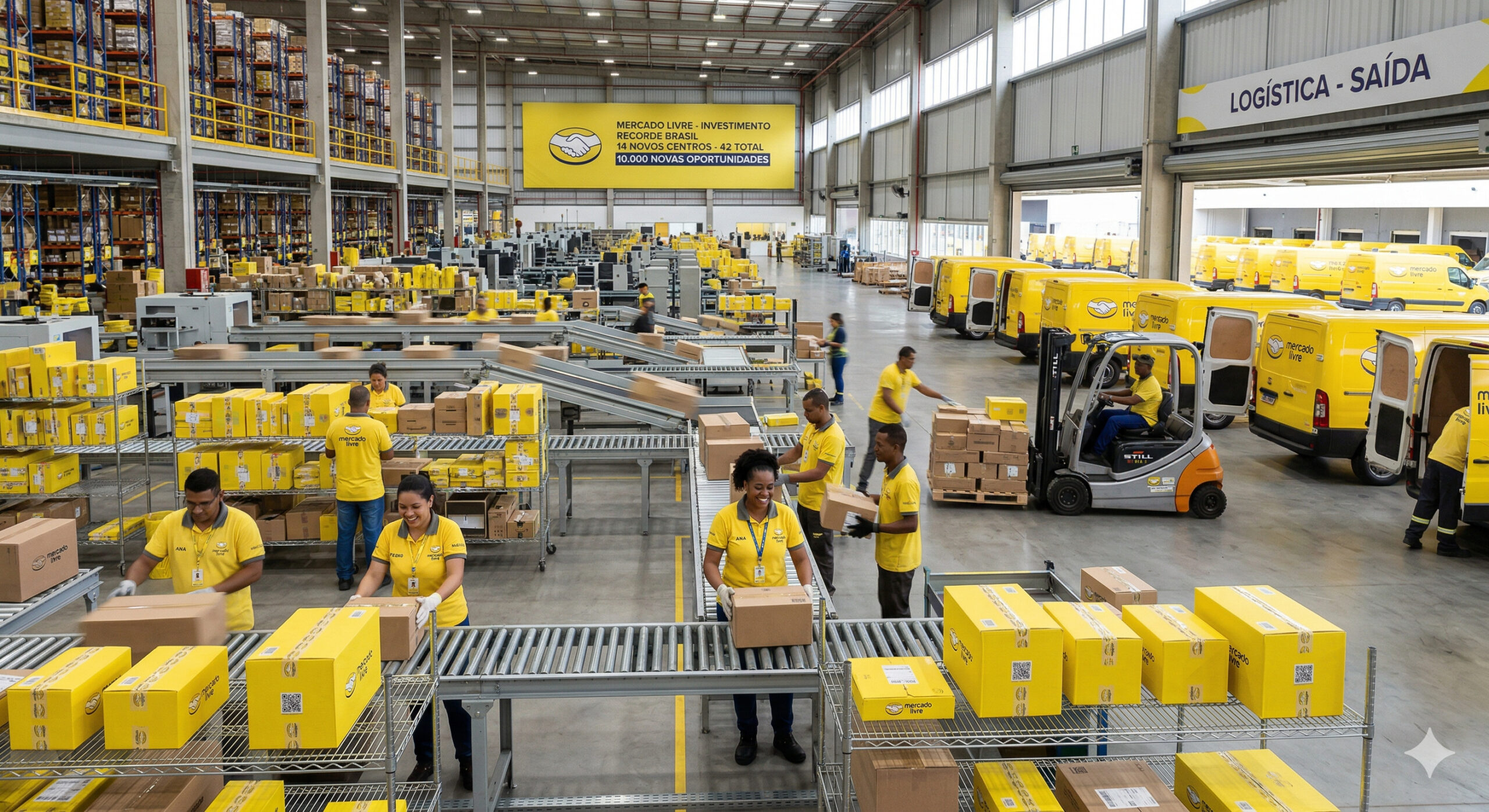
Mercado Livre “opens the vault” and announces a record investment of R$ 57 billion in Brazil in 2026, a value 50% higher than the previous year, with an expansion plan that includes 14 new logistics centers, totaling 42 units in the country and hiring an additional 10,000 employees.
-
How investment in technology can revolutionize the national economy and enhance industrial gains, according to a study that highlights the direct impact on productivity, innovation, and wealth retention within Brazil.

-
The largest food company on the planet, JBS, has just opened a 4,000 square meter laboratory in Florianópolis to develop customized proteins that modulate muscle mass gain, immune response, and metabolic performance.

-
After nearly 30 bids and competition among industry giants, a Spanish company purchases one of the largest airports in Brazil for almost R$ 3 billion and takes over the management of Galeão in a concession that will last until 2039.

“This happened on Saturday morning. On Monday, as soon as the branch opened around noon, I was there”, reported Leicimar. Her attitude reflects a strong moral conviction. “A movie played in my mind at that moment, and I said: ‘no, it’s not mine, I can’t do anything’”. The money remained in her account for only three days and, by the end of the day she sought the bank, the reversal had already been made. For her, the most valuable lesson was the example she would set for her daughters: “It’s better to say ‘let’s continue living the way we are, with what we have’”.
The Temptation and Consequences: The Businessman from Goiânia
In a completely opposite case, a businessman from Goiânia faced a very different fate after a similar banking error. Guilherme Moreira, the owner of a luxury restaurant, received R$ 18 million by mistake. Instead of contacting the bank, he made 65 transfers to accounts of his father, his company, and suppliers. In addition, he bought a luxury car valued at over R$ 200,000.
The financial institution did not take long to act. It filed a police report, and the court ordered the immediate seizure of the vehicle. According to the Civil Police, there are clear indications that Guilherme tried to take advantage of the error. As a result, he was charged with crimes that, when combined, can result in up to 11 years in prison. His lawyer claims there was an attempt to negotiate with the bank, but the businessman is now facing a lawsuit for embezzlement.
Bank Makes a Mistake: Whose Fault Is It and What Does the Law Say?
When a bank makes a mistake in a transfer, the primary responsibility for the error lies with the institution. However, Brazilian law is clear: anyone who receives and uses money that they know is not theirs commits the crime of embezzlement, due to error or force majeure, as provided in Article 169 of the Penal Code. The penalty may vary from one month to one year of detention, or a fine, but can be increased depending on the circumstances.
The legal guidance is unanimous: upon noticing an unexpected deposit, the client should immediately notify the bank and not make any transactions with the amount. Ignoring the fact or spending the money constitutes bad faith and transforms a third-party operational error into a crime committed by the account holder. Voluntary return, as done by Leicimar, eliminates any possibility of punishment and reinforces the expected ethical conduct.
What would you do if a fortune appeared in your account by mistake? Was the housewife’s attitude the most correct, or did the businessman have the right to attempt a negotiation? Leave your opinion in the comments, we want to know how you would react to this situation!








Eu devolvia, porém reteria o justo, 5% de acordo com o Código Civil art.1234.
Quem conhece a Lei nao sai no prejuízo. Consultem um advogado.
Concordo plenamente em devolução de um erro bancário.
Agora quando tiram de vc valores que futuramente vc teria benefício e uma aposentadoria.
Que foi o caso do INSS que ficou com os depósitos dos contribuintes até 1994 e faz os cálculos para aposentadoria de 1994 pra frente, e o que ficou pra trás.
Isso é um roubou tb, e foram muitos milhões. O povo trabalhador foi roubado descaradamente
E vai ficar por isso mesmo? Cadê a punição desse caso?
A revisão da vida toda está uma novela.
O caso foi dado como ganho e cadê o dinheiro do povo, só tão enrolando
Justiça tem que ser pra todos.
Declaração a receita federal dessa quantia por desconfia em lavagem de dinheiro ou fugir de alguma situação flatulência ai distribuio o dinheiro pra uma conta qualquer.