





 Portuguese
  English
  Spanish
  3 min of reading
  0 comments


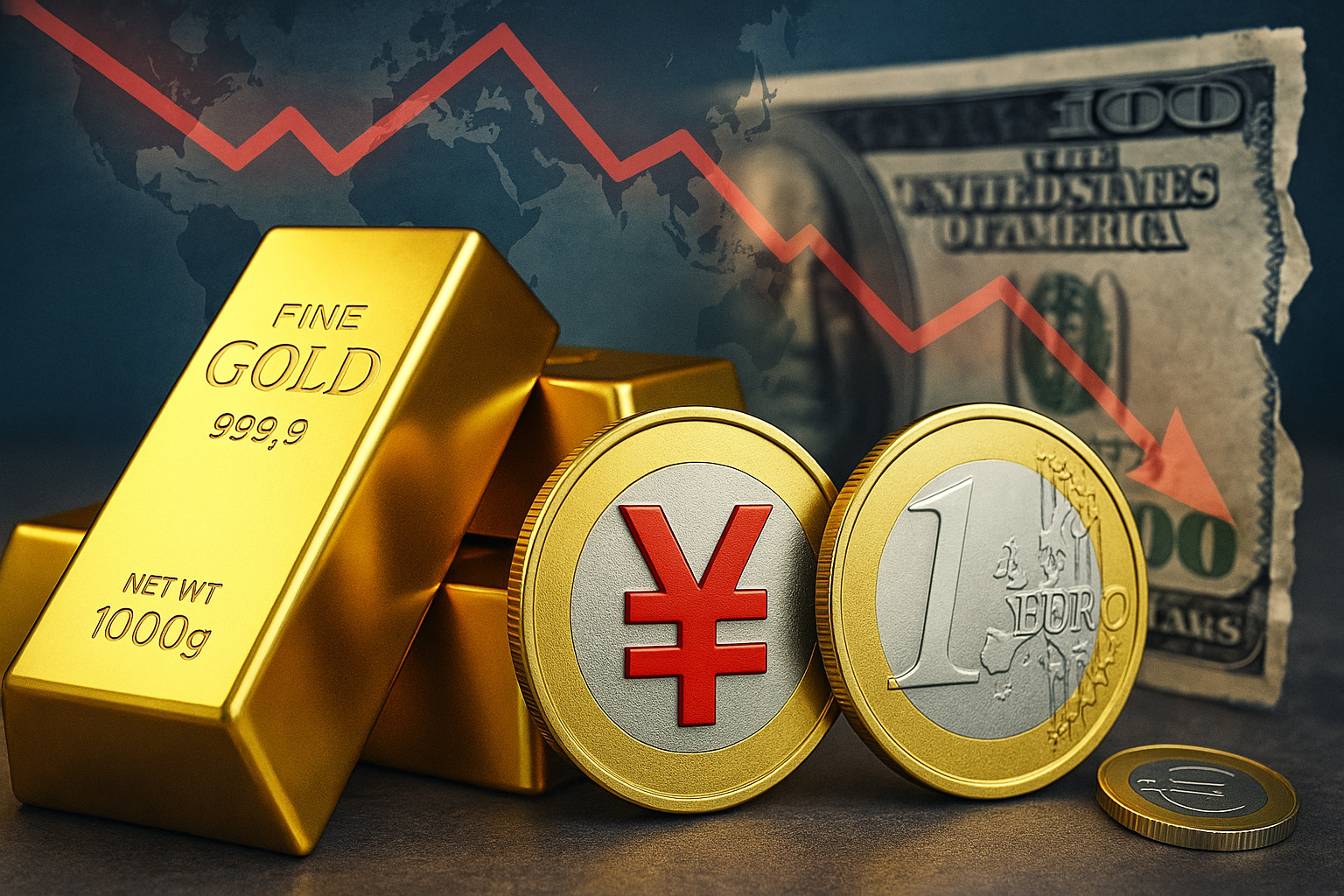


OMFIF Report Shows Central Banks Accelerating Dollar Exodus and Expanding Gold, Yuan, and Euro Reserves, With Geopolitics as a Deciding Factor.
The global economic landscape is undergoing a silent yet impactful transformation: the exodus from the dollar. A report from the Official Monetary and Financial Institutions Forum (OMFIF) indicates that central banks around the world are gradually reducing their reliance on the American currency and expanding their reserves in gold, yuan, and euro. This movement, involving 75 central banks managing over US$ 7 trillion in assets, reflects strategic changes primarily driven by geopolitical and risk management concerns.
Geopolitics and Risk Management Drive Diversification
According to the study, nearly 60% of the banks surveyed plan to diversify their reserves in the next two years, focusing not only on improving returns but also on increasing the resilience of their portfolios.
Trade and political tensions play a decisive role in this choice: 96% of reserve managers cite the tariffs imposed by the United States as a significant concern, and over 80% place geopolitics among the top three factors guiding long-term investment decisions, even surpassing indicators like inflation and interest rates.
-
China, Brazil, and India together control the largest rare earth reserves on the planet and are now at the center of a geopolitical dispute that could determine who will dominate technology and the global economy in the coming decades.

-
While thousands continue to lack water and sewage on the coast of Piauí, the government inaugurates a R$ 5.5 million international portal in Barra Grande and bets on global visibility.

-
Lula’s government opens 13,000 positions for teachers in Brazil and creates more than 24,000 federal jobs, with an impact of R$ 5.3 billion by 2026.

-
A Chinese electric vehicle technology giant wants to invest up to R$ 200 million in a city in Santa Catarina, and the mayor returned from China with a signed document that guarantees the immediate opening of a CNPJ and the start of operations in Brazil.




Dollar Loses Ground While Gold, Euro, and Yuan Gain Strength
The survey shows that, over the past year, the dollar was the only currency to register a decline in demand among central banks.
In contrast, 16% of institutions plan to increase their positions in euro, and several emerging countries indicate they will bolster their reserves in yuan (renminbi), raising the relevance of the Chinese currency in international trade and finance.
The standout, however, is gold. Considered a safe asset in times of instability, it emerges as the top choice for diversification: 32% of central banks stated they plan to increase their stocks of the precious metal in the short term. This preference reinforces the role of gold as a safe haven amid geopolitical and economic uncertainties.
Dollar Exodus Is Still Gradual but Consistent

Despite the trend, the dominance of the American currency remains solid. Over 80% of the banks interviewed still view the dollar as the safest and most liquid currency in the international financial system, and they predict it will account for over 50% of global reserves in the next decade.
However, the move to diversify — especially with gold, yuan, and euro — is considered an irreversible process, marked by gradual but constant advances.
Implications for the Global Financial System
The shift in stance from central banks reveals a search for alternatives to a system largely dominated by the United States.
This movement fits into a new global economic environment, characterized by protectionism, trade tensions, and a clear intention to reduce vulnerabilities in the face of potential sanctions or barriers imposed by Washington.
If this dollar exodus continues at the current pace, it is likely that in the coming years we will see greater multipolarity in the international monetary system, with a more balanced distribution among major currencies and strategic assets.
Do you think this diversification in central bank reserves could significantly reduce the power of the dollar in global trade in the future?










Thanks for the inspiration!