





 English
  Francês
  Alemão
  Italiano
  Japonês
  Norueguês
  Portuguese
  Spanish
  3 min of reading


The Application Of Red Flag Level 2 Increases Cost On Electricity Bill Already In December, But Clean And Renewable Energy Generation Mode May Be An Alternative To Reduce Expenses By Up To 18%
Not only the hole caused by the Covid-19 pandemic in the pockets of business owners in Minas Gerais, but the year 2020 is coming to an end with another bitter taste on the electricity bill. Since last Tuesday (1st), the red flag level 2 system has been in effect, responsible for the additional cost of R$ 6.243 for every 100 kilowatt-hours consumed on the electricity bill. The role of Distributed Generation in this event will be possible to verify in the following paragraphs.
According to a statement issued by the National Electric Energy Agency (Aneel), the drop in the storage level in hydroelectric reservoirs and the resumption of energy consumption, caused by the return of commercial activities throughout the country, led to the review of the decision that initially foresaw the maintenance of the green flag until December 31.
The measure, which affects all Brazilians, will have an even greater impact on the balance sheets of merchants, since in addition to using electricity as a driving force for their businesses, they have had their finances profoundly impacted by the restrictive measures of social distancing.
-
Chinese giant worth nearly R$ 4 billion that manufactures cables for electric cars, solar energy, and robotics wants to open a factory in SC.
-
Many employers do not know, but the law guarantees domestic workers a 25% increase in salary during trips, 50% for overtime, 20% for night shifts, and 17 additional benefits that can lead to labor lawsuits if not paid.

-
Gasoline prices soar and the question arises: is ethanol more advantageous? The 70% rule reveals the limit with gasoline.

-
The government has made a decision and is starting a test with more ethanol in gasoline, anticipating a mixture of up to 35%, diesel with 25% biodiesel, and a study to assess the impacts on engines.


On an upward curve in Brazil, especially in Minas Gerais, which has stood out as a leader in the implementation of photovoltaic plants (UFVs), Distributed Generation (GD) presents itself as an interesting modality for reducing costs with electricity exacerbated by the red flag and also contributes to the sustainability of the planet.
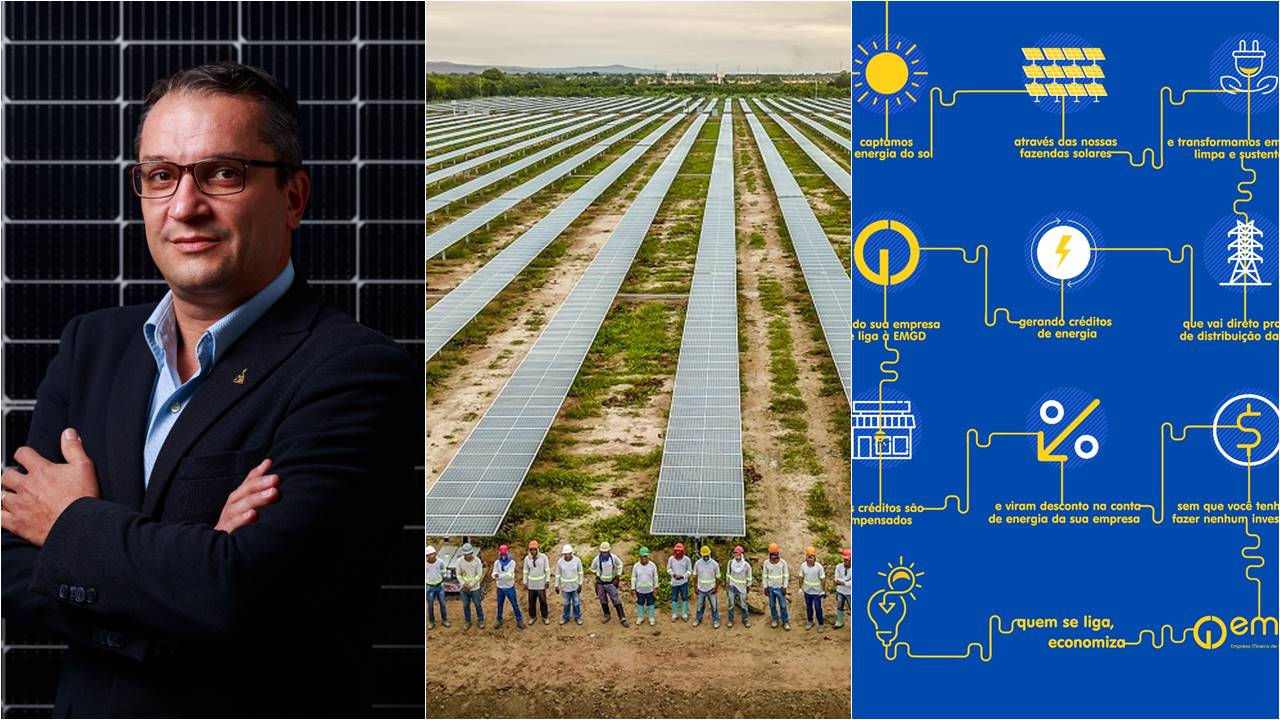
According to the commercial director of the Minas Gerais Distributed Generation Company (EMGD), Cristiano Piroli, customers who use the company’s services can reduce their electricity costs by up to 18% compared to the traditional consumption method. In addition to the savings, the director highlights other facilities for joining: “There is no need to install equipment at the customer’s property, they do not pay enrollment or maintenance fees, and they are also free from contracts,” he guarantees.
According to Cristiano, the service meets the specific needs of each customer and, through the calculation of the average consumption of the customer over the past months, it is possible to size the energy quota needed to offset their consumption with the utility – in the case of EMGD, the service only occurs in installations served by Cemig.
The capture of solar energy takes place in remote photovoltaic plants (UFVs), located in strategically planned places to achieve maximum possible efficiency. “Suppose that the owner of a dental clinic has an average energy bill of R$ 5,000. From the moment of contracting the EMGD plan, the solar quota rented by them will offset their consumption with Cemig, leaving the customer to only pay their electricity bill, which, in the example case, will cost around R$ 4,100, meaning an annual savings of approximately R$ 11,000,” he details.
In addition to the economic benefits, there is the ecological contribution of this energy matrix, which will allow the client company, in addition to generating its own energy, to contribute to the environment and mitigate the costs of the red flag. “Renting a quota capable of generating 5,000 kWh/month can reduce approximately 1.4 tons of CO2 per year, equivalent to planting 11 trees,” celebrates Cristiano.
With the high demand recorded for joining the modality, EMGD is working on its expansion throughout Minas Gerais and expects to implement 24 photovoltaic plants in more than 20 municipalities in the next three years.










Seja o primeiro a reagir!