





 Portuguese
  English
  Spanish
  7 min of reading
  0 comments


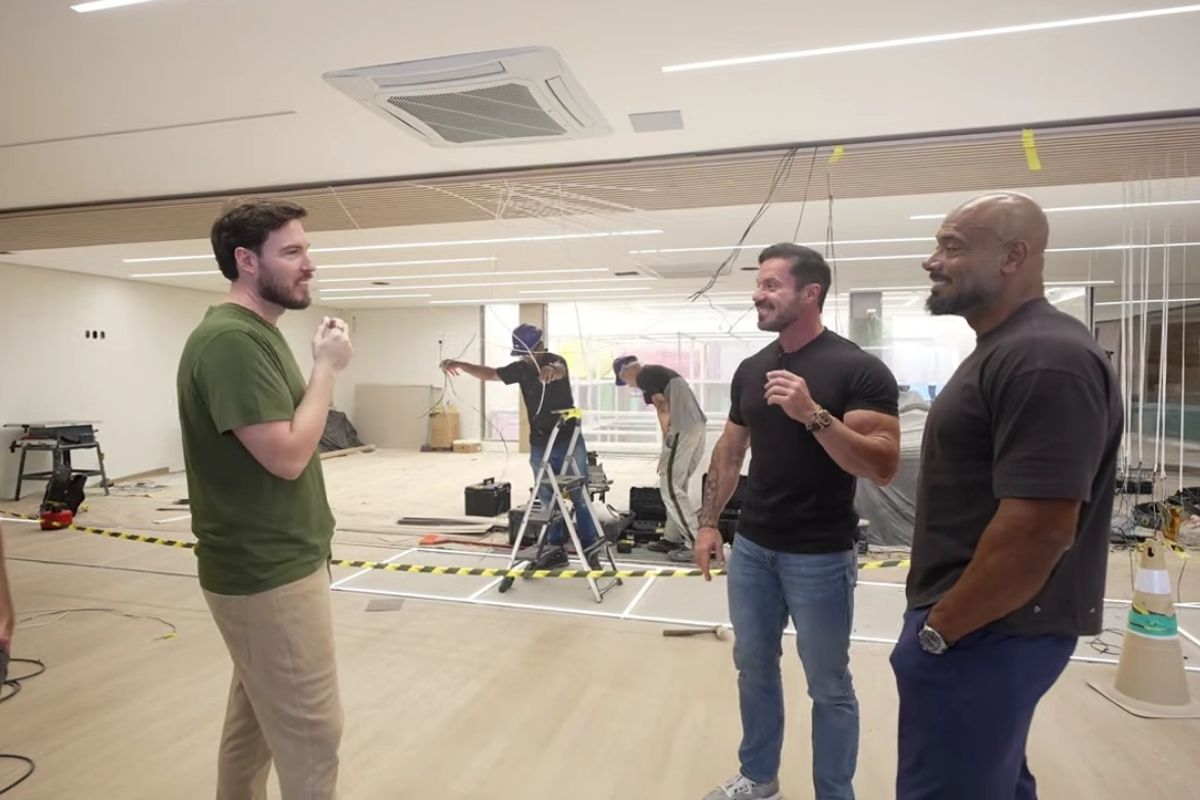
In Genesis 2 Condominium, In Alphaville, The Mansion Of The Rich Cousin Became A Scene Of Endless Construction: Academy Promised In 60 Days Delayed For Months, Timelines Change Yearly, Extra Clear Glass Worth R$ 80 Thousand Breaks, And The House Of 3,000 M² Keeps Growing Day And Night For Social Media.
The mansion of the Rich Cousin, in Genesis 2 Condominium, in Alphaville, has turned into a construction site that seems never to close the time frame. A visit to the site makes clear the contrast between lots of greenery around, the distance from the central area, and the routine of fine adjustments that push the delivery of the training area forward, month after month.
The construction has taken on a life of its own on social media because everything provides a scene: from the gate full of workers and cars to the technical discussion about frames, flooring, and grout, passing through an item that has become a symbol of rework and high expense: the glass. While the house advances to 3,000 m² built, the script repeats the same refrain: date changes, month slips, and year turns into margin.
Where It Is Located And Why Access Becomes Part Of The Story

The arrival at the Mansion of the Rich Cousin goes through Alphaville and ends at Genesis 2 Condominium, described as a place with lots of greenery and further away from the hustle and bustle.
-
Brazilian city neighboring Paraguay becomes a ‘magnet’ for people seeking quality of life and high standards with exceptional growth and commutes of up to 15 minutes.

-
A rare storm transformed part of the Gulf into an unlikely scene of hail, extreme rain, and tornado risk in the middle of the desert, with volumes that exceeded the annual average in a single day.

-
Brazil catches the world’s attention with ships powered by ethanol and biodiesel that have lower emissions, an unprecedented certification with advantages in chartering, and a revolution in cabotage.

-
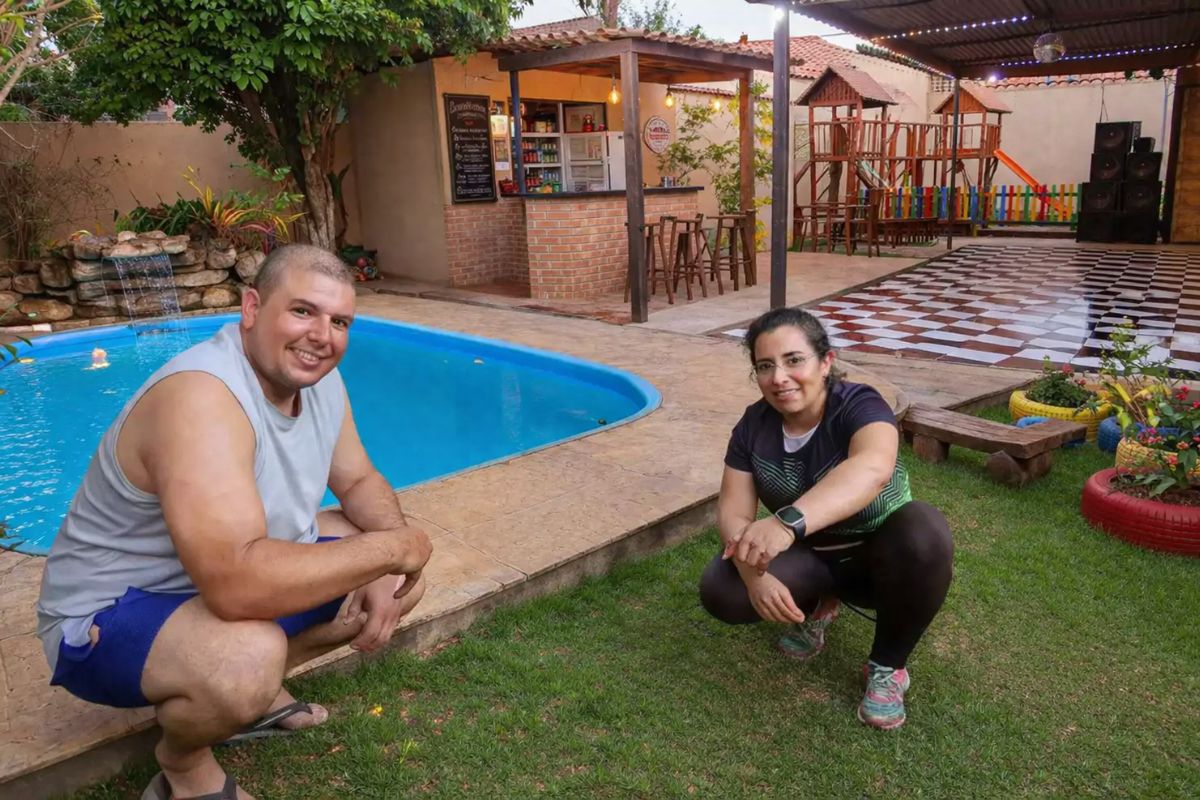
A couple who only has Sundays free has built a hand-dug pool, a hamburger joint, a dance hall, and a playground in their own home without hiring a mason, and even with breaks due to accidents and the pandemic, the work has never truly stopped.

The comparison appears directly: those who want practicality tend to choose other more central locations, while Genesis 2 falls into the package of peace, distance, and space.
The displacement is cited as about 20 minutes from the central area, and the surroundings reinforce the size of the construction site.
The area is described as “eternal,” with concrete mixers, team circulation, and a constant flow that impacts even the neighboring house, mentioned as suffering from the prolonged time and noise of a construction that doesn’t end.
The Promise Of 60 Days And The Timeline That Changes Month And Year

The starting point of the plot is the delivery of the training area.
The repeated memory is the promise that “in 2 months, 60 days” it would be ready.
Months later, the space still appears as a structure in evolution, without the feeling of completion that would allow for immediate use.
When the responsible person, Fabiano, enters the conversation, the deadline becomes the central debate.
The previous promise changes to “three months,” treated as “three prophetic months”, and the joke turns into an operational photograph: the timeline stops being a date and becomes an elastic window.
In another part, the reference to “April of last year” appears, with the summary of the mismatch: got the month right and the year wrong, with a projection for “April of 26.”
Further on, the pressure for a date reappears and the mentioned milestone becomes “February,” with the note that it is “this year”, and a maximum limit enters as a verbal lock: by March 1st, at the latest.
The repetition of this cycle explains why deadlines become “prophecy” in the narrative.
The Expensive Glass That Becomes A Symbol Of Rework And High Cost


If the timeline is the engine of tension, glass becomes the object that materializes cost.
The mansion of the Rich Cousin is associated with a glass described as a “very expensive” piece, made to withstand weight.
The quoted value for one of the items reaches R$ 80 thousand, and the cause of conflict is aesthetic and technical: a “green” glass in a house of this size, when transparency was expected, with mention to the extra clear standard.
The episode doesn’t remain isolated. The conversation points to successive breaks, including a case in the bedroom with “a tear,” treated as the third broken glass.
The consequence becomes an inevitable practical decision: replace, redo, reinstall. And, in a large construction, this affects everything: closures, finishes, sequence of teams, and again, timelines.
Frames, Flooring, Grout, And Travertine Cracking In Expansion
The technical bottleneck spreads across frames, flooring, and grout, with a specific case gaining prominence: travertine, cited as a material that “is cracking” and may need to be replaced due to lack of joints.
The explanation is objective: sun heats, material expands, there is no slack, it cracks.
The problem moves from the aesthetic field to the finishing engineering field, where millimeters decide if the surface holds or goes back to the previous stage.
The chain of accountability appears as a map of friction among suppliers: the door guy points to the glass, the glass guy points to the grout, the grout guy points to the flooring, and the flooring guy returns to another link.
The verbal conclusion is harsh and recurrent in complex construction: good intentions don’t sustain large projects, and a “cheap” supplier can become expensive, slow, and repetitive.
3,000 M² And The Feeling Of A Building Or Shopping Mall Inside
The mansion of the Rich Cousin is described with 3,000 m² built and, at several moments, compared to a building or shopping mall.
The house is presented in sectors, with long circulation and areas that function as “wings,” which changes the day-to-day logistics.
The playroom turns into an example of scale: it is treated as larger than an apartment cited with 250 m², with an estimate close to 300 m², in addition to the double height.
Elements of children’s leisure appear, such as play structures, slides, and the forecast of a basketball hoop, with the idea of children staying there while the training area operates next to it.
In the living room, the described bet is a 27-meter continuous carpet, without cuts, with the image of transport in large volume.
The lighting also becomes a chapter, with mention of kilometers of LED wire.
And there is also the mirror solution with a 100-inch TV behind, with a technical point that weighs: depending on the room’s lighting, the image doesn’t “appear” well and would require a darker space.
Sauna And Technical Choices That Pull New Stages
The training area comes back to the agenda due to a specific detail: sauna.
The discussion places traditional heating with resistance hidden by stones side by side with the alternative of infrared panels.
The argument presented has two fronts: the planned infrastructure and the idea that infrared would provide benefits beyond heating, with mention of scientific articles pointing to positive results.
In practice, this type of choice changes purchase, installation, and service sequence.
In a large construction, each technical decision adds a supplier, schedule, dependency, and risk of rework, which helps explain why the timeline “escapes” easily.
Lake, Artesian Well, Wine Cellar, And Details That Fuel Engagement
The list of infrastructure and leisure is long and helps understand why the construction site yields a permanent series.
The house appears with equipment related to the pool and the lake, as well as an external area described with a small lake, bridge, and big screen thought for events like World Cup, always with the lingering question: will it be done in time?
The artesian well emerges as a work within the work, with the promise of being ready in a few months.
The presence of panels at the top serves as a sign of an attempt to economize.
And the internal logistics gains a concrete detail: a service elevator that sends food up from below, connected to an app referred to as King Food.
The wine cellar is sized for 1,600 bottles, and the supply strategy turns into an event script: a “baby shower” only for men, 100 guests, each bringing a box of wine, to form an initial stock of 600.
It’s the kind of scene that mixes private life, architecture, and storytelling ready for social media.
How Much It Costs, What Could Have Been Avoided, And Why The Series Doesn’t End
The cost appears in layers. First, in unit items that shock, like the glass worth R$ 80 thousand.
Then, in items for automation and finishing, like the discussion about expensive toilets, with values cited between R$ 120 thousand in the set and references of R$ 40 thousand each, with variations in conversation. In projects of this size, this kind of detail isn’t the exception; it’s a standard escalation.
The late learning turns into a hypothetical bill: the realization appears that it would be possible to save “around 10 million” with better choices of supplier, material, and project, reducing redoing, errors, and rework.
And when the topic turns to the total, there isn’t a closed number, but there is a reaction: a guess of “30 million,” then “50,” and the impression that it can be higher, comparing to the local market of high-end houses.
At the same time, the mansion of the Rich Cousin is treated as an engagement machine.
The conversation puts on the table a broad estimate of 500 million to 1 billion views across platforms, in addition to a typical reach of 1 to 3 million per post in short formats.
The logic presented is simple: big projects always have a new chapter, and a new chapter always draws attention.
If you have gone through a long construction, with rework and suppliers pushing tasks to the next week, let us know in the comments what most breaks a timeline in practice. In a mansion of the Rich Cousin with 3,000 m², would you trust a fixed deadline or have you already entered the era of “prophetic months” to finish everything?







-

-

-

-

6 pessoas reagiram a isso.