





 Portuguese
  English
  Spanish
  3 min of reading


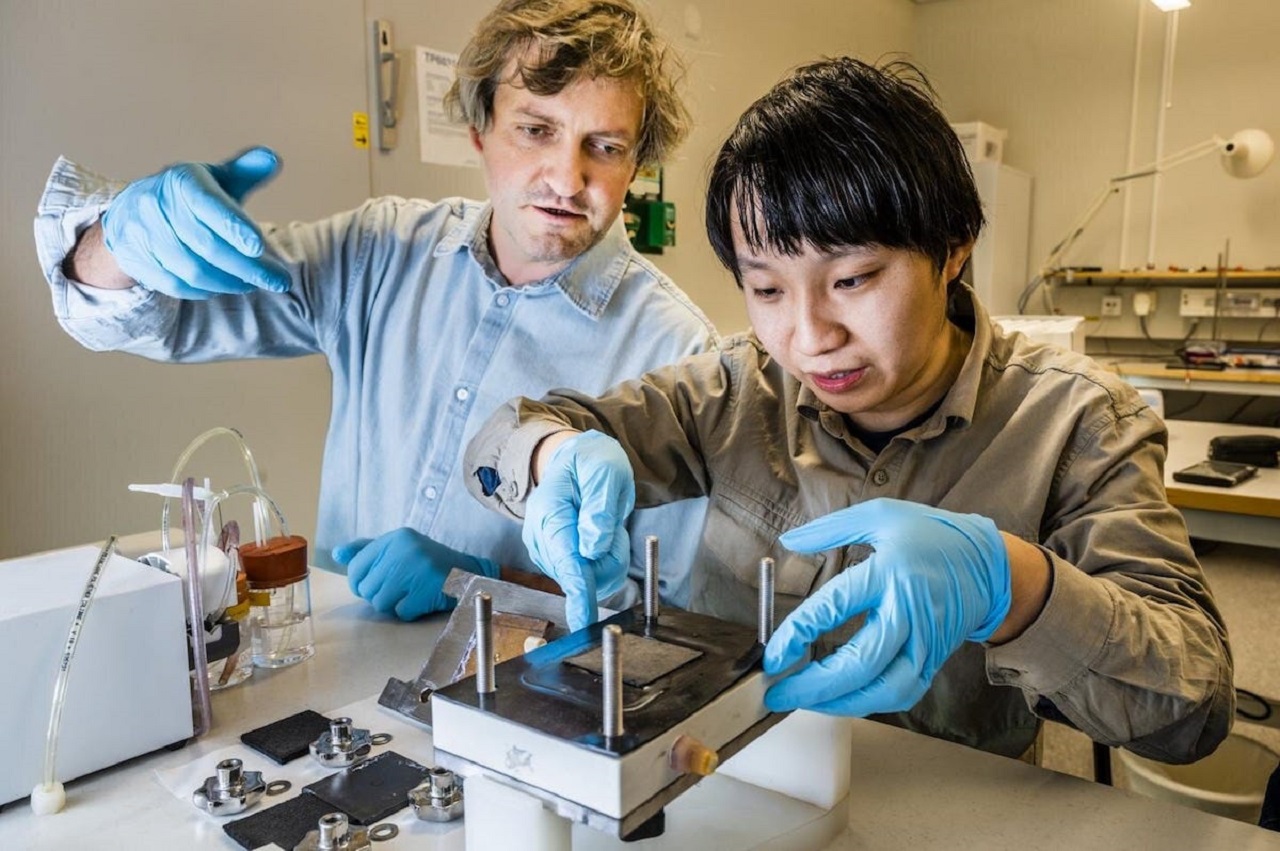
Discover The Perovskite Solar Panel Battery From UK Scientists That Can Charge 100% In Just 10 Seconds.
Scientists have developed a renewable battery that only requires 30 seconds of sunlight from perovskite solar panels to inject dozens of minutes of charge into the batteries of future smartwatches and other small devices. Jinxin Bi and scientists from the University of Surrey in the UK were responsible for developing the renewable and rechargeable battery that does not even need to be plugged into a socket to be charged.
Scientists’ Battery Uses Perovskite Solar Panels
To be recharged, the prototype uses perovskite solar panels to recharge a zinc-ion battery, the same type that has recently matched lithium batteries in terms of energy storage capacity.
Weight for weight, zinc-air batteries can potentially store five times more energy compared to lithium-ion batteries; however, zinc and manganese batteries like those in this new project developed by scientists may be more appealing and competitive because they are thin and flexible.
-
Globo broadcaster achieves 100% renewable energy and advances climate goal, strengthening environmental commitment, reducing emissions, and influencing large companies to adopt more sustainable and competitive strategies.

-
New mapping reveals the Brazilian states with the greatest potential for the production and use of green hydrogen in Brazil to lead the global market.

-
Historical drought and lack of snow in the Norwegian Alps threaten the largest clean energy reserve in Europe and could drive up electricity prices.

-
The Brazilian state accelerates industrial competitiveness with a focus on the extraction of strategic minerals to boost the energy transition in Goiás.

According to the scientist, this technology provides a promising strategy for the efficient use of renewable energy and also allows wearable electronics to operate continuously without the need for plugged-in charging.
The scientists’ prototype could represent a significant step in how we interact with wearable equipment and other IoT (Internet of Things) devices, such as real-time remote health monitors.
Renewable Battery Can Be Charged 100% In 10 Seconds
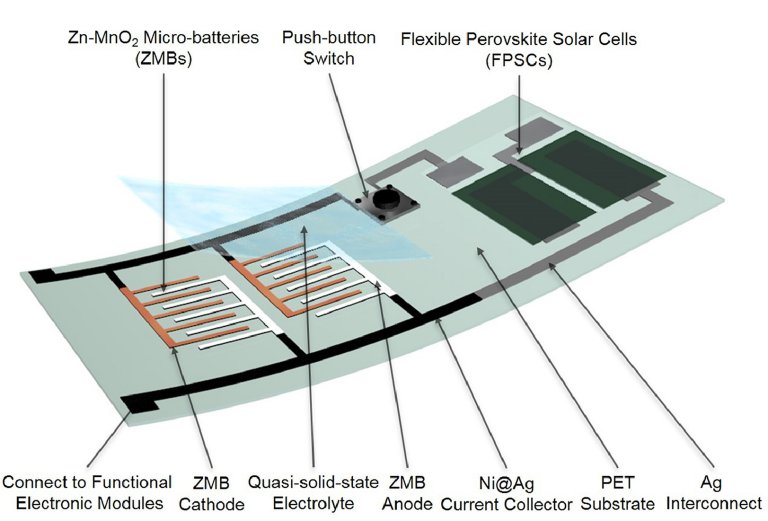
Both the zinc and manganese battery (Zn-MnO2) and the perovskite solar panels were produced in layers applied by an inkjet system and electrodeposition, a low-cost system. According to the scientists, the optimized zinc microbattery exhibited an ultra-high volumetric energy density of 148 mWh cm³ and a power density of 55W cm³ at a current density of 400 C, allowing it to be compared with next-generation microbatteries or supercapacitors produced by conventional methods.
These indicators allow the ultra-thin renewable batteries to be charged rapidly by solar power cells, composing a self-charging system capable of providing energy autonomy for miniaturized electronics. The prototype achieved 100% charge in just 10 seconds, generating enough charge to power sensors and an LED light for nearly an hour.
According to Professor Wei Zhang, the team leader, the unique characteristics of their ultra-fast photo-rechargeable system could lead to extensive applications in self-powered wearable Internet of Things devices, emergency electronics, and autonomous energy systems. Furthermore, it will expand the perception and vision of how to design the next generation of miniaturized flexible photovoltaic systems.
Japanese Scientists Develop Battery That Converts Solar Energy Into Electricity
Scientists from NIMS in Japan announced a study on a new technology to boost renewable energy. They created new types of metallic batteries that can generate solar energy into electricity, potentially storing it for long periods.
The technology aims to solve the limitations of methods used today. Current photovoltaic cells convert solar energy into electricity; however, they cannot store it long-term. Thus, there are standalone batteries that are even more expensive and have low efficiency.
The goal is to create products that combine photovoltaic technology and metallic batteries into a single device. The approach of the Japanese scientists tests several types of batteries, including lithium-iodine, lithium-sulfur, lithium-ion, zinc-ion, among others.










Seja o primeiro a reagir!