





 Portuguese
  English
  Spanish
  6 min of reading
  0 comments


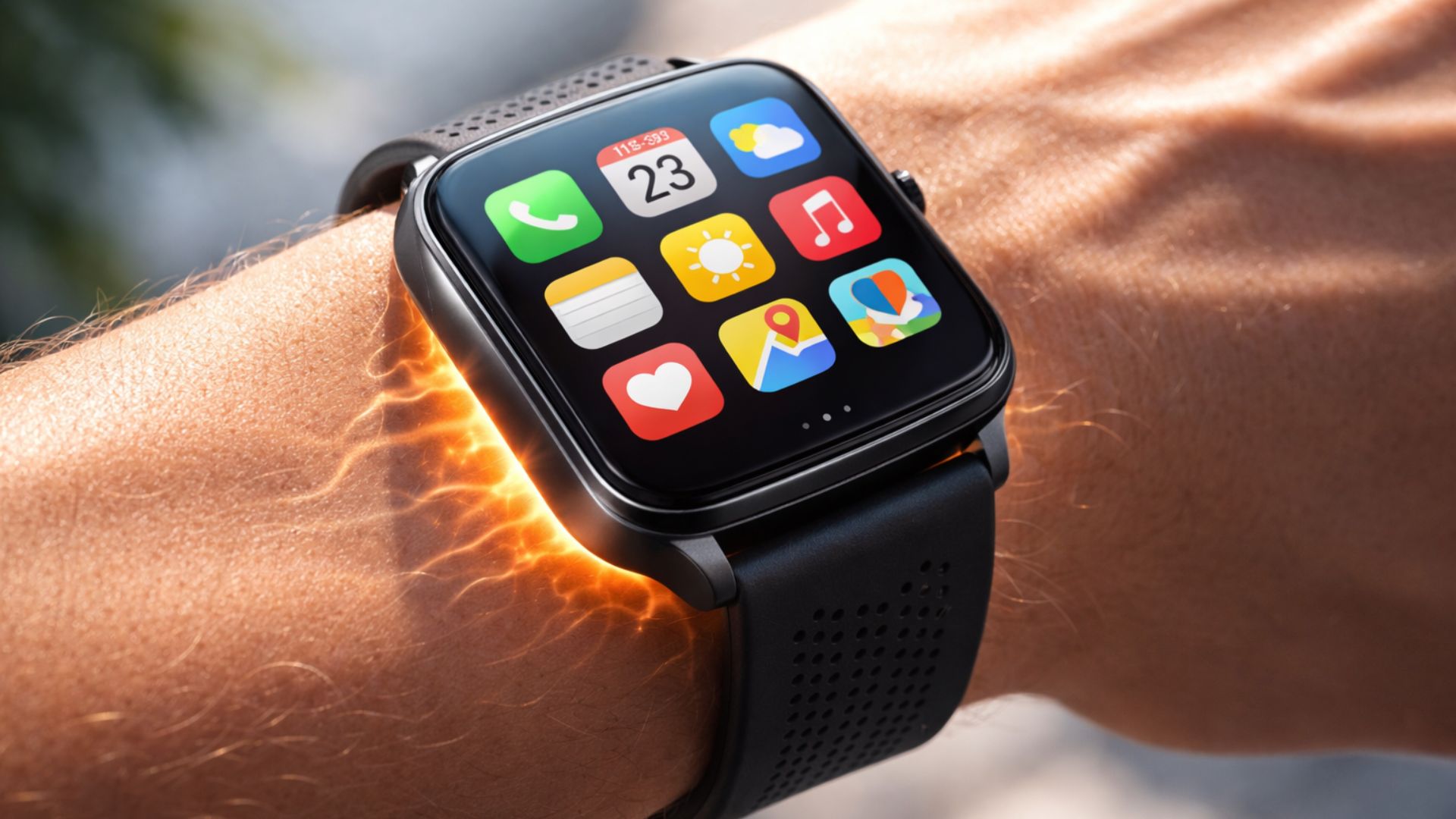
Discover how the battery-free watch uses body heat with new technology to reduce electronic waste, increase autonomy, and drive a sustainable future in everyday devices.
Every day, researchers seek new ways to reduce energy consumption with new technologies. Thus, the advancement of the battery-free watch represents a concrete change in how wearable devices can function in daily life. Instead of relying on constant recharges, this innovation uses body heat to generate electricity continuously.
The basis of this concept lies in thermoelectric generators, capable of converting temperature differences into energy. With the arrival of a new technology, this solution is becoming more efficient and closer to real-world applications.
According to an article published by the website Tudo Celular this Monday (23), the impact goes beyond convenience. It is a significant step towards a sustainable future, reducing the need for traditional batteries and the consequent disposal of electronic waste.
-
Something is happening around the Earth: Inside the huge explosion of fireballs in 2026

-
A hot air bubble coming from Argentina expands over Brazil, causing thermometers to exceed 38 degrees with a thermal sensation of 40 degrees in late March, affecting 6 states at once.

-
The radish leaf that almost everyone throws away has more polyphenols, flavonoids, and fiber than the consumed root, and a 2025 study showed that the leaf contains compounds that protect the intestine, combat inflammation, and may inhibit the growth of cancer cells.

-
A planet that seemed to defy the laws of physics has intrigued scientists for decades, until the James Webb revealed what is really affecting Saturn’s rotation.


How body heat becomes electricity in the battery-free watch
The operation of the battery-free watch depends on a physical principle known as the thermoelectric effect. This phenomenon occurs when there is a temperature difference between two points, generating a flow of electrons.
In the human body, this process happens naturally. The skin maintains a higher temperature, while the external environment tends to be cooler. This difference allows body heat to be converted into electrical energy.
The new technology improves this process by optimizing how heat circulates within the device. Instead of losing energy quickly, the system directs the thermal flow in a controlled manner. This technical detail makes all the difference. It allows for greater energy efficiency and brings devices closer to a sustainable future, where energy is harnessed intelligently and continuously.
Historical technical challenges that limited the battery-free watch
Despite the potential, transforming body heat into usable energy has always been a challenge. This is because, in thin devices like watches, heat tends to dissipate quickly.
Historically, engineers have tried to solve this problem with impractical solutions. Among them were folded structures and three-dimensional pillar-shaped designs. These approaches increased volume and compromised comfort. As a result, the concept of battery-free watch remained limited to prototypes and laboratory tests.
Another significant issue was the difficulty of creating distinct temperature regions on flat surfaces. Without this separation, energy generation became insufficient to power real devices. The structural limitation prevented the new technology from advancing practically, delaying its market application.
New South Korean technology redefines the use of body heat in wearables
A promising solution was presented by researchers from Seoul National University in South Korea, in a study published in the journal Science Advances. They developed a thermoelectric generator called “pseudo-transversal,” which completely changes how heat behaves within the device.
The innovation lies in the elastic silicone base combined with copper nanoparticles. This material directs body heat laterally, instead of allowing its direct dissipation.
This movement creates adjacent zones of different temperatures, something essential for generating electricity. The result is a more efficient system, even in a flat structure. With this new technology, the battery-free watch becomes lighter, more comfortable, and functional, reinforcing its role in a sustainable future.

Flexible structure and ink printing enable scale production
Another important differentiator lies in the manufacturing process. The new system can be produced through functional ink printing, a simpler and more adaptable technique.
This allows for the creation of devices in different shapes while maintaining the necessary flexibility for use on the human body. Additionally, the components can be organized in a modular fashion.
In practice, this means that the battery-free watch can be adjusted for different sizes and applications. The use of body heat remains the primary energy source, without the need for conventional batteries.
The new technology also reduces production costs, increasing the chances of large-scale adoption. This advancement is essential to consolidate solutions aimed at a sustainable future.
Environmental impact reinforces the potential for a sustainable future
The replacement of batteries with energy sources like body heat has direct implications for the environment.
Currently, the growth of the portable electronics market contributes to the increase in electronic waste. Batteries, in particular, pose a challenge due to containing chemical materials and heavy metals.
The battery-free watch emerges as an alternative to reduce this impact. By eliminating the need for frequent recharging, it can also contribute to reducing electricity consumption. This new technology fits into a global movement for cleaner and more efficient solutions. The concept of sustainable future ceases to be abstract and begins to materialize in everyday products.


Practical applications go beyond the battery-free watch
Although the focus is on the battery-free watch, the potential of this technology goes far beyond. Devices like wearable medical sensors, smart bracelets, and tech rings can benefit from using body heat as an energy source.
This is especially relevant in the healthcare field. Equipment that operates continuously, without the need for recharging, can improve patient monitoring.
The new technology allows these devices to be lightweight, flexible, and adaptable to the skin without compromising comfort. This scenario reinforces the transition to a sustainable future, with self-sufficient solutions integrated into daily life.
Current limitations still require advances in new technology
Despite the advancements, the battery-free watch still faces significant challenges. Energy efficiency, although improved, still depends on external conditions. Environments with little temperature difference can reduce performance.
Additionally, integration with other electronic components requires adaptations. The use of body heat needs to be optimized to ensure stable operation in different situations.
Another point is the need to increase energy generation capacity. More complex devices still demand more power. Nevertheless, the new technology already shows significant evolution and indicates a solid path towards a sustainable future.
The wearables market can be transformed with the battery-free watch
The market for wearable devices is in constant expansion. The search for autonomy and practicality drives new technological solutions. In this context, the battery-free watch emerges as a relevant competitive differentiator.
The possibility of using body heat as an energy source directly meets consumer expectations. Additionally, the new technology can reduce operational costs and increase product durability.
Companies that adopt this model can stand out in an increasingly competitive market, aligning innovation with sustainability. The advancement also reinforces the concept of sustainable future, integrating technology and environmental responsibility.
Open path for self-sufficient devices in daily life
The evolution of the battery-free watch marks a turning point in the wearable electronics industry. The use of body heat as an energy source ceases to be an experimental idea and begins to gain practical application. The new technology developed by South Korean researchers addresses old limitations and opens new possibilities for the sector.
With more efficient, flexible, and scalable structures, devices are likely to become increasingly independent of external energy sources. This advancement points directly to a sustainable future, where technology adapts to the human body and intelligently harnesses natural resources.
The expectation is that, in the coming years, solutions like this will become increasingly common, transforming people’s relationship with their electronic devices.
Do you believe that a battery-free watch powered by body heat can really replace traditional devices and change the way we use technology in daily life?






Seja o primeiro a reagir!