





 Portuguese
  English
  Spanish
  5 min of reading
  0 comments


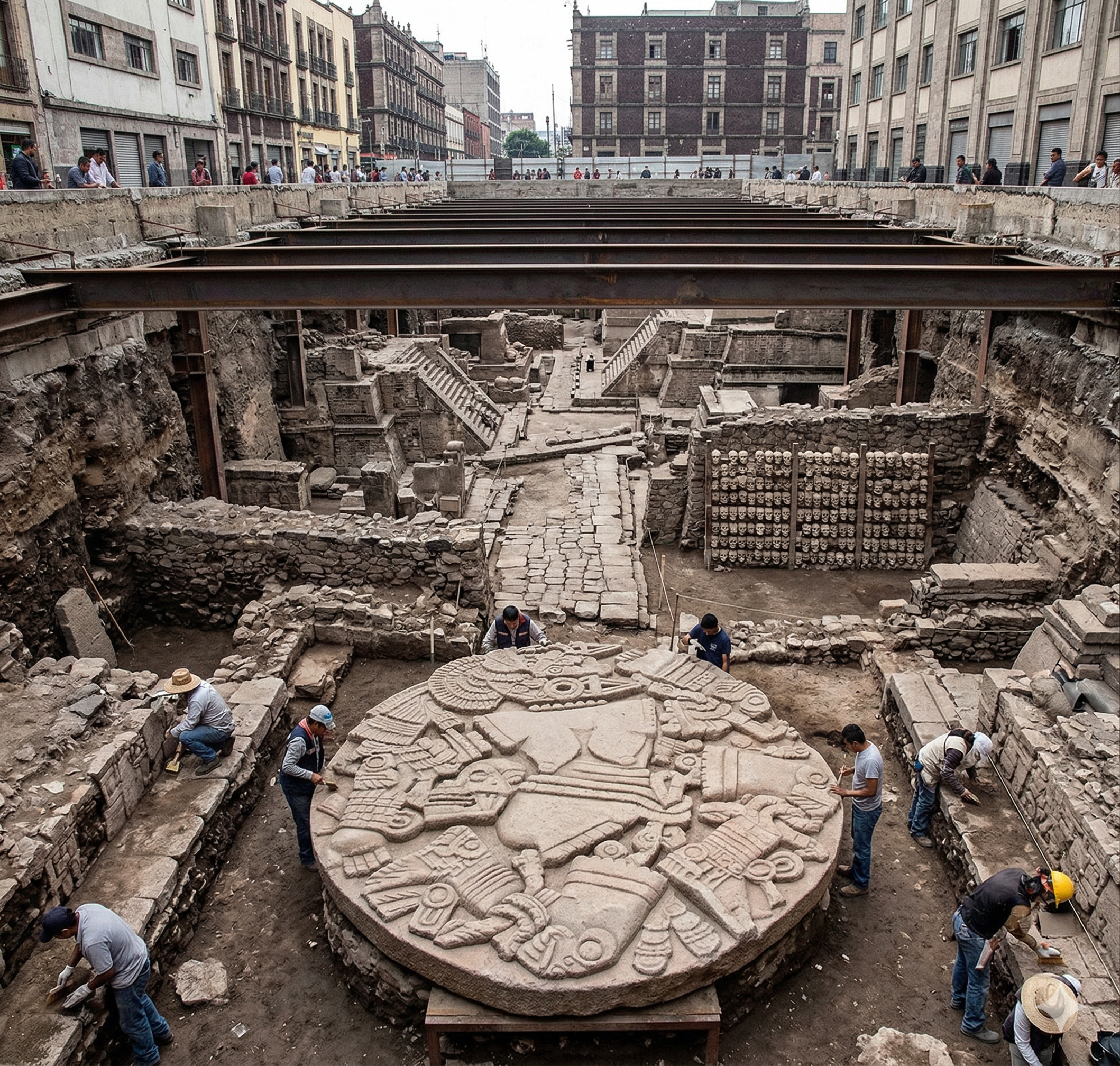
Templo Mayor is revealed beneath Mexico City after discovery in 1978 and excavations show buried Aztec city with thousands of artifacts
On February 21, 1978, workers from the electricity company in Mexico City accidentally found a monolith made of volcanic stone while installing cables in the historic center. The object, measuring 3.25 meters in diameter and weighing about 8 tons, displayed a carved image of Coyolxauhqui, the moon goddess in Aztec mythology. According to Archaeology Magazine and the BBC Travel, the discovery confirmed the exact location of the Templo Mayor, the main religious structure of Tenochtitlán, the capital of the Aztec Empire, buried under layers of colonial and modern construction.
The discovery marked one of the most important moments in modern urban archaeology, revealing that one of the largest cities in the history of the Americas remains buried beneath one of the world’s largest metropolises.
Mexico City was built on Tenochtitlán after the Spanish conquest in 1521
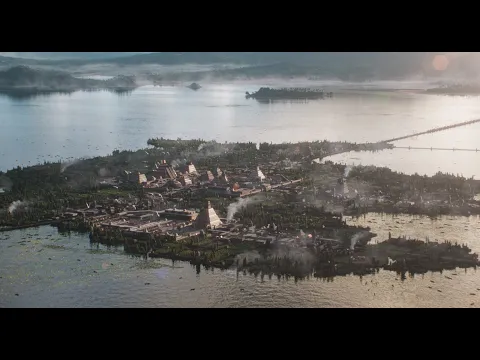
When Hernán Cortés arrived in Tenochtitlán in 1519, he found a city with an estimated population of between 200,000 and 300,000 inhabitants, a number greater than any European city at the time. The Aztec capital was built on an island in Lake Texcoco, connected to the mainland by elevated causeways and a complex network of navigable canals.
-
How to build a 35,000-liter cistern with 60 by 50 cm panels and rainwater for drinking and cooking without relying on water trucks or the city hall.
-
A woman went out for a regular walk and ended up finding a treasure buried for over 900 years, with more than 2,000 medieval silver coins compared by archaeologists to a lottery prize and considered one of the most significant finds in recent years in the country.
-
Scientists revealed 11 signs that very intelligent people exhibit in their daily lives, and most people have no idea that some of these common behaviors are directly linked to an above-average brain.

-
From space, Buenos Aires appears as a colossal spot of light surrounded by kilometers of darkness, revealing at a single glance the exact boundary between the metropolis and the countryside, seen from 400 km altitude.

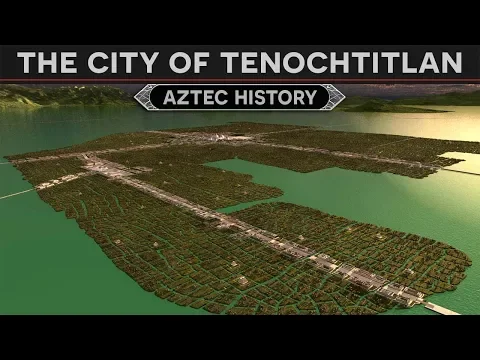

After the Spanish conquest in 1521, the strategy adopted was unprecedented: instead of founding a new city, the colonizers destroyed the existing structure and used its stones to build the new colonial capital. Churches, palaces, and administrative buildings were constructed directly over Aztec temples and palaces.
This process resulted in the complete burial of Tenochtitlán, creating an invisible city beneath present-day Mexico City.
Templo Mayor was 27 meters tall and had multiple preserved archaeological layers
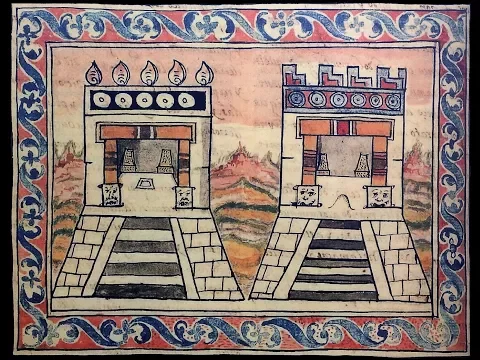
The Templo Mayor was a double pyramid about 27 meters tall, equivalent to a nine-story building, with a base of approximately 100 meters by 80 meters. At the top, two staircases led to temples dedicated to Huitzilopochtli and Tlaloc, representing war and agriculture.
Over two centuries, the temple was rebuilt six times, with new structures erected over the previous ones. When the Spaniards destroyed the complex, only the outermost layer was removed.
This allowed for the preservation of multiple phases of construction, creating a unique archaeological sequence composed of seven superimposed temples.
Excavations at Templo Mayor revealed over 40,000 artifacts from the Aztec Empire
Since 1978, excavations conducted by the Urban Archaeology Program (PAU) have covered about 500 square meters, an area equivalent to approximately seven city blocks. In this space, archaeologists have found over 40,000 artifacts.
Among the identified items are obsidian mirrors, seashells from the Pacific, shark teeth from the Caribbean, jade masks, gold and silver objects, as well as seeds preserved for thousands of years.
The diversity of materials proves the extent of the empire’s trade networks, which reached different regions of Central America and Mexico.
Mexican law requires archaeological oversight for construction in the historic center
Currently, any intervention in the ground of downtown Mexico City requires the presence of the National Institute of Anthropology and History (INAH). The legislation prioritizes archaeological preservation.
This rule ensures that new finds are not destroyed by infrastructure works. Fragments of pottery, bones, and ancient structures continue to be regularly discovered beneath streets and buildings.
The city operates as one of the largest active archaeological sites in the world, with frequent discoveries during urban works.
Soil subsidence in Mexico City reveals buried Aztec structures
Mexico City is undergoing a continuous process of subsidence due to the extraction of groundwater. In some areas, the ground can sink up to 50 centimeters per year.
This phenomenon creates cracks in buildings, which end up revealing buried archaeological structures. Rigid elements, such as pyramids and ancient foundations, resist subsidence, causing deformations in the buildings above.
These cracks act as geological indicators that help archaeologists locate Aztec constructions beneath the modern city.
Metropolitan Cathedral sinks due to Aztec structures beneath its foundations
The Metropolitan Cathedral of Mexico City, built from 1573, shows visible tilting due to the difference in soil support.
Part of the structure is supported on Aztec foundations, while other areas rest on more unstable soil. This difference generates deformations and requires constant engineering interventions.
The phenomenon illustrates how ancient structures continue to influence the stability of the modern city centuries after their construction.
Aztec temples have been found beneath the subway, buildings, and urban areas
Various temples have been identified in unexpected locations, including beneath subway stations and commercial buildings. The temple of Ehécatl, for example, has been preserved in an underground structure accessible to the public.
Other sites have been discovered beneath areas destroyed by the 1985 earthquake, revealing the depth and extent of the buried city.
These discoveries demonstrate that modern Mexico City is built directly over a pre-Columbian urban complex that is still largely intact.
Only 0.2% of Tenochtitlán has been excavated to date
Despite decades of research, only 0.2% of the ancient Aztec capital has been excavated. The original sacred precinct, about 500 meters on each side, remains almost entirely under modern constructions.
Historical accounts from the 16th century, such as those by Bernardino de Sahagún, indicate the existence of dozens of structures that have yet to be located.
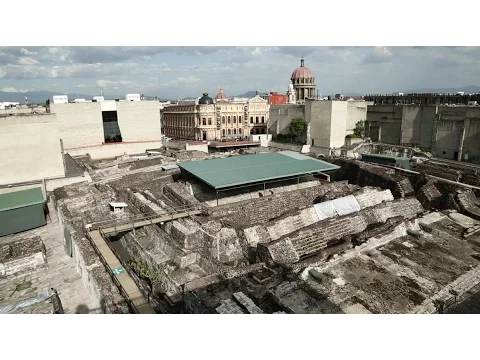
The limitation of excavations is directly linked to the need to preserve current urban infrastructure, making it impossible to fully explore the area.
National Palace was built over the residence of Emperor Moctezuma II
The current National Palace of Mexico occupies the same site where the palace of Moctezuma II, the ruler who received the Spaniards in 1519, once stood.
This overlap was not accidental, but a symbolic strategy of continuity of power adopted by the colonizers. The location reinforces the permanence of power centers in the same geographical space over the centuries.
The organization of Mexico City retains traces of the ancient Tenochtitlán. Some streets follow exactly the path of the ancient causeways that connected the island to the mainland.
The division into quadrants also reflects Aztec cosmology, with the Templo Mayor at the center. Even after centuries of transformation, the original urban structure still influences the design of the contemporary city.
13-ton monolith may indicate the first Aztec imperial tomb
In 2006, archaeologists discovered a 13-ton monolith representing the goddess Tlaltecuhtli. The object was found near the Templo Mayor and features inscriptions indicating the year 1502.
Radar scans identified possible underground chambers beneath the site, suggesting the existence of imperial tombs. If confirmed, the find could represent the first tomb of an Aztec emperor ever discovered.
The ancient Aztec capital did not disappear but was buried. Beneath streets, buildings, and modern infrastructures, structures, artifacts, and remnants of one of the most advanced civilizations in the Americas remain.
With each new excavation, fragments of this city emerge, revealing layers of history that continue to challenge archaeologists.
Mexico City is both a contemporary metropolis and one of the largest hidden archaeological sites on the planet.







Seja o primeiro a reagir!