





 Portuguese
  English
  Spanish
  4 min of reading
  0 comments


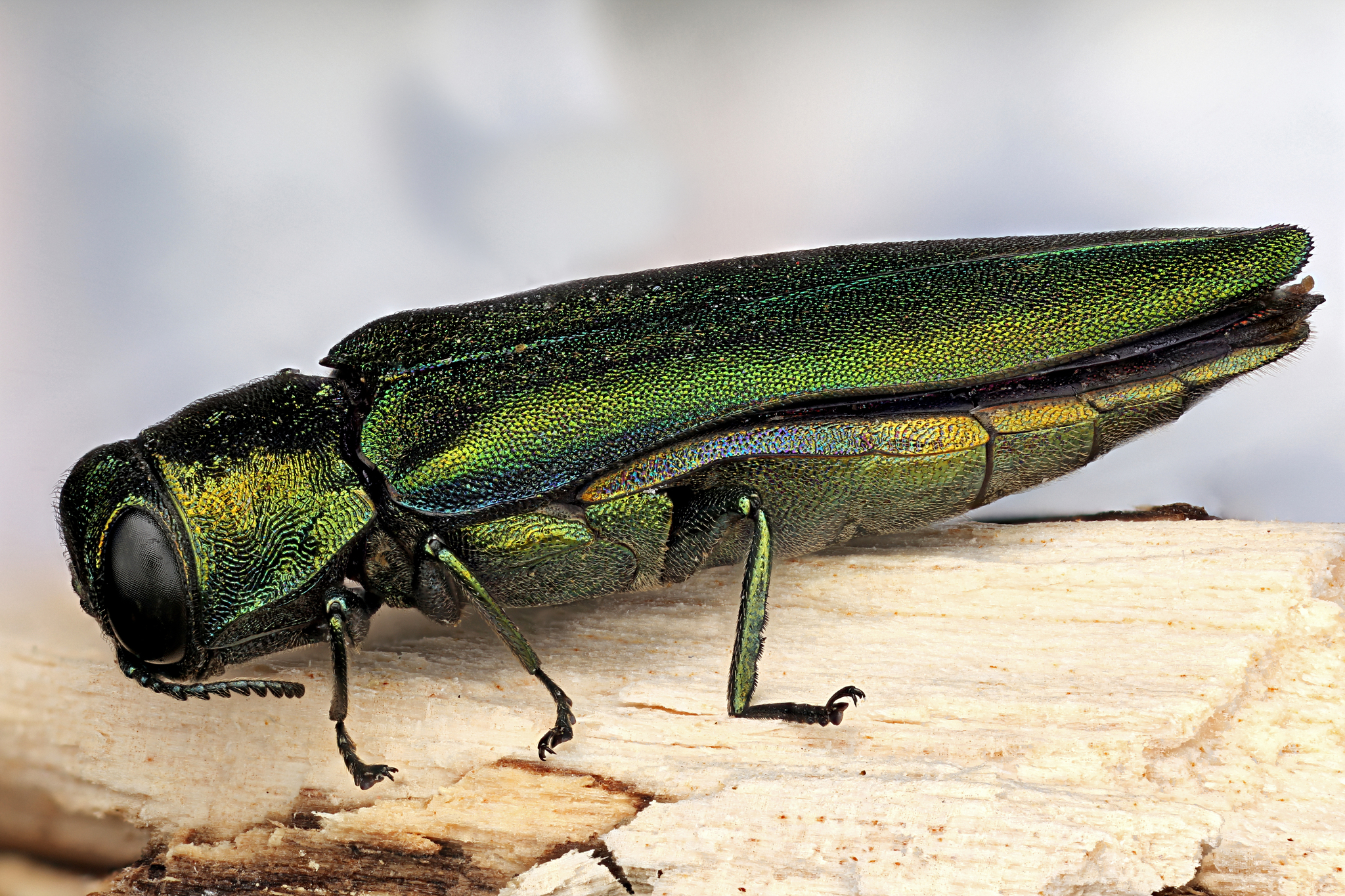
The Emerald Ash Borer Has Killed More Than 100 Million Trees in North America, Devastated Entire Forests, and Continues to Advance Despite Quarantines and Control Attempts.
In the early 2000s, entire forests in North America began to change appearance silently and rapidly. Seemingly healthy trees dried out in a matter of months, canopies thinned, trunks cracked, and entire neighborhoods lost their green cover. The culprit was not a historic drought or wildfires, but a tiny insect: the emerald ash borer (Agrilus planipennis).
Since it was first detected on the continent, the insect has been associated with the death of more than 100 million trees of the genus Fraxinus, a number that continues to grow and has made this biological invasion one of the most destructive ever recorded in modern forests.
Emerald Ash Borer: An Almost Invisible Invader at First
The emerald ash borer is native to East Asia, where it coexists with ash species that have evolved natural defenses over thousands of years. In North America, however, native trees had no evolutionary protection against the insect.
-
With a cost per shot close to zero, the DragonFire laser could change naval warfare in 2027 and provide British ships with nearly unlimited defense against drones.

-
A British startup creates tires that generate electricity in electric vehicles when passing over potholes, speed bumps, and cracks.

-
Scientists have created robots made with living cells that have their own nervous system, swim on their own, explore the environment, and self-organize without any genetic engineering, and now they want to do the same with human cells.

-
Students create a solar-powered ambulance that operates without a plug, without fuel, and still keeps medical equipment running in remote areas.


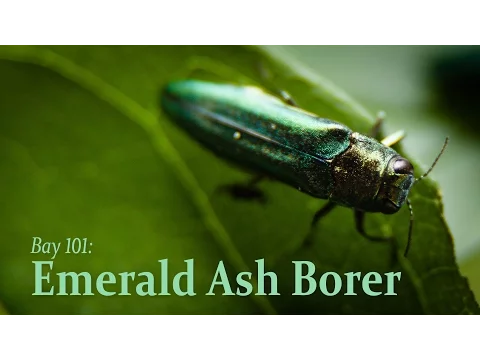

The introduction occurred indirectly, likely through contaminated wood packaging and pallets used in international trade. For years, the insect spread unnoticed, as the initial symptoms are subtle and difficult to identify with the naked eye.
By the time the first alerts emerged, the damage was already irreversible over vast areas.
How an Insect Kills Giant Trees
The adult beetle causes little damage on its own. The real destroyer is in the larval stage. The larvae develop beneath the tree’s bark, tunneling through the tissue responsible for transporting water and nutrients between roots and leaves.
These tunnels completely interrupt the vital flow of the tree. Within a few years—sometimes in just one— the tree undergoes physiological collapse and dies, even if it is decades old and several meters tall.
In infested areas, the mortality rate of ash trees reaches almost 100%.
A Continental Scale Forest Collapse
The impact is not limited to natural forests. The beetle has devastated urban parks, rural areas, ecological corridors, and nature reserves in dozens of U.S. states and provinces in Canada.
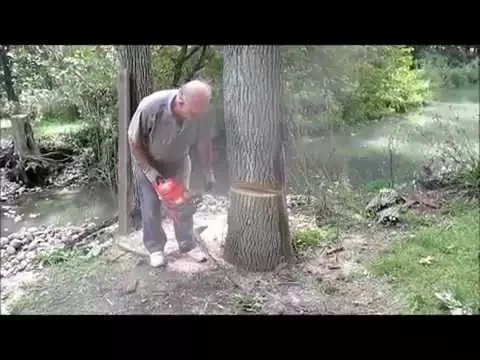
Cities have lost millions of street trees, raising local temperatures, reducing shade, increasing energy costs, and creating risks from fallen dead trees.
It is estimated that direct and indirect economic costs could reach billions of dollars, considering tree removal, replanting, loss of ecosystem services, and impacts on the timber industry.
Why Control Is So Difficult
Once established, the emerald ash borer is extremely difficult to contain. It naturally disperses but also “travels” easily through human transport of infested firewood and timber.
Programs of strict quarantines have been implemented to restrict the movement of timber between regions, slowing the spread, but not eliminating the problem. In many areas, control came too late.
Furthermore, the insect reproduces rapidly. A single female can lay dozens of eggs, ensuring that new generations emerge every year.
Human Response Attempts
Different strategies have been tested over the years. Systemic insecticides can protect individual trees, but are expensive and unfeasible on a large forest scale. In urban areas, some iconic trees have been saved, but vast stretches of forest have not been so lucky.

Another approach has been biological control, with the introduction of small parasitic wasps from Asia, natural enemies of the beetle. In some locations, these insects have helped reduce populations but were unable to reverse the mortality that had already occurred.
The most that has been achieved so far is to slow down the destruction, not to stop it completely.
Cascade Effects in the Ecosystem
The massive loss of ash trees does not only affect the landscape. These trees play a crucial role in riparian ecosystems, mixed forests, and wetlands. Their death alters the forest structure, changes plant species composition, and affects birds, insects, fungi, and associated microorganisms.
In some regions, the replacement of dead trees by invasive or opportunistic species has created degraded forests that are less diverse and more vulnerable to new environmental disturbances.
A Warning About Globalization and Biological Invasions
The case of the emerald ash borer has become a classic example of the invisible risks of globalization. An almost imperceptible organism, unintentionally transported, has been able to reshape entire ecosystems in a few decades.
It has exposed weaknesses in sanitation control systems, forest management, and delayed responses to biological invasions, issues that remain relevant in an increasingly connected world.
Still Far from the End
Despite decades of combat, the beetle continues to advance into new regions. Forests that have not yet been hit live under constant threat, and the recovery of already devastated areas will take generations, if it is possible at all.
More than an isolated case, the emerald ash borer has become a symbol of the real cost of biological invasions, showing that small organisms can cause damage equivalent to the largest environmental disasters when they encounter an unprepared ecosystem.








-

-

3 pessoas reagiram a isso.