





 Portuguese
  English
  Spanish
  3 min of reading
  0 comments


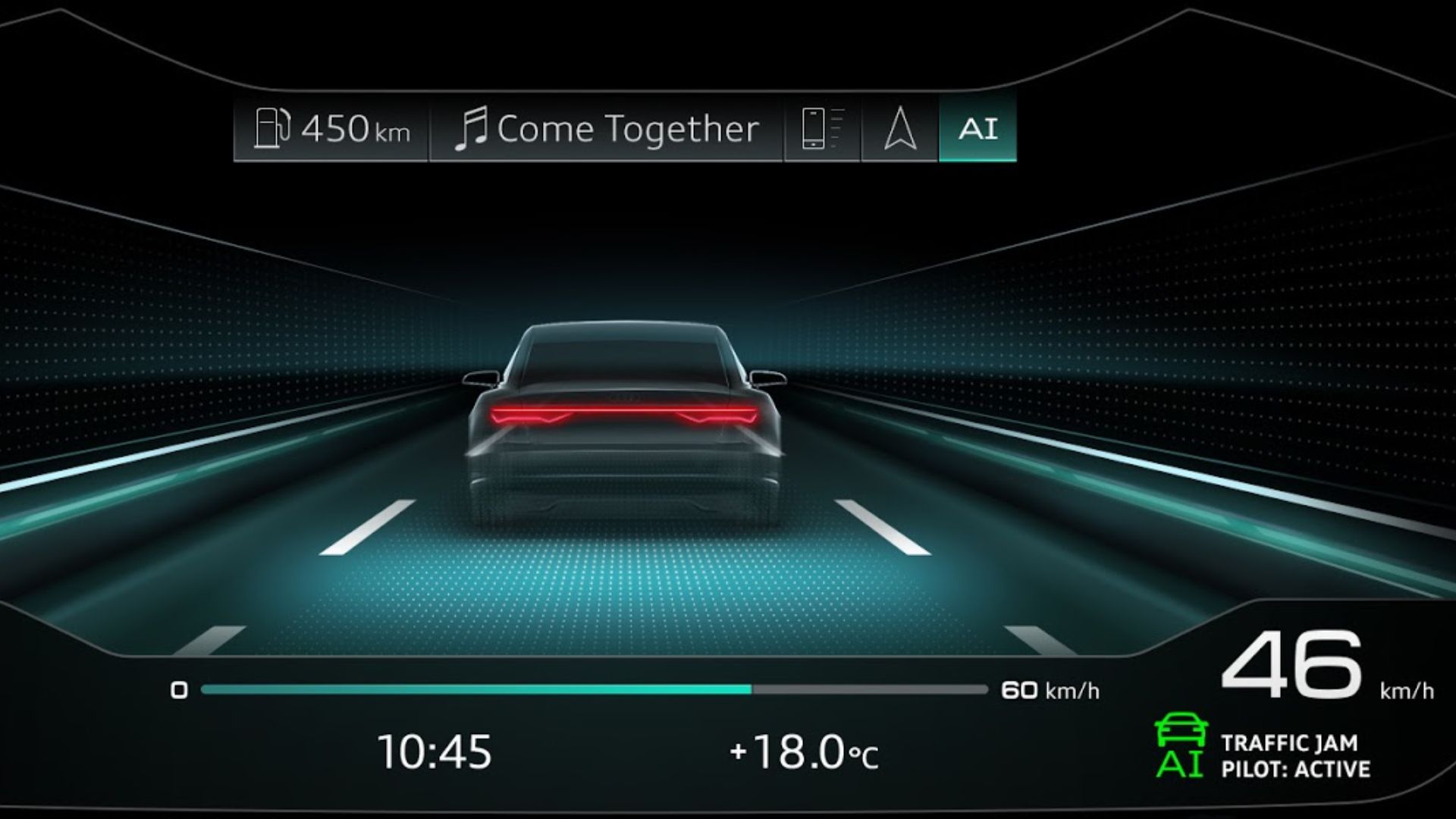
The Race For Total Autonomy Is Already Underway, And Vehicles That Do Not Require A Steering Wheel Or Driver May Arrive Sooner Than Expected, Challenging Legislation And The Very Concept Of Driving
The autonomous cars are increasingly close to becoming a reality. The automotive sector, which celebrated the popularization of the first automobiles a hundred years ago and then watched humans reach the Moon, is now focusing its greatest efforts on an even more ambitious challenge: creating vehicles capable of driving themselves, with safety superior to that of human drivers.
In the last decade, automakers have devoted a large part of their investments to developing alternative engines, especially electric ones. The rise of Tesla in the early 2010s marked a historic turning point. The company not only mastered battery technology but also managed to reposition the electric car, previously seen only as an environmental alternative, into a symbol of innovation, status, and luxury.
However, as other brands—including traditional giants like Volkswagen, Toyota, and General Motors—entered this market, offering competitive electric models, the industry began to seek new horizons. It is in this scenario that autonomous driving emerges as the next big leap.
-
Honda performs miracles in fuel consumption with a hatch that marks 13.2 km/l in the city and 15 km/l on the highway, leaving Polo, HB20, 208, and Onix behind and becoming a reference among compact cars without resorting to turbo or hybrid systems.

-
Six diseases that seem common but can prevent the renewal of the driver’s license for the elderly throughout Brazil and surprise experienced drivers — could any of them affect you without showing clear signs?

-
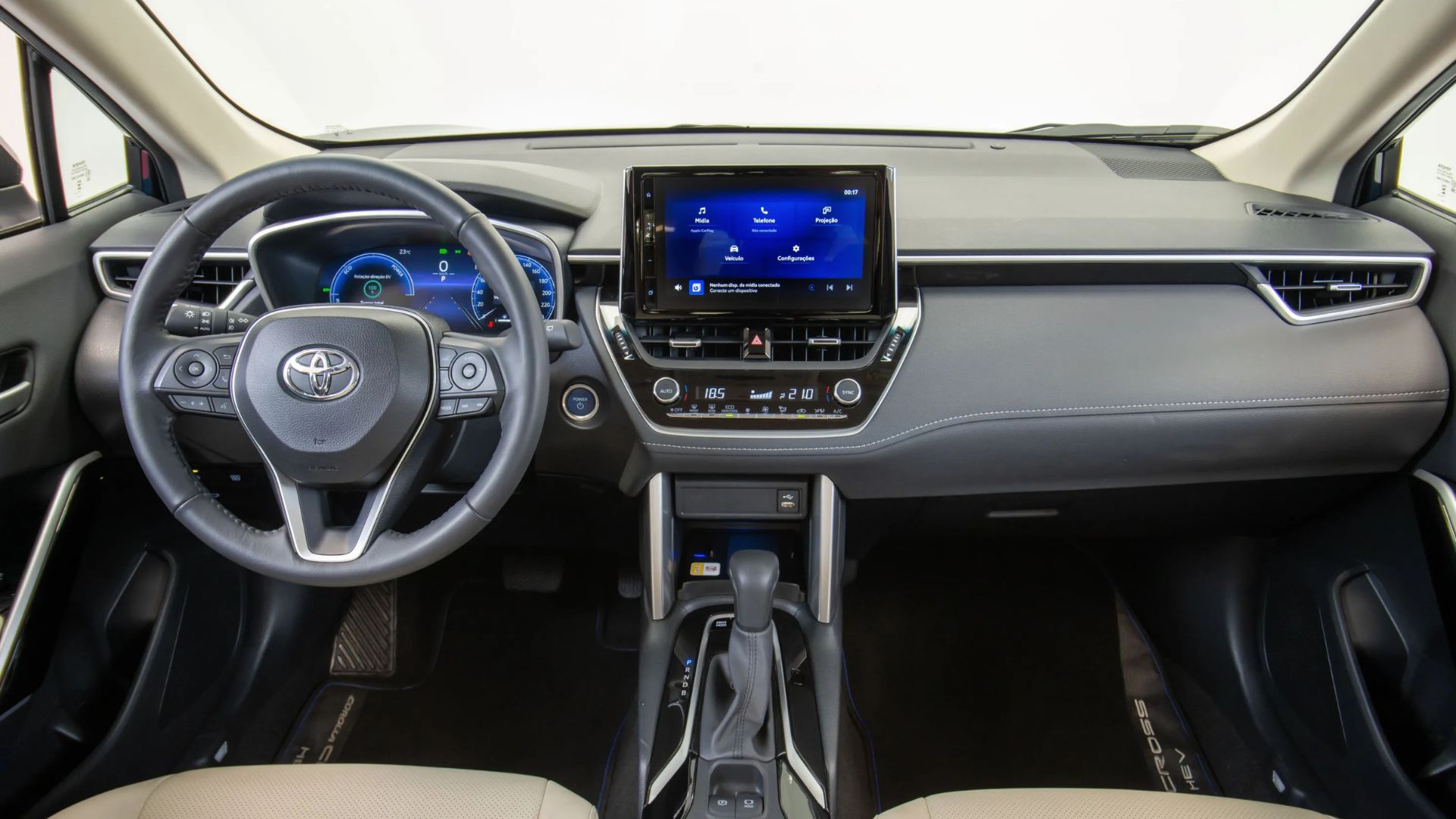
With 122 hp, fuel consumption of up to 17.7 km/l, and a trunk capacity of 440 liters, this hybrid SUV impresses even though it costs up to R$ 47,000 more than the Yaris — meet the Toyota Corolla Cross.
-
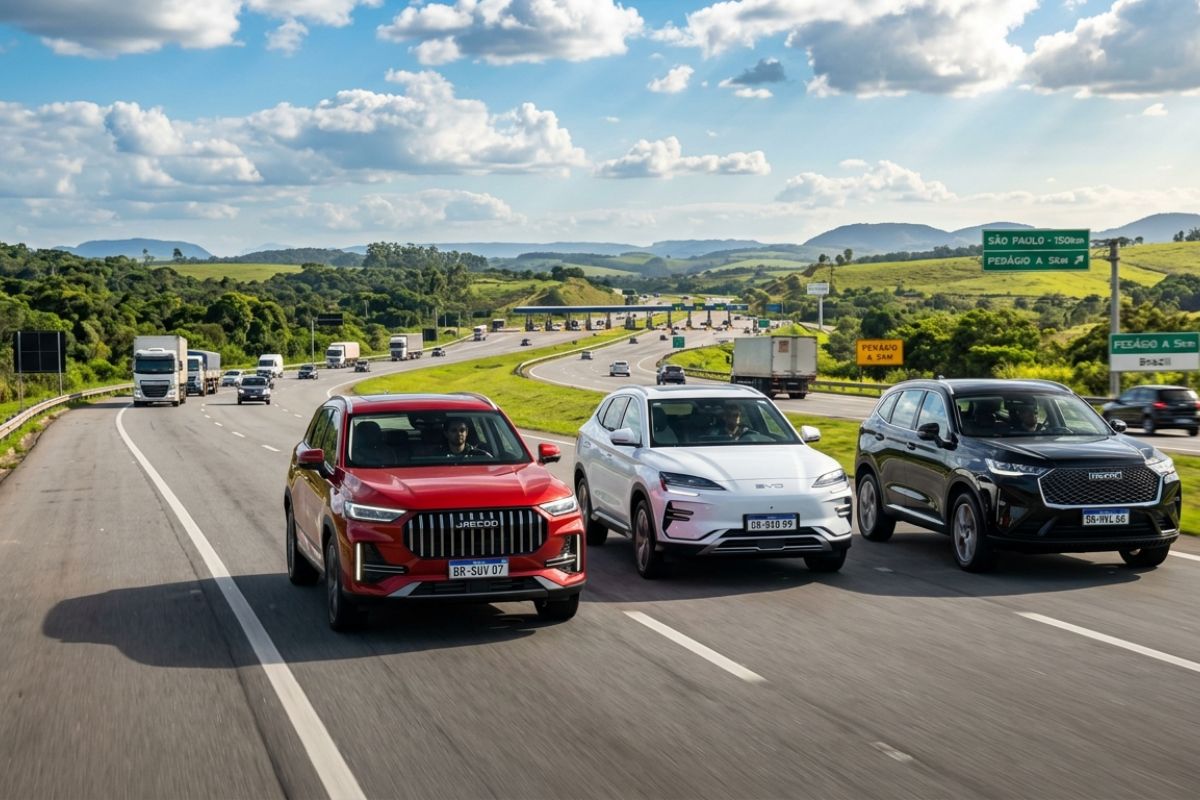
600 km with three Chinese plug-in SUVs, same mode and air conditioning on: Jaecoo 7, BYD Song Plus, and Haval H6 hit the road, and the pump reveals who was truly the most economical.

Understanding The Levels Of Autonomous Driving Beyond Tesla And BYD
Currently, cars available on the market reach, at most, Level 2 Automation, which still requires constant attention from the driver. Tesla and BYD compete for this space by offering increasingly advanced solutions, such as Autopilot and Full Self-Driving (Supervised).
To understand what is at stake, it is crucial to know the official classification:
- Level 1 – Driver Assistance
- Level 2 – Partial Driving Assistance
- Level 3 – Conditional Automation
- Level 4 – Advanced Automation In Limited Areas
- Level 5 – Full Autonomy, Without Steering Wheel Or Human Intervention
In the initial levels, responsibility still falls on the human driver. From level 3 onward, cars take control almost entirely, with Level 5 having no steering wheel at all, and passengers will not be able to interfere with the driving.
This is the peak of the revolution: vehicles capable of operating in any environment, under any conditions, surpassing the reaction and attention capabilities of human drivers themselves.
The Near Future: Between Technological Advances And Regulatory Barriers
The Chinese BYD stands out as a heavyweight rival by offering models with automation features at more affordable prices, democratizing the technology. Tesla, in turn, is testing the Robotaxi project in Austin, Texas, based on Level 4 vehicles. These units operate in restricted geographic areas, with detailed HD maps and under controlled weather conditions.
However, for Level 5 to become a reality, it will be necessary to overcome obstacles beyond technology: laws, regulations, and ethical debates. How do you hold a car responsible in case of an accident? What will be the limits of use on public roads? These questions still hinder progress, but the expectation is that evolution will be faster than one might imagine.
According to information released by specialized outlets like Ecoticias, the automotive market is already preparing for this leap, even if legal approval may take a few more years. The fact is that the transition to autonomous driving is underway and promises to transform not only the industry but also the way we perceive the act of driving.







-

Uma pessoa reagiu a isso.