








Piece created in Paris by Louis Réard faced bans, broke moral standards, and gained new forms on Brazilian beaches.
A small piece of clothing launched in Paris in July 1946 managed to profoundly transform fashion, customs, and women’s relationship with their own bodies.
The bikini turns 80 in 2026 after going through periods of censorship, religious condemnations, and attempts at prohibition in different countries.
Created by French engineer Louis Réard, the garment left the female navel exposed and provoked an immediate reaction in a society accustomed to more closed swimsuits.
-
Removing the boards next to the bathtub during a bathroom renovation in the United States, a family found a secret room and a staircase leading up to a hidden room, and the video of the mystery surpassed 3 million views.

-
Growing by 2.3% in the year and reaching 12.7 trillion reais, Brazil’s economy closed 2025 in expansion for the fifth consecutive year, with growth driven by services and sustained by household consumption.

-
He sold the Harley for 15 thousand, bought an old hull for 7.5 thousand, and turned it into a floating house of just over 10 square meters, where he now lives paying $280 per month with electricity, water, shower, and laundry included.
-
Goodbye, clothesline: Japanese technique for drying clothes indoors better and faster relies on a simple method that can transform drying without devices, products, or renovations.


Decades later, Brazil adopted the piece, reduced its designs, and transformed the so-called Brazilian bikini into an international reference.

French engineer creates the world’s smallest swimsuit
The modern creation of the bikini was presented by Louis Réard at the Molitor public pool in Paris in July 1946.
Réard was 50 years old and had left the automotive sector to take over his mother’s lingerie business.
The model consisted of two small pieces and resembled more a pair of panties and a bra than the swimsuits worn at that time.
Women’s garments divided into two parts already existed previously.
French designer Jacques Heim, for example, had launched a model called “atom” in 1932, inspired by its small dimensions.
The proposal, however, met resistance among women who avoided showing their bellies and navels in public.
Réard reduced the amount of fabric even further and presented his invention as the world’s smallest swimsuit.

Bikini name emerged after nuclear tests
The name chosen for the piece was directly linked to international events at that time.
The United States was conducting nuclear bomb tests at Bikini Atoll, located in the Marshall Islands in the Pacific Ocean.
Réard believed that his creation would cause an impact similar to an explosion on fashion and customs.
No professional model agreed to wear the outfit during the public presentation.
The creator then hired dancer Micheline Bernardini, who performed erotic shows at the Casino de Paris.
Bernardini made history by appearing in a bikini in front of the public at the Molitor pool.
Piece causes scandal and faces bans
The launch provoked a strong reaction from authorities, religious groups, and conservative sectors of the press.
The bikini was treated as an affront to morality codes and social rules that controlled the exposure of the female body.
European countries went so far as to restrict or ban the use of the piece on public beaches.
Police also fined women who wore bikinis on Italian beaches until the late 1950s.
The first edition of Miss World, held in 1951, further amplified the controversy.
Swedish model Kerstin Håkansson received the crown wearing the small swimsuit.
Pope Pius XII condemned the piece and classified it as sinful and contrary to Christian standards of modesty.
Cinema and celebrities boost the novelty
Despite the criticism, the bikini began to gain ground among artists and celebrities.
Actress Brigitte Bardot appeared wearing the piece on the beaches of the French Riviera during the 1950s.
Her role in the film And God Created Woman, released in 1956, helped bring the outfit to cinema and popular culture.
Swiss actress Ursula Andress also marked this trajectory in 1962.
She appeared in a white bikini in the film Dr. No, creating one of the most iconic images in cinema history.
During the 1960s, the sexual revolution transformed the meaning of the garment.
The bikini stopped representing only scandal and became associated with freedom, youth, and changing customs.
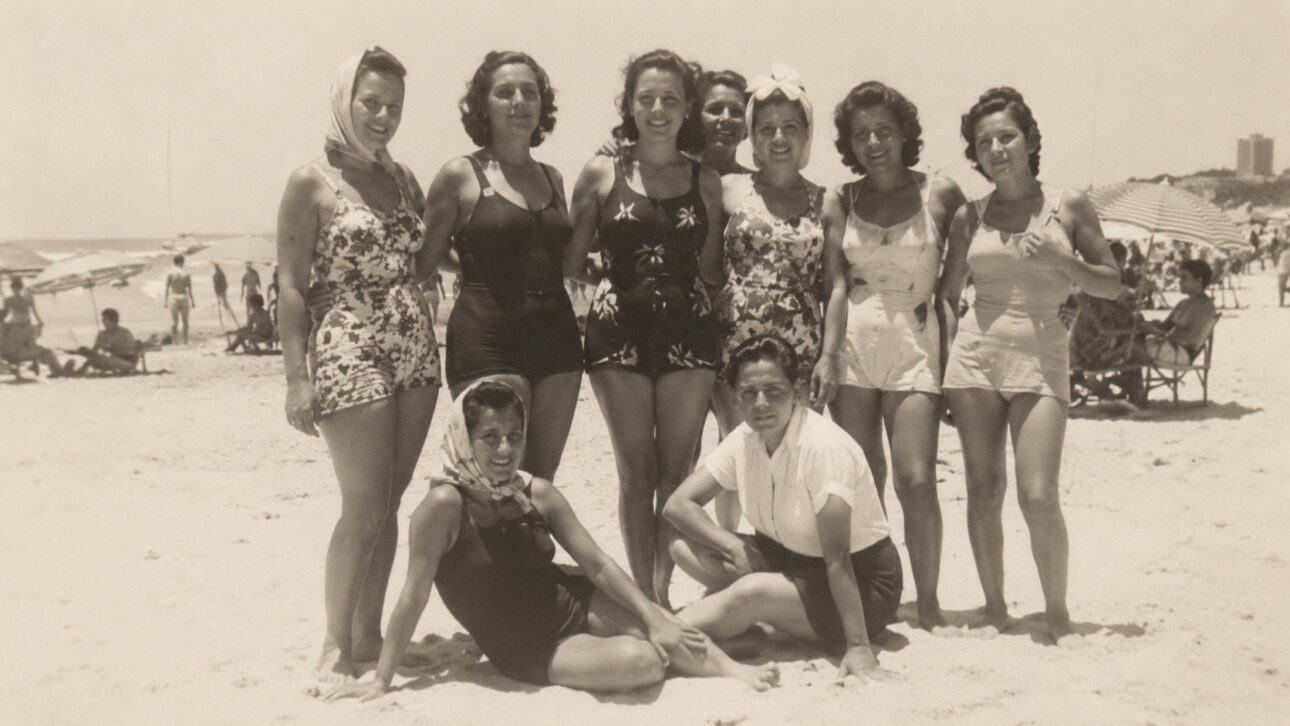
Brazil becomes the natural territory of the bikini
The bikini found a favorable environment for its consolidation in Brazil.
The tropical climate, bustling beaches, and outdoor leisure helped integrate the garment into daily life.
Actresses, vedettes, models, and muses of the Carioca beaches expanded its popularity during the 1950s and 1960s.
Carmem Verônica and Angelita Martinez drew attention by wearing bikinis on the sands of Copacabana.
Photographs of the artists helped transform the attire into a part of Brazilian beach culture.
Marta Rocha also wore a two-piece outfit during the contest that elected her Miss Brazil in 1954.

German anticipated trend on Rio’s beaches
Before the consolidation of the French model in the country, Erna Miriam Etz Kaufmann was already wearing a similar piece in Rio de Janeiro.
The German designer and painter arrived in Brazil during the 1930s after fleeing Nazism.
Erna frequented Arpoador wearing a swimsuit divided into two parts, produced by herself.
The garment was larger than the models launched later, but it had a similar structure.
The book The Bikini Made in Brazil, by journalist Lilian Pacce, records Erna wearing the piece created in France in Rio, in 1948.
Leila Diniz challenges the standards of the time
Actress Leila Diniz starred in one of the most remarkable episodes of Brazil’s relationship with the bikini.
Leila appeared pregnant wearing the piece on the beach and faced the moral standards imposed on women at that time.
Former model Helô Pinheiro, immortalized as the Girl from Ipanema, also strengthened this association.
Tourism, cinema, television, and advertising spread the image of Brazilian beaches to other countries.
The bikini came to represent summer, the Carioca lifestyle, and national beach fashion.
Jânio Quadros tries to limit the use of the piece
The popularization of the garment also faced resistance within Brazil.
The then-president Jânio Quadros adopted conservative measures in 1961 and banned the use of bikinis in beauty contests.
The decision revealed a contradiction of that historical moment.
The garment was strengthening as a symbol of modernity and female freedom.
The State, however, still tried to control body exposure and impose moral standards on society.
Brazilian designs conquer the world
Brazil not only incorporated the bikini into its culture.
Brands, designers, and consumers also modified their cuts, sizes, and ties.
Smaller models gained space from the 1970s onwards.
Narrow sides, high-cut pieces, and different tanning styles began to define the aesthetics of Brazilian beaches.
The high-leg model stood out during the 1980s.
Its high sides created a visual effect of elongating the silhouette and later reached international runways.
In the 2000s, the so-called Brazilian bikini began to be recognized as its own category.
Small designs, side ties, and high cuts became valued products in the United States and Europe.
Female freedom or sexualization?
The bikini remains at the center of a dispute between freedom and control of the female body.
Many women see the piece as a way to occupy public spaces, express identity, and exercise personal choices.
The same image, however, was also used to create an overly sexualized stereotype of Brazilian women.
Advertising, tourism, and entertainment have, at different times, reduced female diversity to a single body standard.
Recent campaigns have started to value inclusion, comfort, representation, and different body types.
The idea that every body can be considered a beach body gained strength during the 2010s.
What does the future hold for the bikini?
The bikini has spanned eight decades, accompanying cultural, social, and aesthetic transformations.
Sporty, handcrafted, minimalist, high-cut, and leisure-oriented models currently coexist in the market.
The piece no longer follows just one predominant trend.
Freedom, comfort, and diversity have come to occupy important positions within beach fashion.
The garment was born with a name inspired by nuclear tests and caused a true explosion in customs.
Brazil, in turn, transformed the piece into one of the world’s greatest symbols of beach, behavior, and cultural identity.
Do you believe the bikini mainly represents freedom and autonomy or still reinforces standards and pressures on the female body? Share your opinion!


