





 Portuguese
  English
  Spanish
  4 min of reading
  0 comments



Europe Stores 61 Billion Cubic Meters of Natural Gas in Caverns to Face Winter and Crises Like War and Russian Blockades. Understand How This Strategic Reserve Works.
When winter arrives and temperatures plummet across much of the continent, Europe knows it cannot rely solely on luck. That’s why, beneath fields, forests, and even cities, there exists an invisible yet essential network to keep homes warm: gas caverns used to store part of the continent’s natural gas reserve. In 2024, the stored volume surpassed 61 billion cubic meters, providing a strategic protection against the severe cold and potential supply crises, whether due to climate issues or geopolitical factors like a Russian blockade.
How the Underground Reserve Protecting Europe Works
The natural gas deposits in Europe are not exactly ordinary deposits. They are located in large caverns created in salt formations or in depleted gas fields which have been converted into reservoirs. These structures can securely store large volumes of gas, with the advantage of allowing quick withdrawal of fuel when demand rises in winter.
This system has been developed over decades and gained prominence after 2022, when the war between Russia and Ukraine raised the alarm about the energy crisis in Europe.
-
Petrobras evaluates suspension of sales to distributors and considers canceling the cooking gas auction following guidelines from the Federal Government.
-
Lula reveals a masterstroke by Petrobras to undo a deal made by Bolsonaro, which involves the return of an important refinery that currently produces less than half of what was expected and makes Brazil dependent on international diesel.
-
A study confirms that the natural gas sector will reduce greenhouse gas emissions in Brazil by 0.5% and accelerate the energy transition by 2026.

-
Petrobras implements a severe adjustment and confirms a 55% increase in the price of aviation kerosene with a proposal for installment payments for the companies.


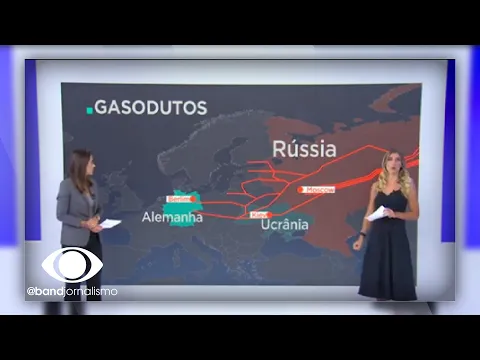
The historical dependence on Russian gas pushed European Union countries to rush to fill their underground caverns before the coldest months, ensuring that families, businesses, and hospitals would not run out of energy at the most critical moment of the year.

Why Europe Bets on Gas Caverns
Having a reserve of natural gas stored in caverns offers several strategic advantages. First, it is an effective way to protect the supply against unforeseen interruptions, such as an export blockade or pipeline failures.
Second, the caverns allow for market balancing: when consumption drops, gas can be stored, and when demand surges in winter, the fuel is released without needing to wait for new imports.
The storage infrastructure also helps to contain price volatility. In times of crisis, such as during tensions with Russia, the ability to quickly access these reserves prevents even larger spikes in gas costs, benefiting both consumers and the industry.
Where the Main Reserves Are Located
The majority of the underground gas caverns in Europe are concentrated in countries like Germany, Austria, the Netherlands, and France. Ukraine, even during war, continues to operate some of the continent’s largest facilities, albeit with a constant risk of infrastructure damage.
In Germany, the caverns in Bavaria and Lower Saxony are key points in the system. Austria houses large deposits in areas like Haidach, while in the Netherlands, the Bergermeer field stands out as one of the largest salt cavern deposits. Together, these structures are essential for keeping the continent warm and factories operating in case of external supply cuts.
The Relationship Between War and Underground Reserves
The recent geopolitical landscape has turned gas caverns into true underground treasures. Since the onset of the conflict in Ukraine, EU countries have doubled their efforts to fill the reservoirs before winter.
The goal of many governments is to reach at least 90% storage capacity before November, as a way to ensure supply even if the flow of Russian gas is interrupted.
Furthermore, the use of underground reserves has become a symbol of the quest for greater energy independence. The war has accelerated projects to diversify suppliers and expand the use of liquefied natural gas (LNG) imported from other continents, such as the United States and Qatar.
Challenges and the Future of Energy Security in Europe
Although the strategy of storing gas in caverns is effective, it is not a definitive solution to the energy crisis in Europe. Gas needs to be purchased in advance and often at high prices in the international market. Additionally, the total capacity of the caverns is limited: even the 61 billion cubic meters stored represent only a fraction of the continent’s annual consumption.
The future of energy security in Europe must involve a combination of solutions: increasing storage capacity, expanding renewable sources, electrifying heating systems, and improving the energy efficiency of buildings. The goal is to reduce dependence on natural gas and make the continent more resilient to external shocks, such as wars and trade blockades.
The gas caverns in Europe demonstrate how invisible infrastructure can be vital in times of crisis. They serve as a reminder that planning and investment in energy security are not just economic issues, but also matters of social protection and political stability.
In an increasingly unstable world, the gas stored underground in Europe is more than just fuel: it is insurance against the cold and against the uncertainties of the international landscape.







Seja o primeiro a reagir!