





 Portuguese
  English
  Spanish
  3 min of reading
  0 comments


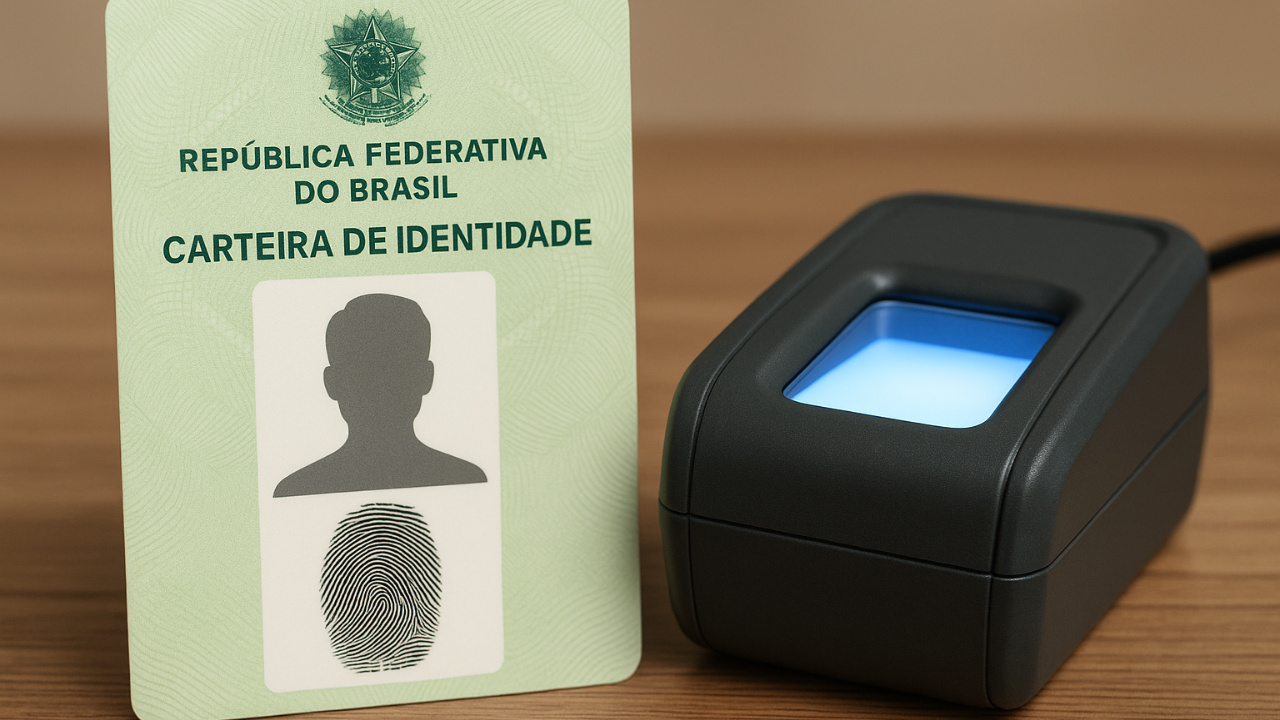
The Government Announces Deadlines To Make Biometrics Mandatory For Social Benefits. Check Dates, Requirements, And Who Is Exempt.
The Federal Government announced on Wednesday (November 19, 2025) that it will implement the mandatory biometric registration for beneficiaries of social programs.
The measure, announced by the Ministry of Management and Innovation in Public Services (MGI), through Esther Dweck, establishes a schedule until 2028, with regulations to be published on Friday (21).
The goal: to reduce fraud, improve control, and ensure greater security in accessing benefits. And everything will be done in a phased manner, so those who already have biometric registration will experience little change.
-
Larger than entire cities in Brazil: BYD is building a 4.6 km² complex in Bahia with a capacity for 600,000 vehicles per year, but the discovery of 163 workers in conditions analogous to slavery has shaken the entire project.

-
With an investment of R$ 612 million, a capacity to process 1.2 million liters of milk per day, Piracanjuba inaugurates a mega cheese factory that increases national production, reduces dependence on imports, and repositions Brazil on the global dairy map.

-
Brazilian city gains industrial hub for 85 companies that is equivalent to 55 football fields.

-
Peugeot and Citroën factory in Argentina cuts production by half and opens a layoff program for more than 2,000 employees after Brazil drastically reduced purchases of Argentine vehicles.


Registration Schedule And Requirements
According to a statement from the Ministry, the requirement for biometric registration will occur in stages, starting to take effect from November 21, 2025.
Who Will Be Affected And Who Is Exempt
The schedule specifically affects beneficiaries who still do not have biometric registration in any of the three databases.
Beneficiaries of programs such as maternity allowance, disability benefits, death pensions, unemployment insurance, salary bonuses, and Bolsa Família have a different deadline until May 1, 2026.
On the other hand, elderly individuals over 80 years old, migrants, stateless persons, people living abroad, persons with difficulties in mobility, or residents of hard-to-access areas are exempt from the requirement.
Why Did The Government Make This Decision?
According to Minister Esther Dweck, 84% of beneficiaries already have biometric registration in some official database (TSE, CNH, or CIN).
Therefore, the new schedule aims to gradually disconnect from the old databases and concentrate the registration in CIN as a single standard to avoid record duplication.
Additionally, the adoption of mandatory biometrics aims to increase the security of social benefits, reduce fraud, and make management more efficient.
In a press conference, the minister added that “for those who already have biometrics, there will be very few changes until December 31, 2027. Our goal is that by the end of 2027, CIN will be the only registration database for social programs.”
How Will The Transition Be And What Should Beneficiaries Do
The change will not be automatic for all beneficiaries at the same time. As reported, “people will be notified about whether or not they have biometrics. We will monitor and explain how to proceed.”
Those who already have biometric registration in any of the maintained databases (TSE, CNH) do not need to rush.
The requirement will only apply to routine maintenance procedures or new applications.
If the beneficiary still does not have biometrics, they should prepare according to the schedule: by May 2026 there is an opportunity for regularization; after that, for new benefit requests or renewals, having CIN with biometrics will be necessary.
Practical Impacts And Next Steps
For millions of Brazilians receiving social benefits, the announcement implies a gradual change in routine, but with active communication from the government.
The recommendation from the government department is that those without biometric registration start the process as soon as possible to avoid setbacks.
Additionally, managers of social programs will need to adjust control systems, integrate databases, and streamline service flows to include biometrics as a mandatory criterion.
On the other hand, beneficiaries who already have registration will not see immediate changes — the focus is on those who are outside the databases.
By 2028, therefore, the country’s social benefits system will align with a single standard of biometric identification via CIN, which can bring gains in transparency, control, and agility.









-

Uma pessoa reagiu a isso.