Portuguese
  Spanish


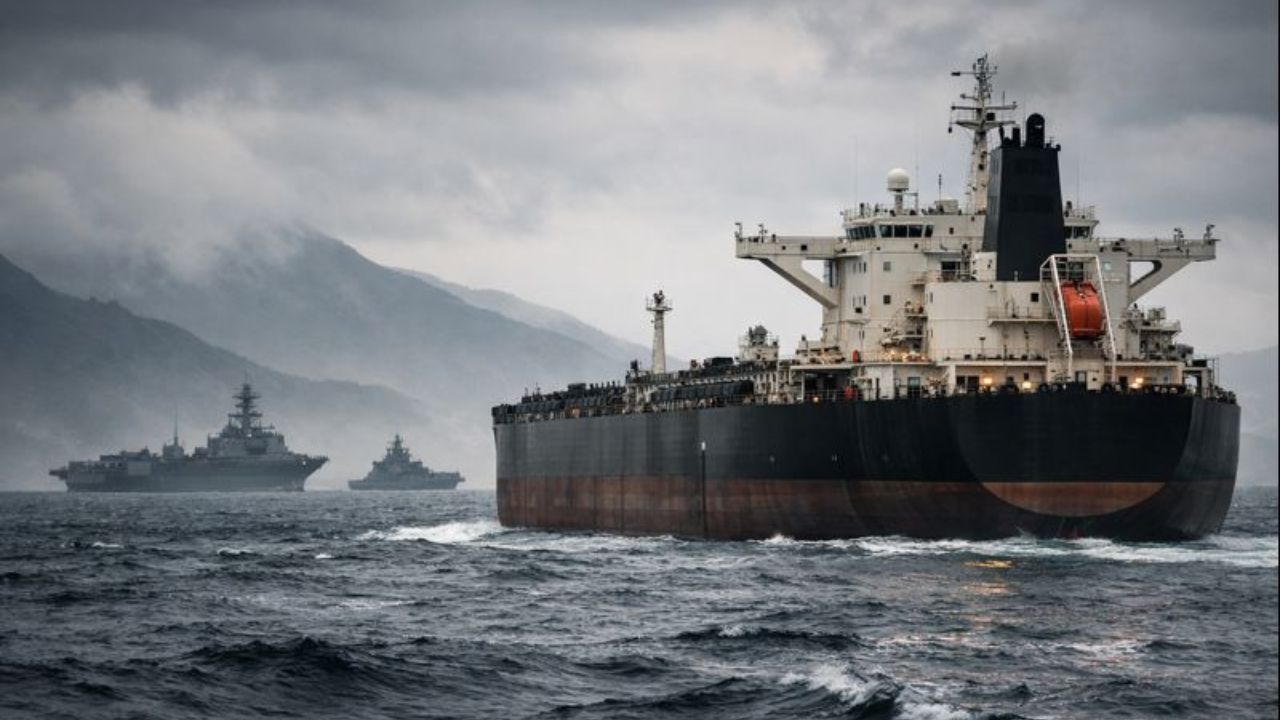

Trump Announces Total Blockade Against Venezuelan Oil Tanker and Escalates Tension in Oil, with Risk of Backfire for the USA.
The Trump administration announced on Tuesday a blockade “total and complete” against oil tankers under sanctions entering or leaving Venezuela in the Caribbean, with the stated aim of pressuring Nicolás Maduro; however, experts warn that the measure could impact the Venezuelan economy, raise costs of routes, and create a backfire effect contrary to what Washington desires, reopening geopolitical disputes around oil and resonating in countries closely following the issue, like Brazil under Lula.
Why Oil Is So Important for Venezuela
In practice, oil does not function solely as an export product for Venezuela. It supports the influx of foreign currency and, consequently, the capacity to import essential items such as food and medicine.
Thus, when Washington targets a sanctioned oil tanker, the impact may extend beyond the Miraflores Palace. It tends to affect supply chains and the daily lives of those who rely on the economy functioning.
-
Explosion at QatarEnergy Plant in Ras Laffan Kills 13 and Injures 66; Investigation Rules Out Sabotage

-
Brazil’s Búzios Oil Field Sets Record with 1.2 Million Barrels Per Day, Strengthening Global Leadership in Deepwater Production

-
Petrobras and Equinor Reach Agreement for 50% Stake in Itaimbezinho Block in Brazil’s Pre-Salt Campos Basin
-
Venezuelan Refinery Halts Operations After Power Outage, Highlighting Country’s Energy Infrastructure Challenges


What Trump Said and How He Justified the Measure
Trump announced the decision via social media and accused the Maduro government of using “stolen” oil to finance itself and sustain “narcoterrorism, human trafficking, murders, and kidnappings.”
By placing these accusations at the center of the announcement, the U.S. president seeks to legitimize the escalation as part of a strategy to combat crime.
Still, analysts see a risk that the rhetoric may heighten tensions without delivering the intended result.
Seizures at Sea and Increased Military Pressure
Statements from Trump came a week after Washington seized a oil tanker off the Venezuelan coast, something Caracas denounced as “blatant theft” and “an act of piracy.”
Additionally, this Saturday (20/12), the U.S. reported that it had seized a second vessel in international waters near the coast of Venezuela. Meanwhile, the narrative of “siege” gained strength in the presidential discourse.
“Surrounded by the Largest Navy”: The Message of Strength and Its Risks
On Tuesday, Trump also stated on the social network Truth Social that Venezuela is “completely surrounded by the largest navy ever assembled in South American history,” adding that this military presence “will continue to grow” and will be “something never seen before.”
Caracas reacted and condemned the blockade order as a “grotesque threat” that, according to the Maduro government, aims to “steal” the country’s wealth.
This clash of narratives, therefore, raises the likelihood of new diplomatic and operational frictions in the Caribbean.
More Than 30 Tankers Under Sanctions and a Weakened Sector
The context includes a broad set of vessels: there are “more than 30 tankers under sanctions,” according to the source text.
This hardens the environment for transport, insurance, and freight hiring, even as buyers attempt to maintain indirect flows.
At the same time, Venezuela currently produces about 1 million barrels of crude oil per day, near 1% of global production.
This level is far below the more than 3 million barrels per day that the country produced in 1998, before the rise of former president Hugo Chávez.
Why the Blockade May “Backfire” on the USA
Several experts warn that a blockade of this magnitude could create a boomerang effect. The reason is simple: as the risk increases, logistical and financial costs also rise, and uncertainty tends to spread among routes and intermediaries.
Moreover, if the measure tightens too much, it may push trade toward less transparent and harder-to-monitor alternatives.
On the other hand, since Venezuelan production represents a fraction of the global market, the immediate impact on oil prices may be limited, at least in the short term.
Where Lula Enters the Radar and Why Brazil Is Watching
In Brazil, the issue tends to come onto the radar of the Lula government because sanctions, blockades, and tensions in the Caribbean influence expectations regarding energy, trade, and regional stability.
Even though Brazil is not at the center of the operation, increasing geopolitical noise usually affects negotiations and investors’ risk assessment.
Thus, the announcement by Trump is not limited to the U.S.-Venezuela dispute: it amplifies pressure on the flow of oil, on every oil tanker involved, and on the diplomatic dynamics in the Americas.
And it is precisely here that lies the risk that the strategy, in trying to isolate Caracas, may end up creating costs and reactions that Washington does not fully control.