





 English
  Francês
  Alemão
  Italiano
  Japonês
  Norueguês
  Portuguese
  Spanish
  4 min of reading



The National Bank for Economic and Social Development (BNDES) is promoting changes in its support strategy for the reindustrialization of the country, according to its Director of Productive Development, Innovation and Foreign Trade, José Luis Gordon.
At first, the goal is to increase BNDES’s support in the reindustrialization of the country, which is currently 1% of its credit portfolio, to 2%. Non-repayable or preferential interest funds will be used to shape specific lines. However, these sources have limited resources, so the most advantageous conditions will not be offered across all BNDES lines.
For Gordon, the innovative capacity of Brazilian industries is vital for them to compete internationally and have a competitive country. “How does a development bank not support innovation?” he questioned.
The President of BNDES, Aloizio Mercadante, also advocates that policies to foster innovation are essential for the reindustrialization of the country. The bank’s target is to reach 5.5% of the credit portfolio allocated to business innovation.
-
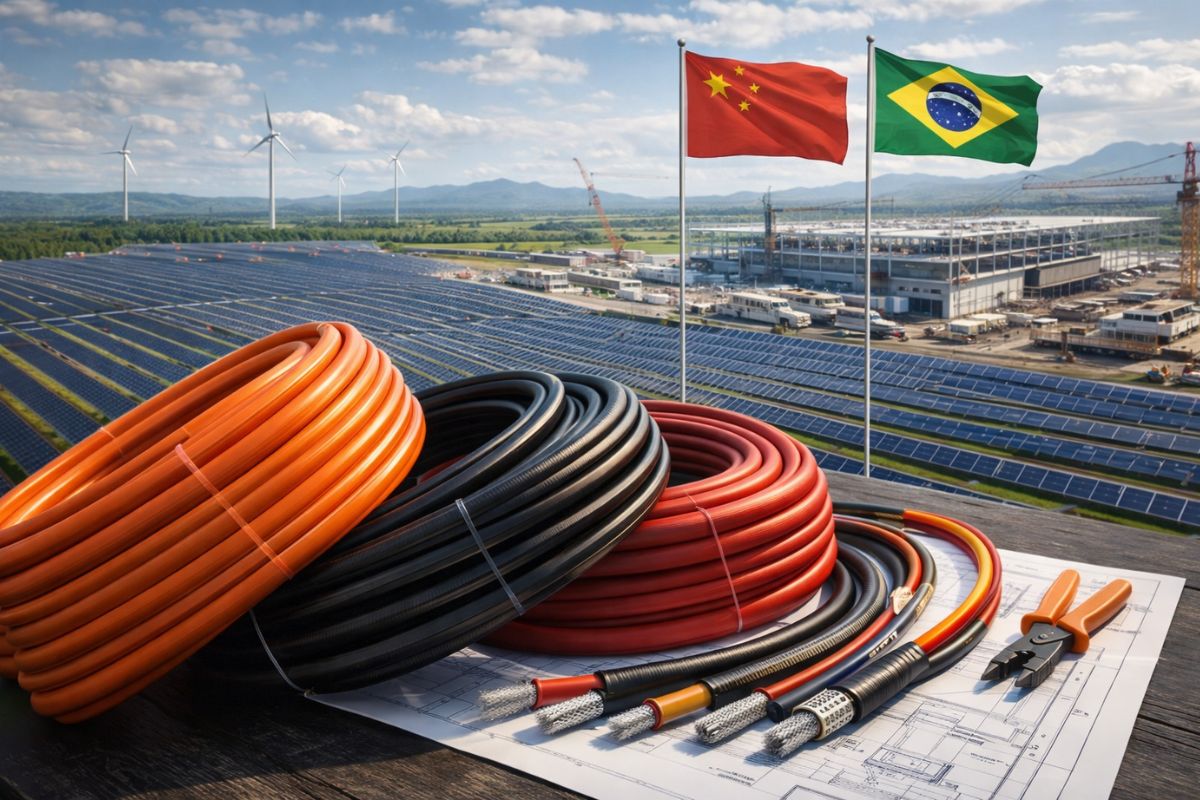
Chinese giant worth nearly R$ 4 billion that manufactures cables for electric cars, solar energy, and robotics wants to open a factory in SC.
-
Many employers do not know, but the law guarantees domestic workers a 25% increase in salary during trips, 50% for overtime, 20% for night shifts, and 17 additional benefits that can lead to labor lawsuits if not paid.

-
Gasoline prices soar and the question arises: is ethanol more advantageous? The 70% rule reveals the limit with gasoline.

-
The government has made a decision and is starting a test with more ethanol in gasoline, anticipating a mixture of up to 35%, diesel with 25% biodiesel, and a study to assess the impacts on engines.


Reindustrialization of the Country: The Minister of Economy Announced an Investment Plan in the Telecommunications Sector to Connect Public Schools to the Internet. The Government Plans to Invest About R$1 Billion in the Next Four Years, of Which R$ 150 Million in 2021.
However, the Ministry plans to develop two new financing lines for technology parks and startups. These lines will include non-repayable resources from Senai, Sebrae, Embrapii, Finep, and FNDCT. The idea is to offer more advantageous credit conditions for these innovative companies.
The Minister also spoke about the possibility of adjusting the TLP interest rate – the interest rate that guides BNDES financing – to attract greater industry demand for the bank’s lines. However, experts believe that BNDES credit should be used strategically to avoid distortions and not be directed to the entire industrial sector.
The Action Aims to Boost the Brazilian Economy Through Innovation and Modernization of Public School Infrastructures. This is a Great Opportunity for Innovative Companies to Strengthen Their Businesses and Collaborate in the Transformation of the Country.
The Brazilian industrial sector has suffered significant desiccation in recent years. According to data from the Institute for Industrial Development Studies (Iedi), the industry’s participation in the national economy fell from 21% in the mid-1970s to 11.9% in 2021. The expansion of BNDES between 2000 and 2010 did not manage to reverse this trend.
Rafael Cagnin, Chief Economist at Iedi, stated that the loss of a high-tech intensity sector contributed to this decline in the quality of Brazilian industry. He further emphasized that it is necessary to have high complexity technology services to generate good jobs and better pay.
The Federation of Industries of Rio (Firjan) advocates for transversal reforms that could benefit all industrial companies. Jonathas Goulart, Economic Studies Manager at Firjan, said that slightly easing credit for small and medium enterprises would have a relatively small effect on the economy. For him, it would be more effective to advance reforms that improve “macroeconomic balance” in the long term, such as tax reform.
Thus, it is necessary to take structural measures to promote the development of the national industry. High inflation and interest rates, unfavorable exchange rate, imbalances in government accounts, political uncertainties, infrastructure bottlenecks, tax complexity, lack of skilled labor, and high energy costs are some of the factors that negatively impact the Brazilian industrial sector.
The National Bank for Economic and Social Development (BNDES) is Planning Changes to Local Content Rules to Modernize Machinery, According to the Bank Director, Gordon.
These changes will only be implemented in specific lines for emerging industrial segments, as was done in the wind energy industry, which was successful.
In the early 2000s, when the first wind farms were selected in auctions by the National Electric Energy Agency (Aneel), BNDES created a credit line with low-interest rates to finance projects. As the turbines and blades of the towers were all imported, the bank relaxed local content requirements with a timeline: over time, the minimums required would increase to encourage the establishment of factories in Brazil.
Therefore, the next step in the new management’s planning is to launch financing lines for technology parks and startups. Other activities will also benefit, such as the generation of offshore wind energy and the production of green hydrogen. The latter could use renewable energy generated by offshore wind farms to produce clean fuel and thus contribute to the transition to a low-carbon economy.









Seja o primeiro a reagir!