





 Portuguese
  English
  Spanish
  5 min of reading
  4 comments


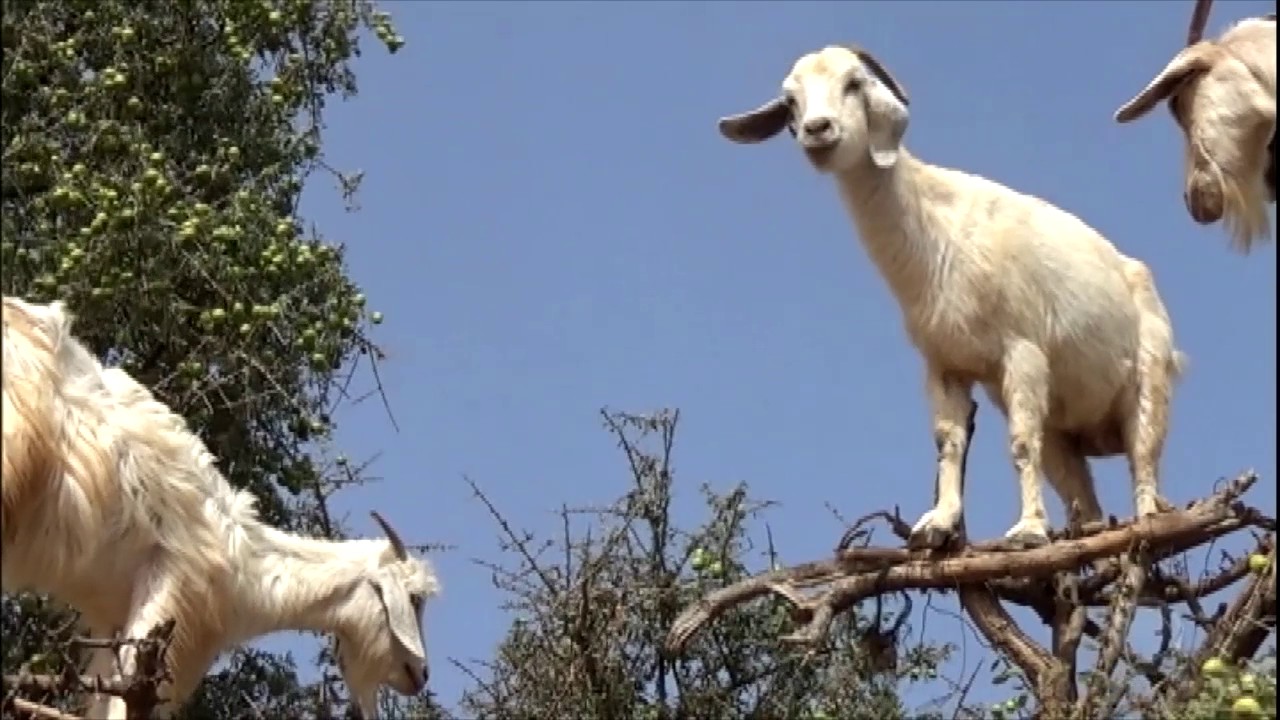


Jumping Between Cliffs and Wires on Steep Slopes, the Feral Goat Reveals How Muscle Impulse and Spatial Memory Define Survival.
The image of a free goat on rocky slopes has nearly become a symbol of animal ruggedness. But when closely observing a feral goat — a descendant of domestic goats that have returned to the wild — one realizes that it is not just a resilient herbivore. It is an animal that converts rugged geography into an escape plan, ravines into trails, and improvised wire fences into aerial bridges. What seems like stubbornness or casual agility is, in fact, a refined set of biomechanics, decision-making, and environmental reading, shaped by predators, lack of food, and hostile terrain.
The feral goat does not climb cliffs and jump over ravines to “show off skill.” It does so because the ground, where grass should be, is often a territory of threat. Height becomes an advantage, the slope becomes shelter, and the relief becomes an architecture of survival.
Slopes and Cliffs as a Biological Defense Strategy
In many regions, feral goat populations establish themselves in rocky and sloped areas. This reduces exposure to land-based predators such as dogs, lynxes, cougars, and even humans. Simple physics explains the advantage: large, heavy bodies struggle to maintain balance on steep gradients, while the goat, with a low center of mass and flexible joints, moves with ease.
-
The eggshell that almost everyone throws away is made up of about 95% calcium carbonate and can help enrich the soil when crushed, slowly releasing nutrients and being reused in home gardens and vegetable patches.

-
This farm in the United States does not use sunlight, does not use soil, and produces 500 times more food per square meter than traditional agriculture: the secret lies in 42,000 LEDs, hydroponics, and a system that recycles even the heat from the lamps.

-
The water that almost everyone throws away after cooking potatoes carries nutrients released during the preparation and can be reused to help in the development of plants when used correctly at the base of gardens and pots, at no additional cost and without changing the routine.

-
The sea water temperature rose from 28 to 34 degrees in Santa Catarina and killed up to 90% of the oysters: producers who planted over 1 million seeds lost practically everything and say that if it happens again, production is doomed to end.



What begins as challenging topography for most vertebrates becomes safe territory for the goat. It masters slopes with inclines that would make any other ungulate retreat. The combination of traction, spatial memory, and muscular ability makes the cliff less an obstacle and more a defensive wall.
Biomechanics: Hooves That Function as Clamps and Dampers
The goat’s anatomy explains a lot of this ability. The hoof is not a rigid sole, but a double structure with hard edges and a softer central part. This allows the animal to “grasp” small rock protrusions, establishing points of friction even where a human finger would struggle.
During short jumps, the knee and carpal joints absorb impact and redistribute load efficiently, preventing fractures.
The body is compact, the leg muscles are dense, and the center of gravity is placed lower than in other herbivores of similar size. The result is an animal that “sticks” to the rock without truly adhering, using geometry and friction instead of claws or suction cups.
Jumps Over Wires and Ravines: Biomechanics + Memory + Improvisation
In many rural areas, feral goats have been observed jumping over stretched wire, small ditches, and narrow ravines to access pasture or escape makeshift fences. The scene may look chaotic, but it is far from random.
To execute this jump, the goat visually calculates distance, slope, and soil type. The impulse is generated in a fraction of a second; the body projects itself with the head low and the tail stabilizing the axis. Even on wires that sway with contact, there is a recovery of balance before the next jump.
What most perceive as “stubborn insistence” is, in fact, a decision-making process based on learned attempts and socially refined behaviors within the herd.
Spatial memory — the ability to register paths, dangerous points, holes, and unstable surfaces — is essential for the success of this maneuver. Safe routes are repeated, bad routes are abandoned. Among rocks and fences, the goat quickly learns where to step and where not to step.
Selective Diet and Vertical Exploration of the Environment
Grazing on cliffs and slopes is not just defense; it is feeding. In many degraded areas, flat soils have already been grazed by other species (domestic or wild), leaving vegetation only in sloped, protruding locations or surrounded by obstacles.
The feral goat climbs to these points because there is still food — bushes, shoots, and herbs that other species cannot reach.
This behavior creates an interesting arrangement: the worse the terrain, the greater the availability of food for the goat. This reinforces adaptation and encourages the species to remain in these niches, even when the environment offers simpler routes.
Muscle Impulse and Engineering of Movement in Hostile Terrain
Low-rotation jumps and controlled landings depend on body torque and muscular power. Unlike a feline, which uses explosion and elasticity, the goat works with the minimum necessary energy and with redundant cushioning.
The body prioritizes stability over speed, ensuring that the first contact with the rock is safe and that there are escape surfaces should something go wrong.
This fine control is especially observed in rapid descents, where the goat alternates between lateral supports and small controlled slides to avoid frontal falls. The physics that would allow a goat to fall forward is overcome by adjusting the body backward, correcting the force vector.
The Relationship Between Predators, Terrain, and Decision-Making
Predators shape behavioral geography. The more complex the terrain, the more the goat depends on slopes to survive. In areas with canids, the advantage is clear: dogs do not scale vertical walls and do not jump accurately over topographical traps.
The feral goat responds with vertical escape, diagonal jumps, and improbable routes. In seconds it can disappear behind a rock, scale a fragmented wall, or cross a ravine that to a predator is simply a “dead end.”
The Feral Goat as Engineer of Its Own Map
In practice, the goat transforms the physical map into a functional one. Where humans see a fence, it sees a line to be crossed. Where we see a ravine, it sees an aerial bridge. Where we see risk, it sees advantage.
In mountainous regions, just follow the herd to understand this: invisible trails become paths, rocky platforms turn into temporary pastures, and wires — intended to limit movement — become improbable shortcuts.
The story of the feral goat shows that terrain is not a neutral obstacle. It can be a weapon, a route, and food. And that the difference between falling and surviving, in many natural scenarios, depends less on strength and more on precision, spatial memory, and real-time environmental reading.









Que inteligente como o eterno criador deu a cada um a sua sobrevivência
Esses animais são grandes engenheiro arquiteto olha como eles sobreviver sem destruir o meio ambiente tira o alimento da terra a água do solo sem poluição desmatamento.
O homem tem muito o que aprender com a natureza se ele quiser ele consegue.
mulheres solteira
Os bodes e integrante más que sertos homem Sater!