





 Portuguese
  English
  Spanish
  5 min of reading
  8 comments


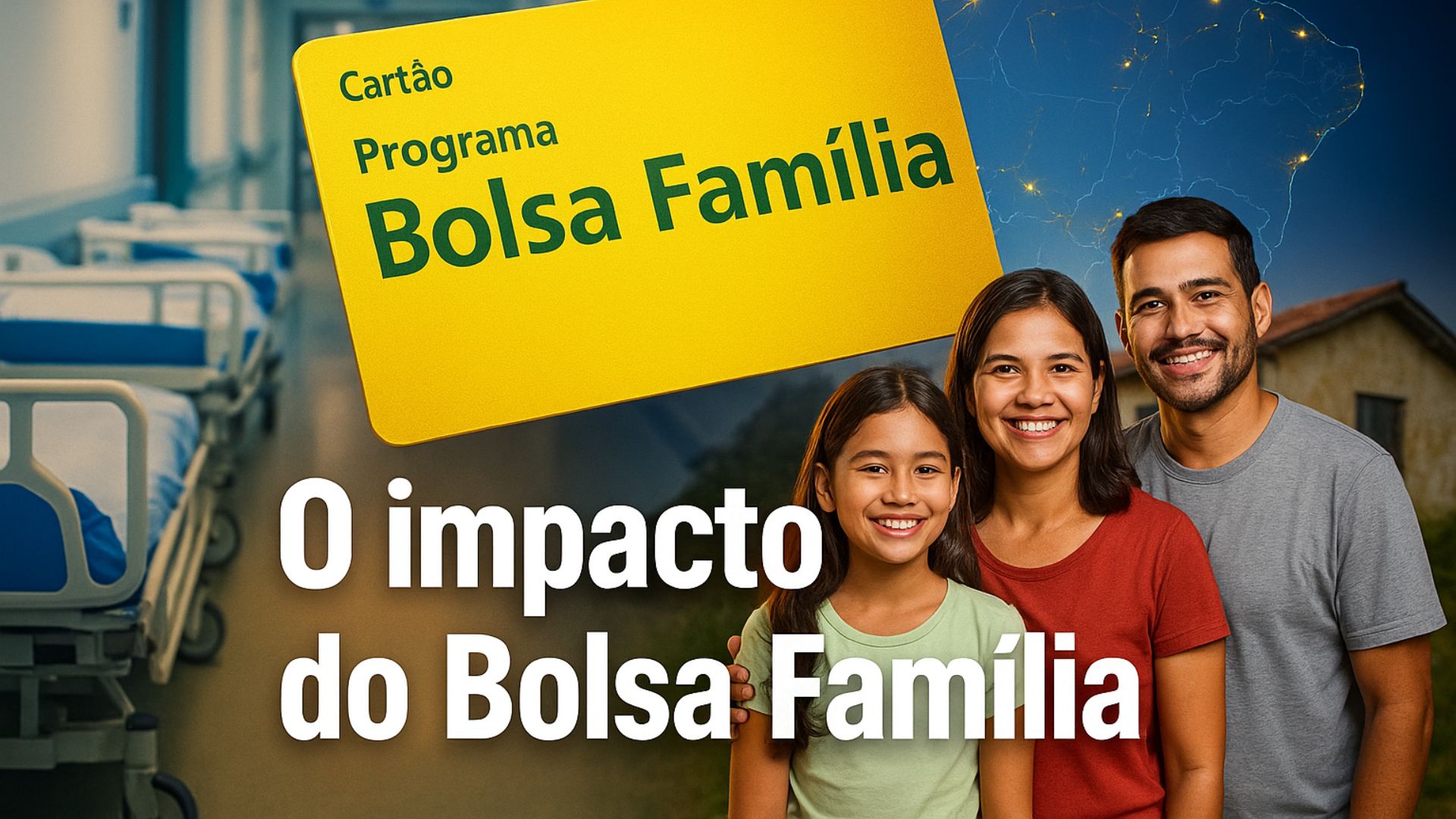


International Study Reveals That Bolsa Família Had Direct Impact on Brazilian Public Health, Associating the Program with the Prevention of Hundreds of Thousands of Deaths and Millions of Hospitalizations Between 2004 and 2019, Especially Among Children and Elderly.
The Bolsa Família is often associated by public debate with the supposed labor shortage, but recent evidence indicates another large-scale effect: between 2004 and 2019, the program is linked to the prevention of 713 thousand deaths and 8.2 million hospitalizations in the country, according to a study published in 2025 in the scientific journal The Lancet Public Health.
The results stand out especially in children under 5 years and elderly over 70, the most vulnerable age groups.
By analyzing municipal data over two decades, researchers observed consistent reductions in mortality and hospitalization rates in areas with greater coverage and more robust benefits of the program.
-
The institute that trained the greatest aerospace engineers in Brazil has just opened its first campus outside São Paulo after 75 years: ITA Ceará will have R$ 445 million, new courses in energy and systems, and classes are expected to start in 2027.

-
Luciano Hang, owner of Havan, goes to Juiz de Fora after the tragedy in February, brings R$ 1 million, hands out R$ 2,000 cards, and donates up to R$ 15,000 to victims in the region.

-
The Brazilian passport allows legal residence in dozens of countries without the need for a prior visa, and most Brazilians are unaware that they can apply for residency directly upon arriving in nations in South America, Africa, and even Europe.

-
Petrobras sends a message to Brazilian truck drivers after fuel collapse and reveals plan to have 100% domestic diesel.


This design allows for estimating the impact associated with conditional cash transfers without inferring absolute causality, but with a strong correlation between the presence of the benefit and health indicators.
Beyond the magnitude of the numbers, the breadth of the scope is noteworthy.
The research considered 3,671 municipalities with appropriately quality records, a universe that represents most of the Brazilian population.
In these areas, the decline in health outcomes accompanied the expansion of Bolsa Família, whose coverage steadily increased throughout the evaluated period.

Positive Effects on Brazilian Public Health
Overall, estimates point to 8.2 million hospitalizations avoided in fifteen years.
This reduction was most pronounced in age groups at the extremes of life, where preventable diseases, issues due to malnutrition, and lack of monitoring usually carry more weight.
Child mortality, a sensitive indicator of social policies, also receded significantly in localities with better program execution.
The study situates the effect of the Bolsa Família as part of a set of actions that reduce health risks.
By alleviating food insecurity, improving access to services, and enabling basic care, the conditional cash transfer creates a more favorable environment for the timely prevention and treatment of diseases.
As a result, occurrences that would lead to deaths and hospitalizations, especially from avoidable causes, decrease.
Previous research, in various scopes and journals, had already suggested positive impacts of the program on health, including in the control of infectious diseases among vulnerable populations.
The publication in The Lancet Public Health updates and expands the evidence base, with national scope and extensive historical series.
Conditionalities That Reinforce Preventive Care
One of the mechanisms often highlighted is the requirement of conditionalities for the continuation of the benefit.
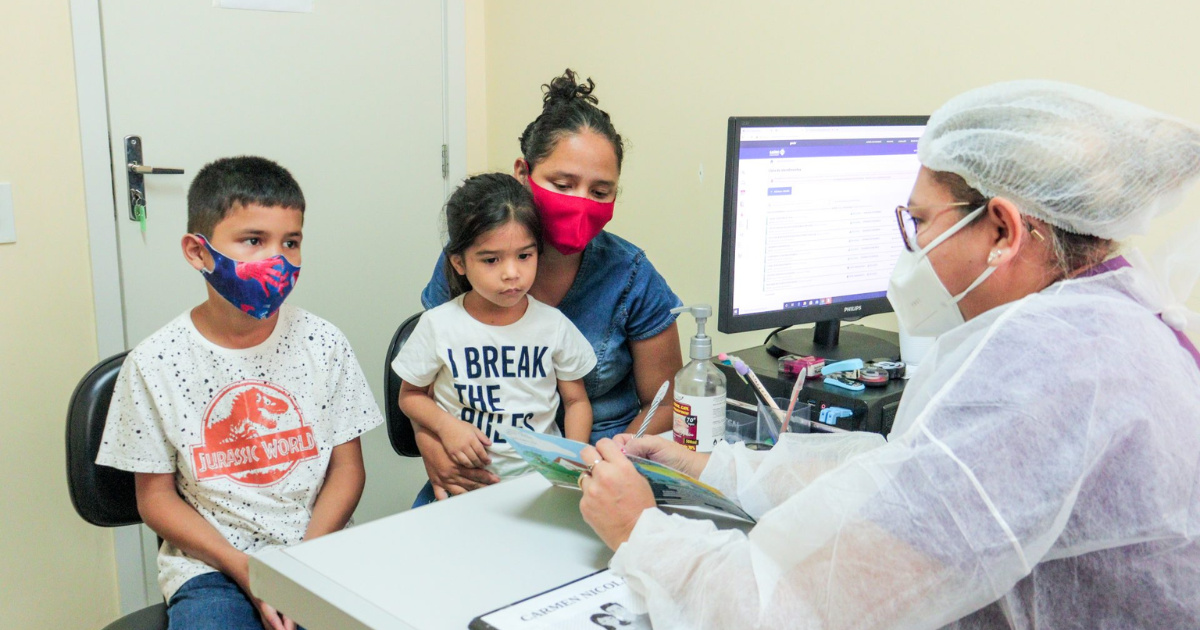
Families must follow the national vaccination calendar, maintain health monitoring for children up to seven years old, and, in the case of pregnant women, adhere to prenatal care.
These routines, established since the program’s early versions, act as an incentive for regular access to SUS services and for early tracking of issues.
In practice, the conditionalities favor immunization, growth and development monitoring, and maternal and child care.
Consequently, issues that would previously be identified late are now addressed timely, reducing complications and, in turn, the need for hospitalizations.
Debate on Employment and Social Assistance
While part of the business sector and voices from the ultraconservative spectrum point out Bolsa Família as a factor of misalignment in the labor market, the study in question does not evaluate employability or employment incentives.
Its focus lies in health outcomes.
Still, the results provide an objective counterpoint by associating the program’s expansion with measurable improvements in mortality and use of hospital services.
It is important to separate the discussion axes.
The topic of labor supply involves variables such as wage dynamics, qualifications, economic cycle, formalization, and employment policies.
On the other hand, the literature referred to here focuses on how conditional minimum income and access to care connect to population health indicators.
At least in this second aspect, the compiled evidence indicates substantial gains.
Structure and Functioning of the Program
Bolsa Família operates with per capita income criteria for selection and with conditions linked to health and education.
The design provides for monthly payments to eligible families and requires countermeasures that reinforce social protection.
In health, the requirements act as a bridge between the household and primary care, a structural axis of SUS.
With greater coverage among impoverished and extremely impoverished populations, the benefit tends to reach those who face financial and geographical barriers to health care.
The income support contributes to improving nutrition, covering transportation to health units, and maintaining regularity in consultations and vaccinations.
Meanwhile, the local care network must be operational to transform this additional demand into effective care, a condition that also helps explain variations in impact among municipalities.
Continuous Impact and Consolidated Data
The period from 2004 to 2019 encompasses distinct economic cycles and administrative changes, which lends robustness to the estimates.
Even with macroeconomic and fiscal fluctuations, the association between better program coverage and lower mortality and hospitalization rates remained statistically relevant.
This result suggests that the observed effects are not limited to specific circumstances, but reflect structural trends over the years.
Another methodological point is the choice to work with municipal series and criteria of civil registration quality and vital statistics.
By restricting the sample to locations with data considered adequate, the authors seek to minimize information bias, which strengthens the reliability of the numbers presented.
Public Policies and Lasting Results
From a public health perspective, the findings reinforce the integration between social protection, primary care, and health promotion.
The assessment suggests that income transfer programs with conditionalities, when well-executed, can decompress the hospital system and save lives on a significant scale.
Furthermore, they indicate that continuity and coverage of the benefit are variables that modulate the intensity of the observed effect.
For the discussion about cost-effectiveness, the results provide objective inputs.
By estimating avoided hospitalizations and prevented deaths, the literature opens the way for more precise economic evaluations, including direct hospital costs and indirect effects such as days of work saved by families and caregivers.
Although such calculations are not detailed in the original text, the direction of the findings points towards potential efficiencies when social policies and health articulate.
In summary, the research published in 2025 describes a systemic and measurable effect of Bolsa Família on the health of the Brazilian population over fifteen years, with emphasis on children and the elderly.
Given the estimated numbers for avoided deaths and hospitalizations, what should be the country’s priority when calibrating income and health policies in the coming years?









Evitou mortes ou fez dessas pessoas escravas da miséria
PAGAR SALÁRIO QUE PRESTA, ESSES PICARETAS NÃO QUEREM!
Viva Lula, viva o PT, viva o Bolsa Família!
SALVAR ESSAS VIDAS POUCO IMPORTA!
De que adianta, se não enche de grana, os cornos dos empresários picaretas do Brasil?!