





 Portuguese
  English
  Spanish
  8 min of reading
  0 comments


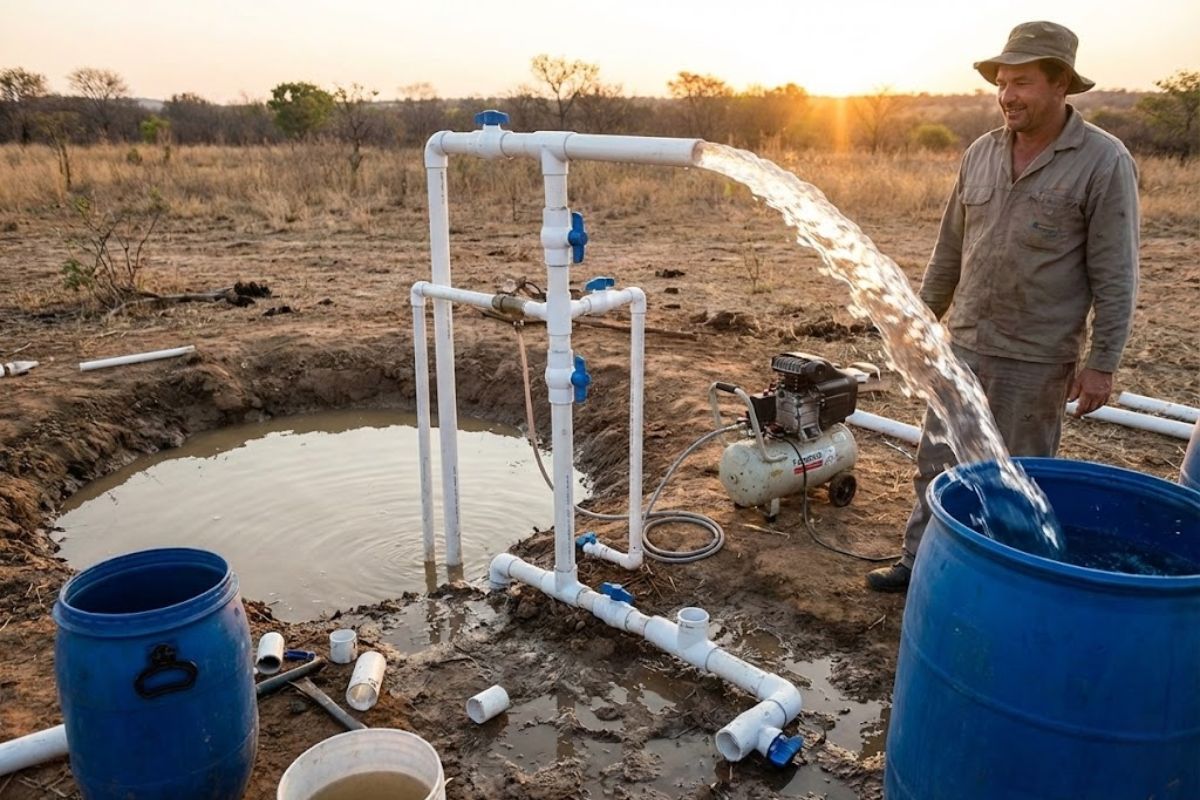
Designed for Off-Grid Locations, the HCPL1 Water Pump Without Electricity Uses PVC Pipes, Compressed Air, Venturi Effect, and a Pulsating Hydropneumatic System to Transform Manual Pressure into a Strong Jet, Pulling Water from Remote Sources and Serving as a Didactic Hydraulic Laboratory Accessible in Small Schools and Isolated Sites.
A step-by-step of the HCPL1 project has gained prominence by showing, in detail, how a water pump without electricity made only with PVC pipes and compressed air can pull water with jet force, without a plug and without a motor, based on classical hydraulic principles. The proposal targets those who need to pump water in simple, rustic, or completely disconnected areas, using only common tools and manual pressurization.
By transforming compressed air into water movement, the HCPL1 hydropneumatic system practically demonstrates how a water pump without electricity can use the Venturi effect, a check valve, and vertical tanks to create efficient suction. The result is a low-cost off-grid solution that combines educational demonstration, real use in small properties, and encouragement for studies in applied physics in low-cost contexts.
How the HCPL1 Water Pump Without Electricity Works

The heart of the so-called water pump without electricity is a closed circuit of PVC pipes that stores both water and air.
-
Scientists from USP issue a warning about the air in the countryside after a study indicates that breathing outside of São Paulo may conceal silent risks, with evidence that worries experts about health impacts.

-
The change in weather arrives tomorrow: heavy rains and storms return to the Central-South after a hot week, with a cold front along the coast bringing instability between Santa Catarina, Paraná, and the Southeast, affecting capitals strongly until Thursday.

-
The rapporteur of the critical minerals project said today that Brazil will not create a state-owned mining company, but Lula has already discussed the creation of Terrabras with ministers last Friday, and the United States has already invested 565 million dollars in a Brazilian mining company without waiting for a response from the government.

-
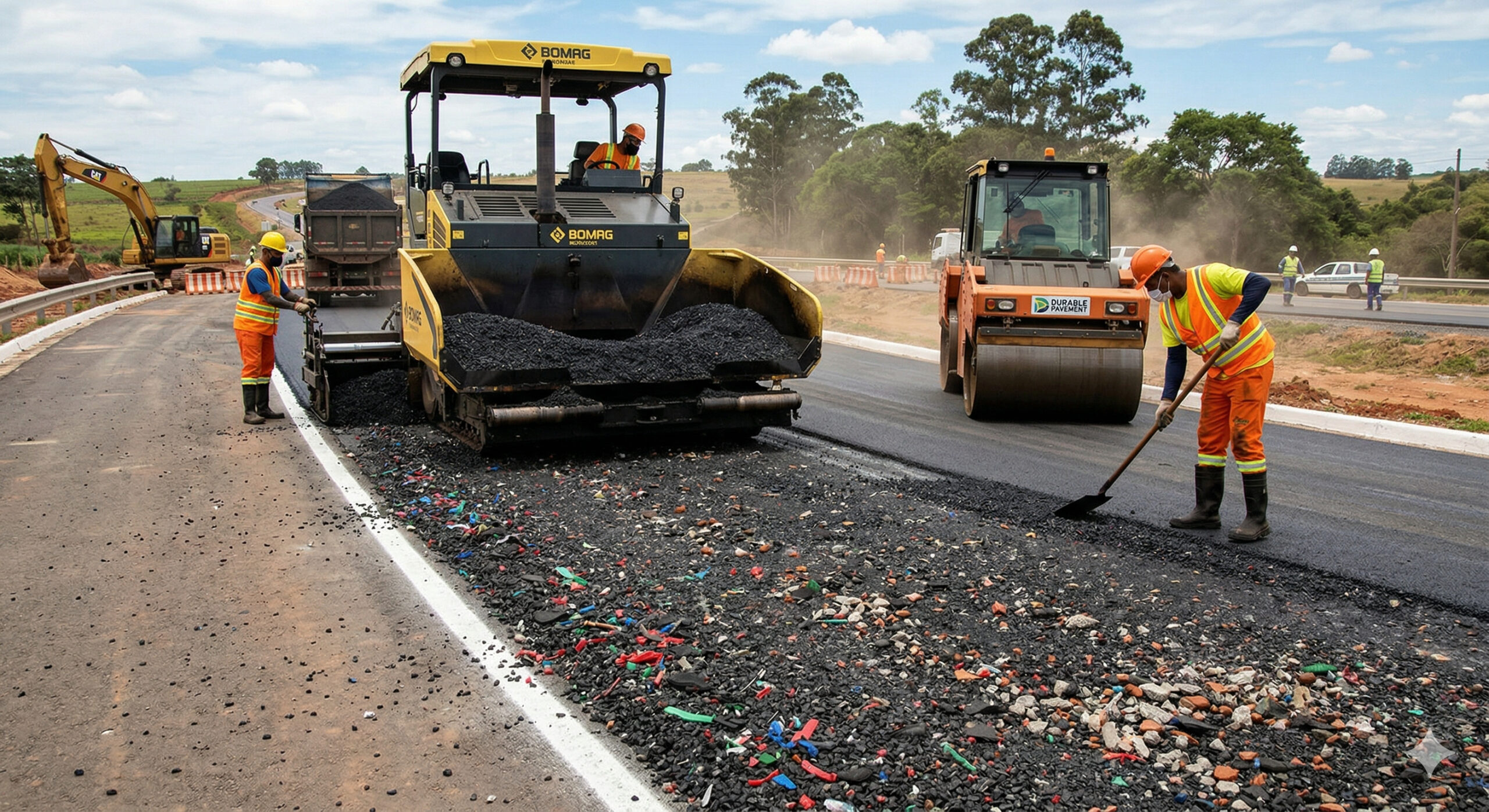
Roads made with recycled plastic, crushed tires, and construction waste are already being applied in several countries, reducing tons of waste in landfills and increasing the durability of the pavement by replacing traditional materials.

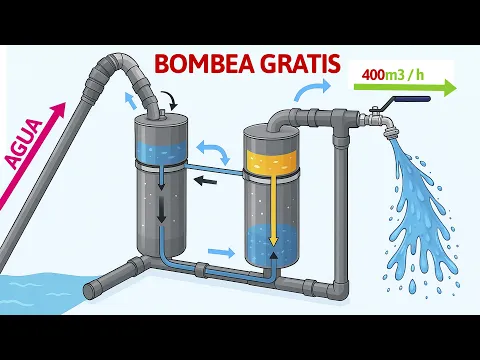
Water occupies the lower part of the system, while compressed air remains at the top, forming a type of “invisible piston” that pushes the liquid column when pressure increases.
When air is injected with a hand pump through a tire valve type, the upper tank accumulates sufficient compressed air to launch the water through the main outlet.
When the faucet is opened, the flow gains speed and, at a strategic point in the circuit, the geometry of the pipe creates a low-pressure zone.
It is there that the Venturi effect comes into play, sucking water from an external source through the suction line and feeding the system back.
Pulsating Hydropneumatic System and Pressure Recycling

The HCPL1 is described as a pulsating hydropneumatic system, capable of recycling a part of its own internal energy through pressure waves, controlled cavitation, and expansion of compressed air.
In practical terms, it transforms pneumatic energy into hydraulic flow, without any connection to the electrical grid and without resorting to conventional motors.
The project makes it clear that there is no “infinite energy.”
The same air pressure that feeds the water pump without electricity is gradually consumed with each pumping cycle, requiring new manual pressurization when the system loses its suction momentum.
Efficiency comes from the way the circuit distributes pressure in pulses, prolonging the useful time between recharge cycles.
Construction in PVC Pipes Step by Step
In the physical construction, the water pump without electricity uses common materials from everyday residential hydraulics.
The system begins with two vertical PVC tanks of 110 millimeters, heated to expand the plastic and allow firmer fittings of caps and connections, which increases the capacity to withstand internal pressure without leaks.
At the top, caps, threaded adapters, and elbows define the path of compressed air and pressurized water. At the base, 32-millimeter pipes, bends, and tees form the lower passage chamber, which distributes flow and helps stabilize the structure during operation.
The entire set is sealed with high-pressure adhesive specific for PVC, applied inside and outside, followed by leak tests before the first use.
Main Components That Make the HCPL1 Operate
For the HCPL1 to function as a truly usable water pump without electricity in off-grid applications, some components assume central roles in controlling pressure, suction, and flow retention.
Each of them performs a precise function within the hydropneumatic system.
In pressurization, the protagonist is the tire valve type, a tubeless valve similar to those used in automotive wheels, allowing compressed air to be injected with a common hand pump.
Along the water path, a check valve ensures that the liquid enters through the suction and does not return, preserving the pressure difference built inside the circuit.
The outlet faucet is the fine control point: opening it too much rapidly reduces internal pressure, while opening it too little compromises the jet and the Venturi effect.
The lower passage chamber helps stabilize the flow, while the vertical PVC tanks store water and compressed air, forming the zone known as the “air piston,” essential for the operation of the hydropneumatic system.
Where the Water Pump Without Electricity Fits into the World of Traditional Water Pumps

The water pump without electricity like the HCPL1 emerges in a scenario where conventional water pumps are already part of the daily lives of construction sites, farms, industries, and households, used to pull water from wells, pressurize systems, irrigate areas, and drain flooded grounds.
In professional applications, electric motors are still in the majority, precisely because they can move large volumes consistently and with high flow rates.
However, the logic is the same in all cases.
In a submersible pump, in a hose pump, or in the water pump without electricity itself, the central goal is to move water from one point to another efficiently, overcoming distance and elevation.
What changes is the source of energy: while traditional models depend on electric motors or combustion, the HCPL1 transforms manual compressed air into useful hydraulic flow, which explains the interest of those working in off-grid areas or without fixed infrastructure.
Differences Between the Water Pump Without Electricity and Submersible, Sump, and Hose Pumps
Among conventional pumps, the submersible pump is the most well-known, designed to operate underwater in wells, cisterns, rivers, and reservoirs.
It works at depth, ensuring continuous flow to supply houses, small industries, or irrigation systems. The sump pump is sized for dirty water, with sludge and debris, typical for draining flooded areas in construction, basements, and garages.
In heavy civil construction, the hose pump serves as a solution for draining trenches, foundations, and hard-to-reach areas, handling water loaded with sediments.
All these models require electric power or dedicated motors, greater investment, and periodic maintenance.
The water pump without electricity does not replace these solutions in large volumes but occupies a specific niche: small demands in rural sites, isolated lots, shallow wells, and situations where there is no plug nearby but some degree of controlled pumping is needed.
In terms of complexity, the submersible or hose pump comes ready from the factory, with defined flow curves and power, while the HCPL1 is a project assembled with PVC pipes that depends on proper assembly and manual pressurization.
The advantage of the water pump without electricity lies in autonomy and low entry cost, not in the ability to compete with professional equipment in volume or speed of pumping.
What to Consider When Choosing Between a Traditional Pump and the HCPL1
From a technical standpoint, the same criteria used to choose a submersible or hose pump help understand the real scope of the water pump without electricity.
The type of liquid is the first filter: clean water from a cistern or shallow well favors the HCPL1, while very dirty water, with sludge and debris, remains typical territory for sump and hose pumps.
Capacity and power also matter.
In construction sites with large volumes of accumulated water, the demand for high flow rates and significant suction height makes electric pumps more suitable.
In contexts where demand is intermittent and volume is small, such as filling an auxiliary water tank or pulling water from a secondary reservoir, the water pump without electricity may be sufficient, as long as the operator accepts the effort of manual pressurization.
Another point is the availability of infrastructure.
In construction sites with an electrical network, renting a submersible, sump, or hose pump offers speed and operational safety.
In remote areas, without a grid and sporadic use, assembling an HCPL1 from PVC pipes can represent a practical support solution, complementing the use of buckets, manual pumps, or simple gravity systems.
When It Makes Sense to Invest in a Water Pump Without Electricity
In practice, the HCPL1 water pump without electricity does not compete with large industrial pumps, but engages with small rural producers, site dwellers, technical schools, and university extension projects looking to demonstrate applied physics in the field.
In these situations, the possibility of building the system with PVC parts, testing different pressure configurations, and observing the Venturi effect in real-time holds didactic and functional value simultaneously.
For those dealing with specific projects, there is also the possible combination: renting a submersible or hose pump for heavy tasks and keeping a water pump without electricity as a complementary piece of equipment, useful in emergencies, at points without a plug, or in experiments optimizing energy consumption.
The decision revolves around total cost, usage frequency, type of water, and desired autonomy, rather than a direct competition in pure performance.
In this scenario, the question shifts from whether the water pump without electricity works to whether it fits into the routine and the actual needs of those in the field, at work, or in educational environments that need to demonstrate, in practice, how basic hydraulic principles can turn into concrete solutions for supply and pumping.
Energy Limits and Possible Off-Grid Applications
From an energetic standpoint, the HCPL1 water pump without electricity operates within the limits of compressed air that the user can manually inject.
Each pumping cycle consumes part of that energy until the pressure drops below what is necessary to maintain the Venturi effect and suction.
At this point, a new round of air pumping is needed to reactivate the system.
Despite this natural limitation, the project shows an efficient use of compressed air in a simple hydropneumatic system, capable of inspiring homemade solutions to pull water from cisterns, shallow wells, and auxiliary reservoirs.
At the same time, it serves as an educational tool to explain, in classes and workshops, concepts such as the Venturi effect, compressibility of gases, pulsating flow, and the difference between pneumatic and hydraulic energy.
In rural contexts, isolated sites, and small properties, a water pump without electricity made from PVC pipes can function as supporting equipment for specific tasks, from filling water tanks in places without a plug to feeding small temporary irrigation points.
The simplicity of assembly and ease of maintenance make the HCPL1 an interesting starting point for those who want to experiment with off-grid systems in practice.
Given this combination of low cost, simplicity, and the need for constant manual effort, would you invest time to build a water pump without electricity like the HCPL1 on your land, or would you prefer traditional pumping solutions powered by the electrical grid?





-

-

2 pessoas reagiram a isso.