





 Portuguese
  English
  Spanish
  5 min of reading
  0 comments


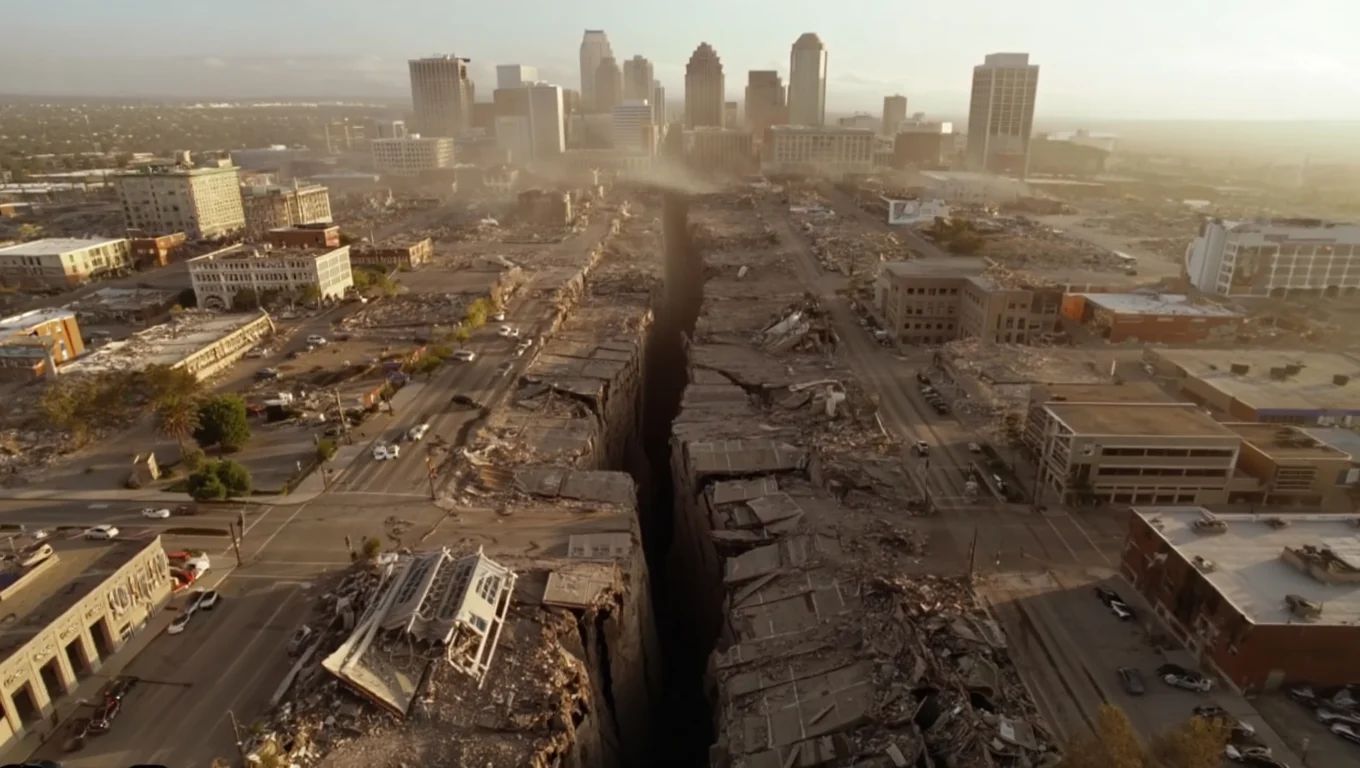
A New Geological Discovery Sheds Light on Little-Mapped Deep Structures on the Pacific Coast, Reigniting Scientific Debates on How Tectonic Plates Interact and How These Processes Can Influence Seismic Risk Assessments in the United States.
Scientists in the United States have identified a new geological element that helps explain the complexity of the region where the San Andreas Fault connects, north of California, with other active tectonic systems.
According to a recent study, a fragment of an ancient tectonic plate remains trapped beneath this area and expands the contact surfaces between moving plates, which could influence how seismic risk is assessed on the country’s West Coast.
The research was published in the scientific journal Science and describes the existence of the so-called Pioneer Fragment, a remnant of an ancient oceanic plate associated with subduction processes that have been acting on the western margin of North America for tens of millions of years.
-
With a cost per shot close to zero, the DragonFire laser could change naval warfare in 2027 and provide British ships with nearly unlimited defense against drones.

-
A British startup creates tires that generate electricity in electric vehicles when passing over potholes, speed bumps, and cracks.

-
Scientists have created robots made with living cells that have their own nervous system, swim on their own, explore the environment, and self-organize without any genetic engineering, and now they want to do the same with human cells.

-
Students create a solar-powered ambulance that operates without a plug, without fuel, and still keeps medical equipment running in remote areas.

Until now, geological models indicated that this plate would have been completely absorbed by the Earth’s mantle.
However, the new study points out that some of this material did not disappear and started to move along with the Pacific plate.
Mendocino Triple Junction Concentrates Different Tectonic Movements
The focus of the study is on the Mendocino Triple Junction, an area where different plate boundaries meet in a relatively small space.
At this point, the San Andreas Fault, characterized by lateral movement between the Pacific plate and the North American plate, connects to the Cascadia Subduction Zone, where oceanic plates plunge beneath the continent.

According to the researchers, this combination of mechanisms makes the local tectonic behavior particularly difficult to model.
While simplified geological maps indicate well-defined boundaries, more detailed analyses suggest the presence of deep structures that alter the geometry of the contact between the plates.
While the San Andreas Fault is known for producing shallow and potentially destructive earthquakes, the Cascadia zone is associated with events of great magnitude.
Seismic monitoring networks and historical studies have already indicated that this region is capable of generating earthquakes above magnitude 9 along the coastline from northern California to Canada.
Pioneer Fragment Expands Contact Surfaces Between Plates
According to the study, the Pioneer Fragment corresponds to a portion of oceanic lithosphere that has not been fully subducted.
This material has ended up being incorporated into the movement of the Pacific plate, moving along with it.
This process, according to the authors, has increased the interaction area between the Pacific plate and the subduction system located further north.
In a statement included in the article, geophysicist David Shelly of the United States Geological Survey states that the fragment expands the contact zone between what practically functions as the Pacific plate and the subduction region.
For the researchers, this configuration helps explain why seismic risks in the area still have significant uncertainties.
The study also identifies a nearly horizontal contact plane between the Pioneer Fragment and the North American plate.
According to the authors, this type of structure does not often appear in traditional seismic risk models, which prioritize more inclined or vertical faults visible on the surface.
Microseisms Reveal Hidden Structure Below the Surface
The identification of the fragment was possible through the analysis of microseisms and low-frequency tremors.
These seismic events have low magnitude and are not perceived by the population.
Still, they provide relevant information about the dynamics of the plates at depth when recorded by highly sensitive instruments.
By mapping the distribution of these tremors, the team was able to reconstruct boundaries between tectonic blocks and infer relative movements that do not appear in conventional surveys.
According to the authors, repeated patterns of these signals indicate zones of active friction between different portions of the lithosphere.
The study also describes that parts associated with the ancient Gorda Plate may have been scraped and reincorporated into the system over time.
This process contributes to a fragmented geological configuration, which complicates the definition of clear boundaries between the involved plates.
Earthquakes in Northern California Enter the Scientific Debate
The researchers point out that this complex geometry may help understand characteristics of earthquakes that have already been recorded in northern California.
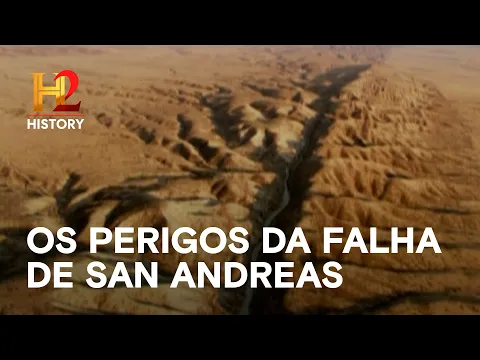

One of the cited examples is the Cape Mendocino Earthquake, which occurred in 1992.
In this case, the origin of the tremor was estimated to be at a shallower depth than expected for that area.
According to the study, the presence of tectonic fragments and shallow contact surfaces may have influenced the location of the rupture in that event.
Still, the authors emphasize that the work does not allow for establishing a direct or causal relationship between the Pioneer Fragment and specific earthquakes.
There is also not, according to the article, sufficient evidence to assert that the identified contact functions as a new fault capable of generating large earthquakes independently.
The main contribution of the study, according to the scientists, is to indicate that there are relevant structures still overlooked in current models.
Implications for Understanding Seismic Risk
Previous research has already discussed the possibility that large earthquakes in the Cascadia zone could influence seismic activity along the northern extension of the San Andreas Fault.
The new analysis suggests that the interaction area between these systems may be larger and more complex than previously thought.
According to the authors, understanding this architecture in detail is essential for improving risk models.
The study, however, does not aim to predict when the next large earthquake will occur.
The researchers highlight that advances in seismic instrumentation have allowed for the observation of previously invisible processes.
Even so, transforming this data into more accurate risk estimates remains a scientific challenge.
As new information about the subsurface of the Pacific coast is incorporated, experts indicate that maps and models may need to be updated to reflect this complexity.






-

-

-

-

-

36 pessoas reagiram a isso.