





 Portuguese
  English
  Spanish
  3 min of reading
  0 comments


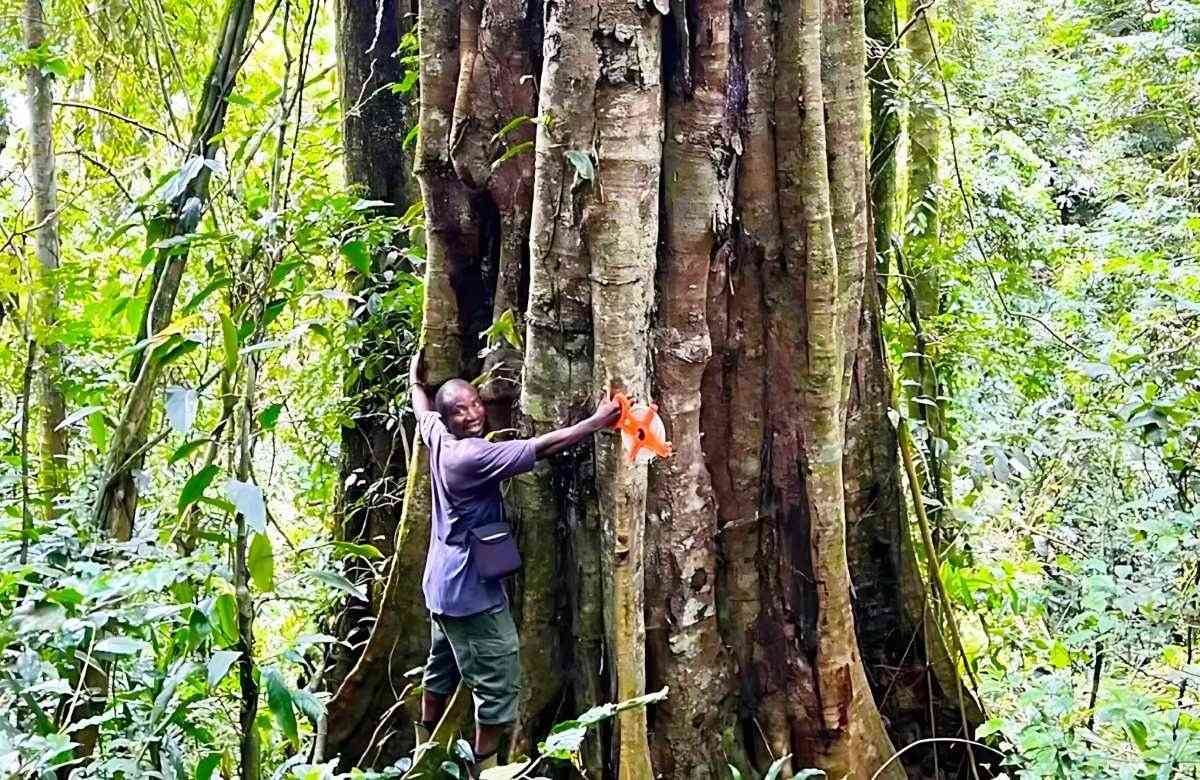
In The Heart Of The Udzungwa Mountains, In Tanzania, Scientists Made An Impressive Discovery: A Giant Tree, Unknown To Science Until Now, That Can Reach 40 Meters In Height. The Species, Called Tessmannia Princeps, Lives Isolated For Millennia And Is Already Threatened.
A Surprising Find Is Changing The Way Tropical Biodiversity Is Understood. In The Remote Udzungwa Mountains, In Tanzania, A Team Of Scientists Discovered A New Species Of Giant Tree That Has Gone Unnoticed By Science For Millennia.
An Unexpected Discovery In The Mountains
The Tree Was Identified As Tessmannia Princeps, A Tree Legume That Towers Above The Forest Canopy. The Discovery Was Led By Botanist Andrea Bianchi From The Trento Museum Of Sciences In Italy, Along With Experts From Tanzania.
The Find Occurred In 2019, During A Flora Mapping In The Boma La Mzinga And Uluti Forest Reserves.
-
Embrapa’s discovery reveals an unexpected advancement by allowing the production of seedlings from the caatinga using brackish water, opening a new frontier for farmers to face drought more efficiently.
-
6 sources of free fertilizer that you are throwing away every day and can transform your garden without spending anything.

-
With a water crisis on the radar, Sabesp invests in reclaimed water for data centers and transforms sewage treatment into a solution that saves millions of liters and protects public supply.

-
Foresea achieves 100% offshore waste reuse in 2025, eliminates landfill disposal, and consolidates sustainable strategy with 1,500 tons recycled.


Although It Was Observed Years Earlier, The New Species Was Only Officially Described In 2025, In An Article Published In The Scientific Journal Phytotaxa.
A Silent Giant Among The Clouds
The Tessmannia Princeps Can Reach Up To 40 Meters In Height, With Trunks That Can Be 2.7 Meters In Diameter. The Scientific Name princeps, Which In Latin Means “The Most Eminent,” Directly Refers To The Tree’s Imposing Size.
It Features Trunks With Very Distinct Tabular Roots — Typical Of Tropical Species That Grow In Poor Soils And Help Support Trees Of Great Structural Mass.
During Field Observations, Researchers Noted That Some Fallen Trunks Showed Dense Wood And Very Slow Growth. This Indicates That The Species Might Have Significant Longevity.
However, There Are Still No Published Scientific Studies Confirming Its Age Or The Amount Of Stored Carbon.
How Did It Stay Hidden For So Long?
One Of The Most Curious Questions Is: How Did Such A Large Tree Go Unnoticed For Centuries? The Answer Lies In Geography.
The Udzungwa Mountains Are Part Of The Eastern Arc Mountain Range, An Isolated Region With Constant Cloud Cover.
Specimens Of The Tessmannia Princeps Grow Between 1,280 And 1,520 Meters In Elevation, In Steep Valleys Little Touched By Human Presence.
Even Local Botanists Believed That All Large Tree Legume Species Had Already Been Cataloged. This Find Shows That There Is Still Much To Discover About Tropical Biodiversity.
Species Is Already Threatened
Estimates Suggest That There Are Fewer Than 1,000 Living Specimens Of The Tessmannia Princeps. This Renders It Vulnerable, According To The Criteria Of The International Union For Conservation Of Nature (IUCN).
Although Logging Is Prohibited In The Areas Where It Grows, There Are Other Indirect Threats: The Advance Of Agriculture, Uncontrolled Fires, And Future Infrastructure Projects.
Still, The Tree Is Already Being Used As A Symbolic Species In Conservation Programs. Its Presence Reinforces The Importance Of Preserving Forest Corridors, Even The Narrowest Ones, In Fragmented Tropical Areas.
Importance For The Climate And For Other Species
There Have Not Yet Been Specific Studies On The Amount Of Carbon That The Tessmannia Princeps Can Store.
However, Due To Its Size, It May Play A Relevant Role In Microclimate Regulation. Similar Large Tropical Species Can Store Between 20 And 30 Tons Of Carbon.
In Addition, Trees Of This Type Serve As Centers Of Biodiversity. They Provide Habitat For Other Species, Help Anchor The Soil, And Facilitate The Regeneration Of Smaller Plants In The Forests.
Future Analyses Of Its Wood, Reproductive Cycle, And Ecological Relationships May Reveal How Some Species Manage To Survive For Centuries In Humid Tropical Environments.
A Reminder Of How Much There Is Yet To Discover
The Discovery Of The Tessmannia Princeps Is Proof That Nature Still Holds Great Surprises. In A World Where Many Species Disappear Before They Are Even Studied, Finding A Completely New Giant Tree Is A Wake-Up Call.
Protecting These Ecosystems Is Not Just About Preserving A Tree. It Is Ensuring That Knowledge About Life On Earth Continues To Expand. Nature, Even Today, Can Still Reveal Sleeping Giants.








Seja o primeiro a reagir!