





 Portuguese
  English
  Spanish
 3 min of reading
  0 comments


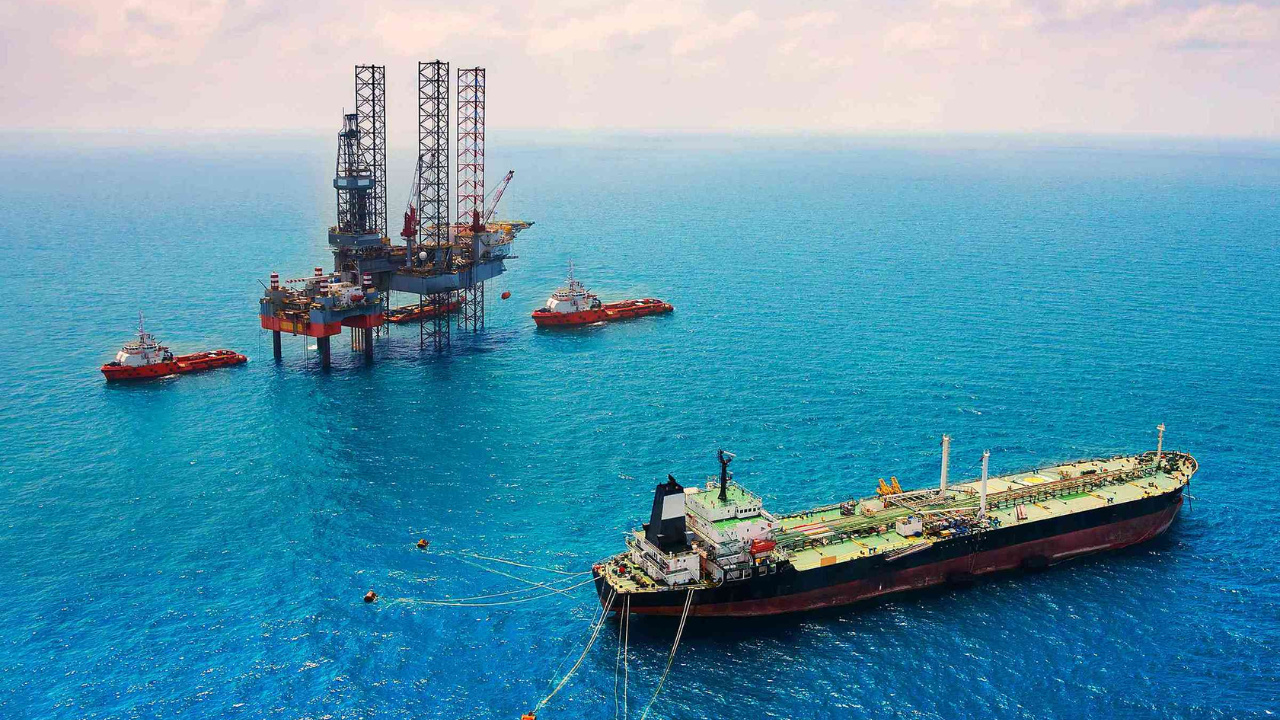
Brazil Registers Record in Oil and Gas Production in October, Boosted by Advances in Pre-Salt; Espírito Santo Maintains National Leadership as Second Largest Producer.
The Brazilian oil sector has once again gained prominence on the global energy scene after registering, in October 2025, a new production record. The updated numbers reveal significant advances both in the volume extracted from the pre-salt and in the operation of offshore fields.
Furthermore, Espírito Santo continues to establish itself as a key player on the national energy map, remaining the second largest producer in the country, behind only Rio de Janeiro.
National Oil Production Reaches Unprecedented Level
In a performance that reinforces Brazil’s prominence in the global energy market, total oil and natural gas production amounted to 5.255 million barrels of oil equivalent per day (boe/d) in October.
-
The rise in oil prices could ensure an extra revenue of R$ 100 billion for the Federal Government, indicates a recent economic study.

-
Naturgy begins an investment of R$ 1.6 million to expand the gas network in Niterói and benefit thousands of new residences and businesses.

-
A major turn in the Justice system suspends tax increases and directly impacts oil and gas companies in Brazil by affecting costs, contracts, and financial planning, leaving uncertain what could happen to the sector if these costs had increased.

-
Brava Energia begins drilling in Papa-Terra and Atlanta and could change the game by reducing costs in oil while increasing production and strengthening competitiveness in the offshore market.


Thus, the country surpassed the previous record, set in July 2025, when it had reached 5.160 million boe/d.
In the specific segment of oil, 4.030 million barrels per day (bbl/d) were extracted. This volume represented a growth of 2.9% compared to September and a substantial leap of 23.2% compared to October 2024.
Natural gas also showed strong performance, reaching 194.78 million cubic meters per day (m³/d), with an increase of 2.2% compared to the previous month and 22.5% year-on-year.
Strategic Role of Espírito Santo in the Oil Chain
According to a report from the National Agency of Oil, Natural Gas and Biofuels (ANP), Espírito Santo reaffirmed its relevance by remaining the second largest national producer of oil and gas.
In October, the state recorded 266.497.49 barrels of oil equivalent per day, of which 227.197.68 were barrels of oil and 6.248.17 barrels corresponded to natural gas.
This performance reinforces the importance of the Espírito Santo fields, which continue to play a decisive role in the expansion of national production and in the country’s energy security.
Dominance of Offshore Fields and Petrobras Prevalence
Another piece of information that highlights the strength of the sector is the predominance of maritime production. In October, 97.8% of oil and 86.6% of natural gas originated from offshore fields.
Additionally, the fields operated by Petrobras, whether alone or in a consortium, accounted for 90.68% of total national production.
The report also emphasizes that production was distributed across 6,421 wells, with 552 offshore and 5,869 onshore, showcasing the industry’s wide operational diversity.
Fields and Installations That Led Production in October
Among Brazilian fields, Búzios, located in the Santos Basin, remained the top oil producer, reaching 884.78 thousand barrels per day. Meanwhile, the Mero field, in the same basin, excelled as the largest natural gas producer, with 41.34 million m³/d.
In the ranking of installations, the FPSO Almirante Tamandaré registered the highest oil production of the month, with 232.940 bbl/d, operating in the fields of Búzios, Búzios Eco, and Tambuatá. For natural gas, the leadership went to the FPSO Marechal Duque de Caxias in the Mero field, which produced 12.70 million m³/d.







-

-

-

-

-

12 pessoas reagiram a isso.