





 Portuguese
  English
  Spanish
  5 min of reading
  0 comments



With a Record Production in 2025, Technical Advances in Pre-Salt, and New Offshore Systems in Operation, Brazil Expands Oil Supply, Aims for the Global Top 5 in the Early Next Decade, and Transforms Energy Security, Trade Balance, and Transition Strategy to Low-Carbon Sources in the Country.
The advancement of Brazilian oil has entered a decisive phase after closing 2025 with an average of 3.7 million barrels per day, according to data consolidated by ANP. This volume places the country back at the center of international energy disputes and sustains expectations of a structural change in the next decade.
At the same time, the topic has ceased to be merely productive and has become strategic. The discussion now involves who leads regional growth, how sustainable this expansion is in the long term, where the most relevant assets are, and why the exploration schedule of new frontiers is already pressing regulatory and industrial decisions in the present.
2025 Record and the Route to 2031-2032

The 2025 milestone is not isolated. With 3.7 million barrels per day, Brazil remains in between the eighth and ninth positions among the largest global producers, depending on the closing of data from other countries. This level confirms gains in scale, productivity, and operational consistency in an industry that, historically, has fluctuated more in the face of external cycles.
-
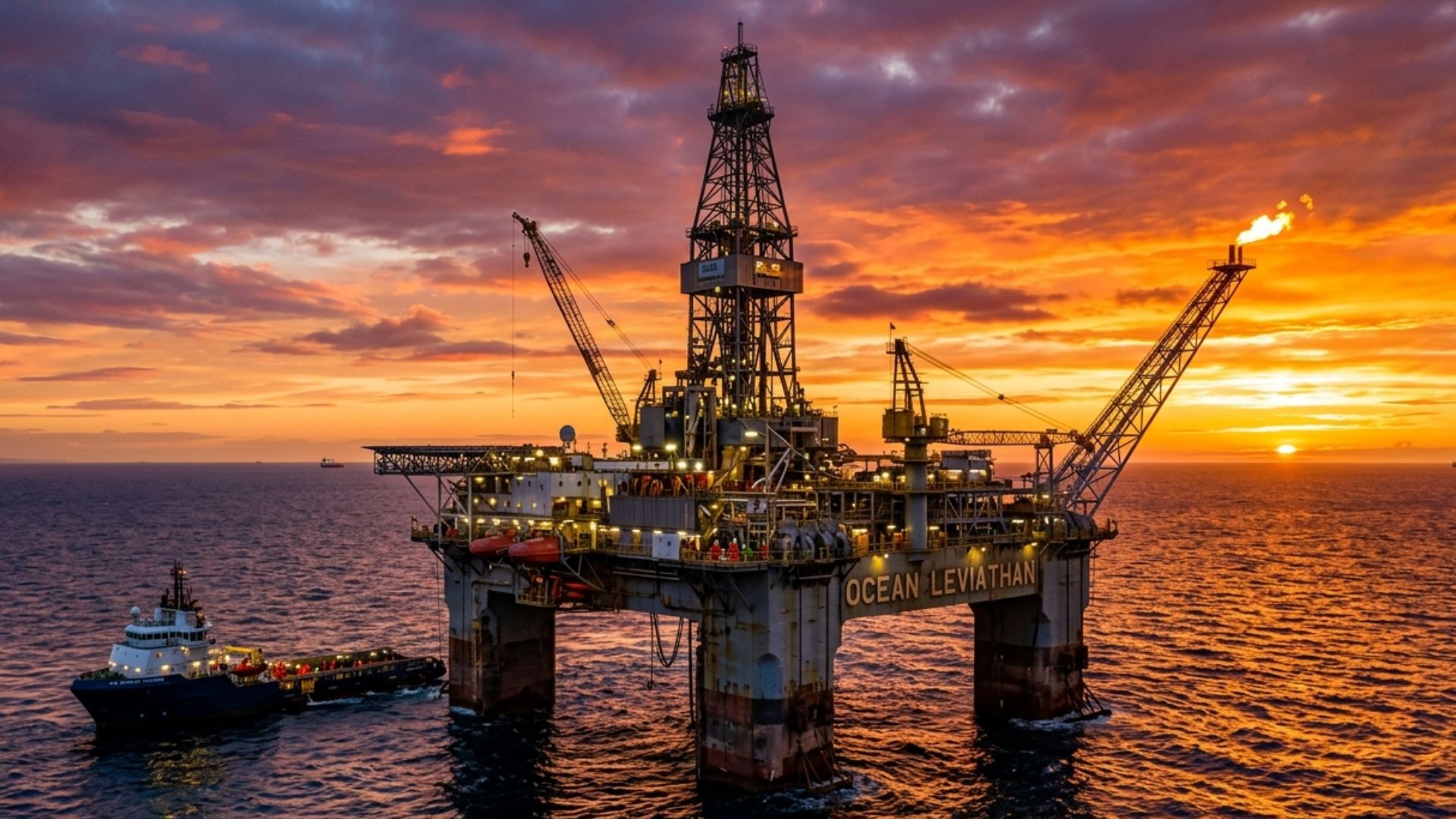
Brava Energia begins drilling in Papa-Terra and Atlanta and could change the game by reducing costs in oil while increasing production and strengthening competitiveness in the offshore market.
-
Petrobras surprises the world again by announcing a new discovery in the pre-salt with excellent quality oil.

-
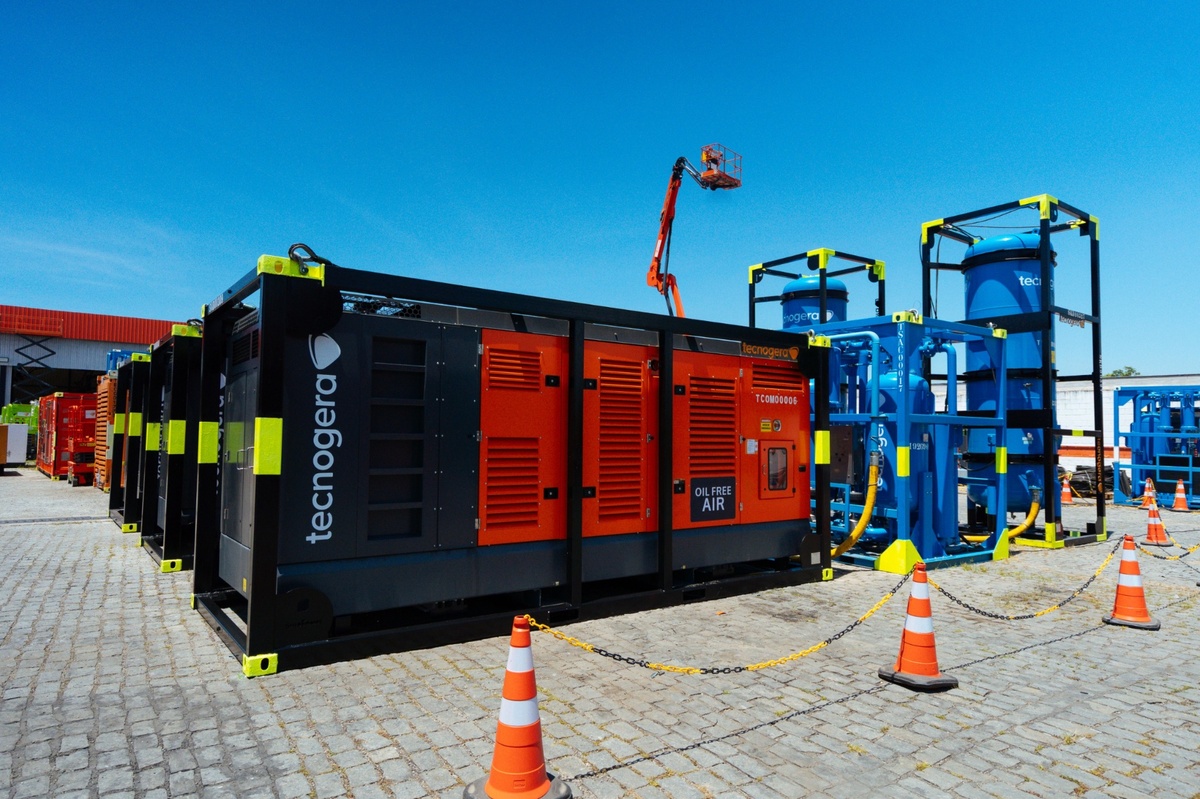
Offshore industrial demand in Macaé skyrockets with the recovery of oil and gas and could grow by up to 396% by 2026 in the Campos Basin.
-
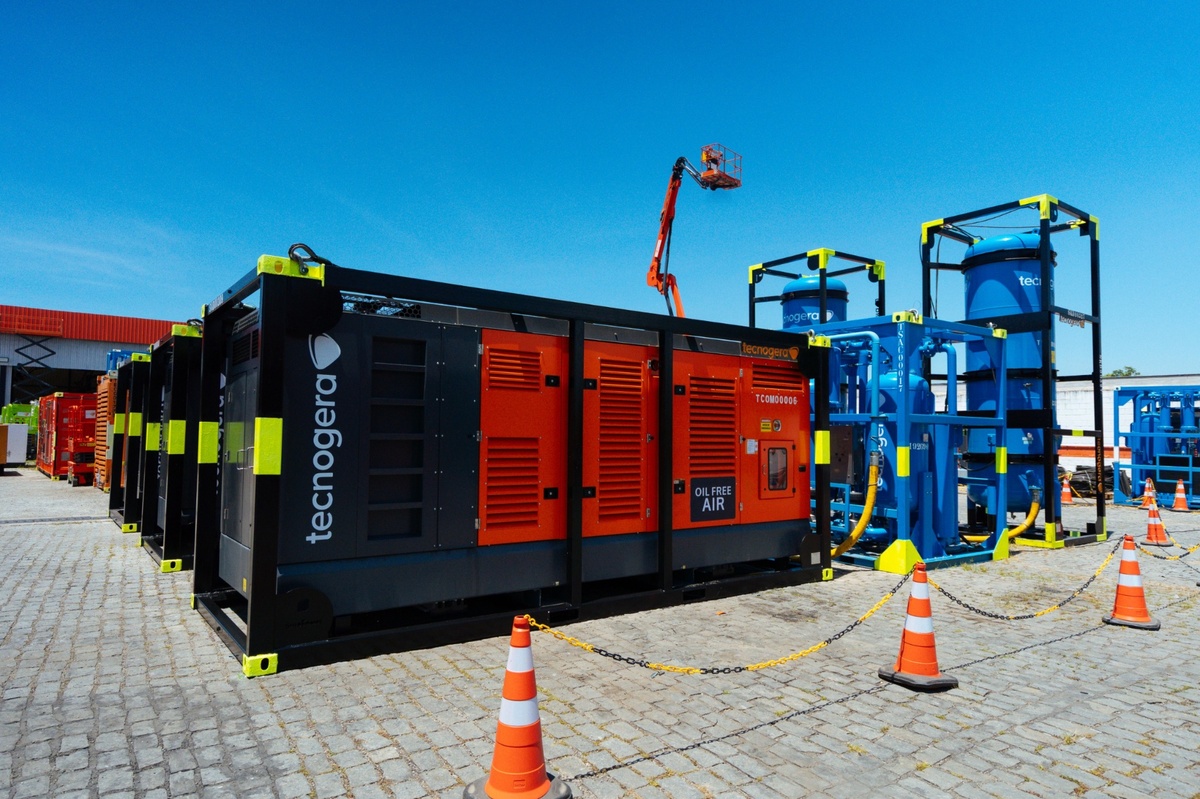
Offshore industrial demand in Macaé surges with the recovery of oil and gas and could grow by up to 396% by 2026 in the Campos Basin.

Projections from EPE and international consultancies, such as Rystad Energy, indicate that the production peak could occur in 2031 or 2032, exceeding the mark of 5 million barrels per day. If this scenario is confirmed, the country enters the Top 5 globally.
This is not just about climbing the rankings: this change alters negotiation power, supply predictability, and Brazil’s geoeconomic weight in international decisions.
What supports this view is the very architecture of the sector. The expected growth does not rely on a single field, but on a set of high-productivity assets with a well-known technical curve. How durable this leap can be will depend on reserve replacement, investment discipline, and the ability to maintain cost efficiency in long production cycles.
Pre-Salt, FPSOs, and the Engineering That Keeps Production High
The material base of this advancement lies in the pre-salt, where productivity and technical competitiveness remain Brazilian differentials.
The pre-salt has become the backbone of national oil expansion, capable of sustaining high volumes even in scenarios of international volatility. It is this core that provides robustness to projections for the early 2030s.
In the short and medium term, the entry of new offshore units reinforces this trajectory. Three Petrobras platforms have expanded the productive system in Búzios and Mero, while Equinor has begun operations in Bacalhau, in the Santos Basin. These movements help explain the forecast of production exceeding 4.2 million barrels per day in 2026, with Brazil identified as the main driver of oil growth outside OPEC+.
Where does this translate economically? Throughout the entire chain: industrial suppliers, maritime services, logistics, engineering contracts, and public revenue. The expansion of oil does not happen just at the well; it spreads through a wide technical and financial network, with effects on specialized employment, foreign investment, and the ability of the State and companies to plan for the long term.
Equatorial Margin and Amazonas Mouth: Today’s Decision for Future Demand
Despite the favorable moment, the sector operates on its own clock. Between discovery and first oil, the cycle can take up to ten years. This means that the strong production now does not eliminate the risk of decline ahead. According to EPE, avoiding a loss of momentum after 2035 requires advancing now in new exploratory frontiers, especially in the Equatorial Margin.
In this context, the Amazonas Mouth has gained strategic centrality. Studies of volumetrics cited in the sector debate indicate a recoverable potential close to 10 billion barrels of oil equivalent, still conditioned to licensing and commerciality assessment. There are also projections of 100,000 to 150,000 barrels per day in development scenarios. The key point is temporal: the resource demanded in 15 years needs to be discovered now.
Why does this front weigh so much? Because energy security depends on continuity of supply, not on isolated peaks. Without asset replacement, the country loses predictability, reduces investment capacity, and weakens its international position. The discussion, therefore, is not just environmental or regulatory; it is also industrial, fiscal, and geopolitical.
Global Top 5, Exports, and Energy Transition Funded by the Sector
If Brazil reaches 5 million barrels per day in the early next decade, the effect will not be restricted to the production ranking. Oil already occupies a central position in the export agenda and tends to amplify its impact on trade balance, currency inflow, and resilience in the face of external shocks. In international tension scenarios, this energy surplus acts as a macroeconomic buffer.
On the fiscal front, the income generated by the sector is treated as a relevant piece to finance the energy transition itself. The logic defended by public agents and technicians is pragmatic: use oil results to accelerate low-carbon technologies, increase biofuels, and maintain the national matrix relatively clean in international comparison. The tension between fossil expansion and climate goals exists, but the Brazilian strategy tries to convert it into a funding mechanism for change.
In the industrial horizon, the projection of a more modular and integrated refining system, focusing on diesel and aviation kerosene, indicates a repositioning of the chain. This connects oil supply, domestic demand, and technological planning. In other words, the country is not only discussing how much to extract, but how to turn production into a long-term competitive advantage, without losing the ability to adapt to the global energy cycle.
Brazil has entered a phase where oil has ceased to be just a sectoral indicator and has begun to function as a vector of economic, energy, and geopolitical influence.
Record in 2025, expected expansion for 2026, possibility of 5 million barrels per day in 2031-2032, and the debate on new frontiers show a country trying to balance production scale, supply security, and energy transition.
In your view, what should be the immediate priority: accelerating new frontiers like the Equatorial Margin to avoid decline after 2035, or concentrating resources on pre-salt efficiency and low-carbon transition?
And, looking at your state, do you see more local economic gains or more environmental concerns in this oil race?







-

-

5 pessoas reagiram a isso.