





 Portuguese
  English
  Spanish
  5 min of reading
  63 comments


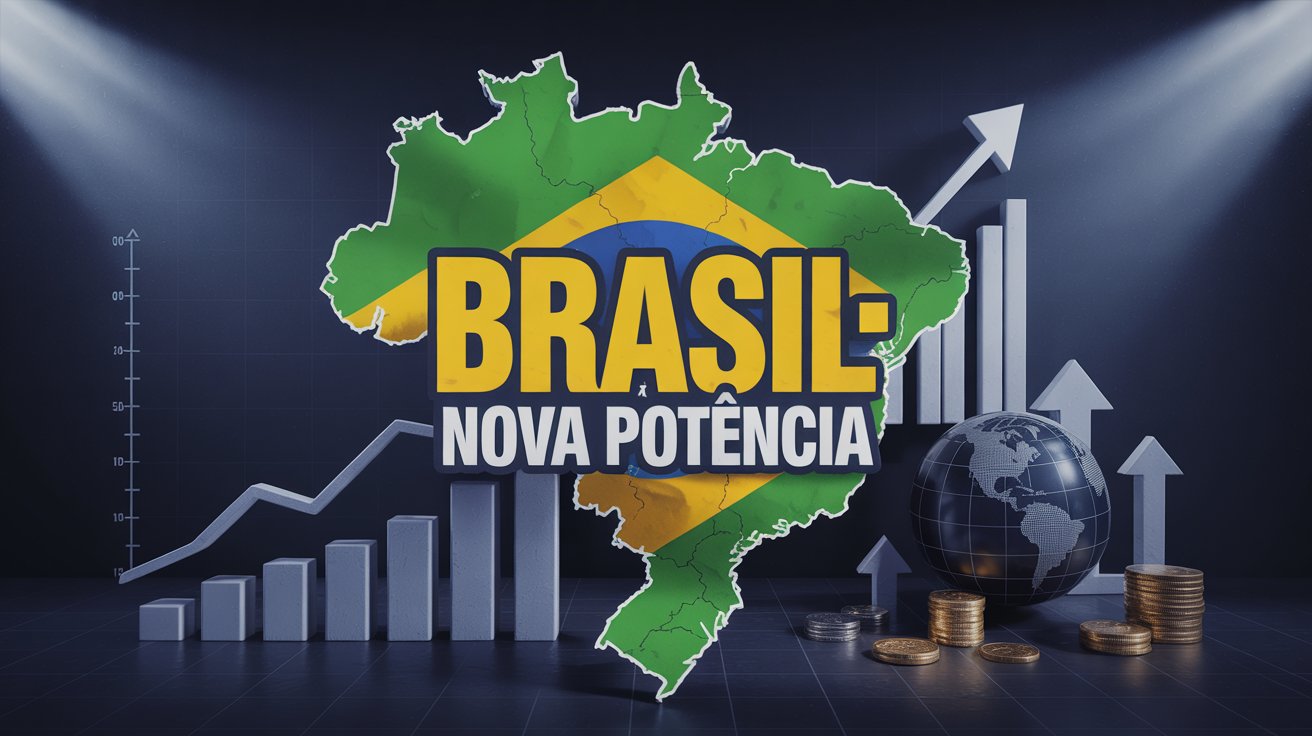


Brazil Should Surprise The World With Growth Rate Above The Largest Developed Economies, According To The IMF, Amid High Interest Rates, Fiscal Challenges And Optimism With Global Recovery.
Brazil is expected to have a 2.4% increase in GDP in 2025, a performance that places it among the five largest growth rates in the G20 next year, according to the latest edition of the World Economic Outlook from the International Monetary Fund.
The projection surpasses that of the United States (2.0%), United Kingdom (1.3%), and Japan (1.1%), in a scenario of global expansion estimated at 3.2%. In the previous year, the Brazilian economy grew 3.4%.
Brazil Rises In The G20 Ranking
The IMF’s reading shows the country ahead of mature economies and with a pace compatible with those of relevant emerging markets.
-
Electrolux surprises, closes colossal factory and lays off 400 people in a mass dismissal that will have a direct effect later this year, following a cost review, with an impact of R$ 272.5 million and R$ 109 million in cash in Chile.

-
The Lula government is pursuing re-election and is therefore preparing a package with discounts of up to 80% on debts, subsidies for diesel, gas for 15 million, and energy, after reaching 51% disapproval six months before the election.

-
The chamber approves a project that transforms plots of up to 2,000 square meters into official rural properties, allowing thousands of small producers who were invisible to the government to now access credit, tax exemptions, and technical assistance.
-
Factory 52, in the USA, cost over $5 billion, covers 270,000 square meters, and manufactures cutting-edge chips: it was named Project of the Year by the world’s largest engineering magazine, marking the global race for semiconductors.

The leaderboard is led by India (6.6%) and China (4.8%), followed by Saudi Arabia (4.0%) and Turkey (3.5%).
In this group, Brazil is at 2.4%, still above the average of the Eurozone (1.2%). According to the Fund, the boost will come from domestic and external factors.
More favorable international financial conditions and some recovery in investment help, while tariffs and trade uncertainties still pose risks.
Meanwhile, Latin America maintains a projection close to 2.4% in 2025, with Brazil and Mexico among those responsible for recent improvements in regional estimates.
What Explains The Upward Revision
The projection for Brazil was raised from 2.0% to 2.4% compared to the first half of the year.
According to economists, the adjustment reflects a stronger first half, with activity above expectations, and methodological revisions by the IMF itself.
Still, the Fund and private institutions predict loss of momentum in the second half of the year, a typical effect of more restrictive monetary policy and global deceleration.
For Rodolpho Sartori, economist at Austin Rating, the central question is the intensity of this cooling.
“The question is how strong the deceleration will be this semester, considering an interest rate that should remain at 15%,” he stated.
This observation aligns with the current environment: the Selic at 15% keeps financial conditions tight, which helps to contain inflation but delays consumption and investment decisions.
Fiscal Policy And Agent Confidence
While monetary policy remains restrictive, the fiscal landscape continues to be a concern.
The withdrawal of the provisional measure that proposed taxation on financial investments increased uncertainty about revenue sources.
In Sartori’s view, the need for compensatory measures may influence market confidence and, consequently, the cost of financing for the public and private sectors.
The Ministry of Finance, on its part, is working with an expected 2.3% expansion for 2025, aligned with the range anticipated by international organizations.
In the market, the latest Focus Bulletin indicates 2.16% for the 2025 GDP, signaling caution amid high interest rates and signs of moderation in consumption.
Although the consensus is below the IMF’s projection, the median smooths weekly fluctuations and incorporates assessments from banks and consultancies regarding inflation, exchange rates, and credit.
Relative Position Against Large Economies
International comparisons help gauge the result.
Among developed countries, the IMF projects 2.0% for the United States, with activity supported by investment and a resilient labor market.
The United Kingdom is expected to grow 1.3%, supported by a gradual relief from inflation, and Japan 1.1%, with a boost from real wages.
Canada stands at 1.2%.
In the Eurozone, the average is 1.2%, with Spain standing out at 2.9% and Germany at 0.2%, reflecting industrial setbacks and fiscal adjustments.
This cross-section indicates that Brazil combines growth above advanced peers with inflation still above the target in the short term.
The outcome is a mixed scenario: activity resists but requires firmer monetary policy to anchor expectations.
Domestic Engines And Structural Gaps
On the domestic front, recent expansion has been supported by a booming labor market, credit still expanding, and public investment in infrastructure and energy transition sectors.
However, structural gaps continue to limit the advancement of potential GDP.
The IMF highlights the importance of microeconomic reforms, such as improving the business environment, legal security, and regulatory advancements in concessions and PPPs, to sustain growth rates close to 2.5% in the medium term.
The consolidation of tax and administrative reforms is also noted by analysts as a key element to unlock investments and reduce the cost of doing business in Brazil.
Without consistent progress on these fronts, the economy tends to alternate between stronger years and periods of slowdown, maintaining average growth rates close to 2%.
Interest Rates, Inflation And The Dilemma Of 2025
With the Selic at 15%, the Central Bank indicates that its strategy is to ensure the convergence of inflation to the 3% target, even at the cost of a more significant cooling of activity.
The calibration of the cycle will depend on the behavior of the IPCA, expectations, and the dynamics of the exchange rate.
If prices decelerate durably and inertia subsides, there will be room to reduce interest rates throughout 2026.
If not, the tightening may be prolonged.
For 2025, the baseline scenario of multilateral institutions assumes gradual disinflation and moderate growth.
However, the risk balance remains asymmetric: tariffs and trade tensions between large economies, commodity shocks, and domestic fiscal uncertainties may alter the projected trajectory.
Private Projections And IMF Signaling
Despite the uncertainties, the overall reading of the IMF is considered optimistic by the market.
Austin Rating is working with a 1.8% growth projection for 2025, with an upward bias after the Fund’s revisions.
The difference between estimates reflects distinct methodologies and the weight of local risks in private institutions’ models, which are more sensitive to fiscal news and credit developments.
Commonly, there is an assessment that Brazil grows above developed peers, but below the major Asian economies.
In the end, the interplay between the external scenario and domestic conditions determines how close the country will come to the 2.4% estimate from the IMF.
If fiscal policy gains predictability, inflation cools down, and private investment advances, the Fund’s projection is likely to materialize.
Otherwise, the more subdued pace indicated by Focus and independent consultancies will prevail.
Given this scenario, which factor do you consider most decisive for Brazil to achieve — or exceed — the 2.4% projected for 2025: fiscal confidence, sustained decline in inflation, or improvement in the international environment?






Acho que a “previsão” deu errado.na verdade ao contrário né. Muito confiavel essa midia contratada a serviço de que paga. Agora estamos em 2026 e o pib real menos de 2% e eua voando, sem falar nos outros paises ai da materia.
Só sei que havia perdido um monte de clientes que se foram para o Paraguai, vários faliram ou estão em recuperação judicial, a empresa que eu trabalhava fechou as portas e demitiu 410 funcionários de uma só vez, precisei virar PJ porque ninguém contrata mais com carteira assinada e sou obrigado a ler uma notícia cheia de inverdades como essa. O pior é que tem gente que ainda não enxerga o que está acontecendo ou faz questão de ser enganado mesmo.
A queda sustentada da inflação é o mais importante para o crescimento sustentável.