Portuguese
  Spanish


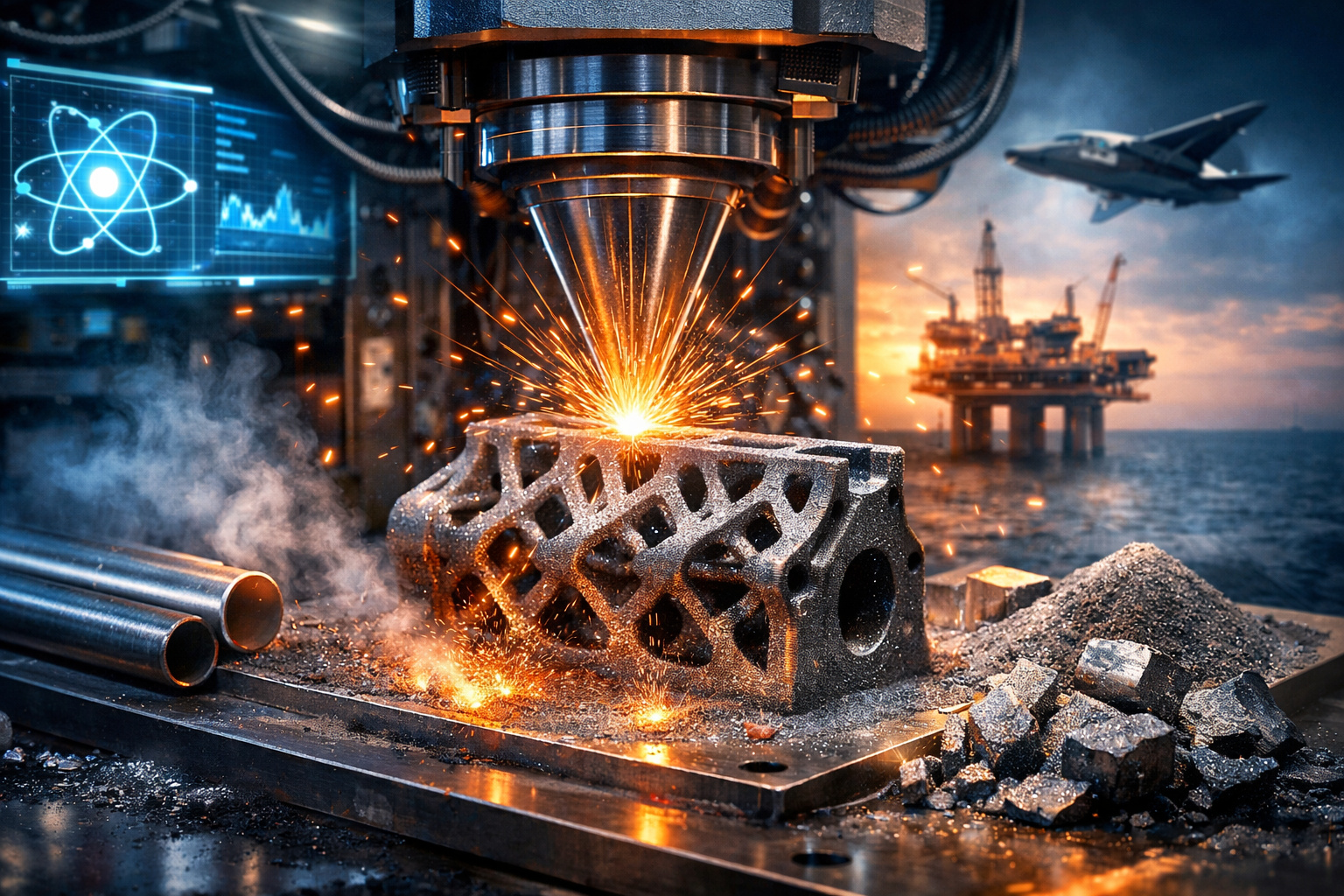

A new steel made with artificial intelligence for 3D printing combines strength, flexibility, and low cost, bringing important advancements to the energy and oil industry
The use of artificial intelligence to create stronger and more resistant steel is already beginning to change the way industrial parts are produced. Researchers have managed to develop a material that combines high strength, flexibility, and rust protection, something rare until now.
This advancement can directly impact sectors such as energy, aviation, and construction, as the new steel is also cheaper and faster to produce. This facilitates the manufacturing of more durable and efficient parts.
According to a source from the International Journal of Extreme Manufacturing, a scientific journal specialized in advanced manufacturing, the material can help create lighter, stronger, and more durable equipment.
-
The large jar blender has a rival: Oster Ultra Power bets on 1,000 W, six stainless steel blades, and two portable cups with leak-proof lids.

-
Tesla injected an additional $250 million into the German factory, doubled the battery cell target, and opened its own production line for startups.

-
No more TV stuck on the wall: Samsung The Freestyle+, the new projector with over 400 lumens projects on walls, floors, and ceilings, bringing cinema to any corner of the house.
-
A Japanese governor single-handedly stalled the construction of the world’s fastest train for nine years, and only now has he agreed to allow a tunnel excavated at a depth of 1,400 meters.



Artificial intelligence helps create stronger and more flexible steel at the same time
Creating steel has always involved a significant challenge. When the material becomes too strong, it tends to break more easily. When it becomes more flexible, it loses strength.

With the use of artificial intelligence, it has been possible to find a balance between these two characteristics. The new material can be strong and flexible at the same time, something considered rare in the industry.
To achieve this result, the technology analyzed dozens of characteristics of metals, such as particle size and internal behavior. This allowed for finding the best possible combination.
Mixing common metals reduces cost and facilitates production
The new steel was developed from a mixture of iron, chromium, nickel, manganese, copper, silicon, aluminum, and carbon. All these materials are well-known and relatively inexpensive.
This is important because it avoids the use of rare and expensive metals. Thus, the process becomes more accessible for the industry.
In addition, production was done with a special 3D printer that uses laser to melt the metal and form parts layer by layer. This method is already used in sectors such as aviation and heavy engineering.
Faster production reduces steel treatment time
Another point that stands out is the time required to finish the material. The new steel needs about 6 hours of treatment, while other types require several lengthy processes.
This time gain can generate savings and increase productivity. Companies can manufacture more parts in less time, at a lower cost.
The technology used also allows for creating complex parts with greater precision, something essential for modern industrial equipment for energy and oil.
Internal structure prevents cracks and increases durability
The secret to the performance of the new steel lies within it. Small particles help prevent cracks from spreading when the material is under pressure.
There are also areas that function like shock absorbers. They absorb the impact and prevent the steel from breaking easily.
This ensures a longer lifespan of the parts, even under difficult usage conditions.
Rust-resistant steel can compete with stainless steel
The material also exhibits high corrosion resistance. This happens because chromium, one of the main elements, is well distributed within the steel.
Copper particles help maintain this balance, preventing weak points where rust could appear.
This behavior allows the new material to perform similarly to stainless steel, which is widely used in aggressive environments.
New steel can transform sectors such as energy and oil
The material has a strength of about 1,730 MPa and an elongation capacity of 15.5 percent before breaking, which represents a significant improvement over the initial state.
These characteristics make the steel ideal for applications such as wind turbines, oil pipelines, and aircraft parts.
The findings were published by the International Journal of Extreme Manufacturing, an international scientific journal focused on advanced industrial technologies.
Technology can reduce costs and increase efficiency in the industry
The use of artificial intelligence in material creation shows a new path for the industry. The development of more efficient steel can reduce costs and improve product quality.
With more resistant and durable parts, companies can thus save on maintenance and replacement of equipment.
This advancement also opens up space for new applications in areas that require high-performance materials.
The new steel created with the help of artificial intelligence shows that technology and industry can work together to bring more efficient solutions.
And you, do you believe that this type of innovation can change the future of the industry? Leave your opinion in the comments and share this information with others.