





 Portuguese
  English
  Spanish
  5 min of reading
  0 comments


Brazil And Germany Study Country’s 1St Green Hydrogen Hub. Project Led By Pieracciani And Brazil-Germany Cooperation Aims For Sustainable Development And Renewable Energy.
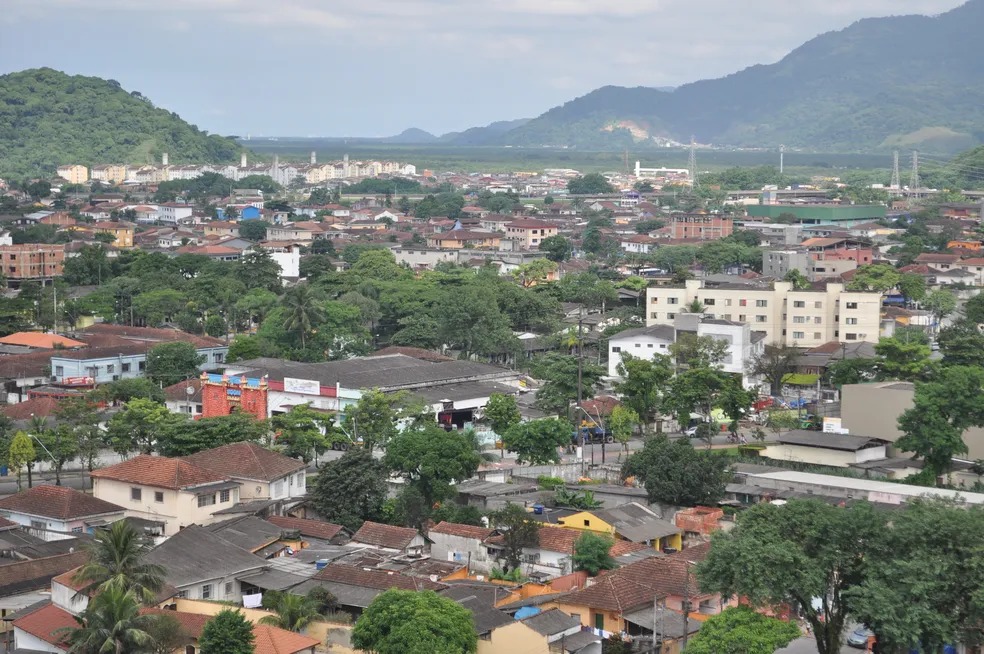
Brazil and Germany are analyzing the feasibility of implementing the first Green Hydrogen hub in Brazilian territory. The proposal is led by the consulting firm Pieracciani along with Brazil-Germany Cooperation for Sustainable Development. In August, Cubatão, a city in São Paulo, hosted a significant event where the relevance of local projects focused on green hydrogen as an innovative and technical renewable energy solution.
With discussions ongoing, the Green Hydrogen hub emerges as a crucial step for the future of sustainable energy in the country. Furthermore, the project encompasses strategies such as PtX (Power-to-X), enhancing the efficient use of this resource. During the event, experts highlighted the capacity of green hydrogen to reduce dependence on fossil fuels and the importance of new technologies in energy transformation. This approach aims to promote a positive impact on the environment and encourage the adoption of energy-efficient solutions.
Launch Event Of The Feasibility Study Project
The event, which brought together important companies such as Yara, Petrobrás, and Unipar, as well as local leaders, marked the beginning of the project for the feasibility study of the ‘GREEN HYDROGEN HUB and Power-to-X’ (PtX), which will be the first H2V center on the coast of São Paulo.
-
The Brazilian state accelerates industrial competitiveness with a focus on the extraction of strategic minerals to boost the energy transition in Goiás.

-
A Canadian retiree creates a hydroelectric system on a real river, generating energy continuously throughout the day and demonstrating how the power of water can supply a house with stability even in a simple structure.

-
Petrobras reaffirms its commitment to the market and ensures that it will carry out the energy transition safely to maintain national sovereignty.

-
Researchers discover a possible hydrogen deposit of up to 46 million tons beneath an ancient coal basin, and the volume could exceed half of the entire global production.


This initiative is led by the H2Brazil project, which is part of the Brazil-Germany Cooperation for Sustainable Development. This cooperation is implemented by the Deutsche Gesellschaft für Internationale Zusammenarbeit (GIZ), in collaboration with the Ministry of Mines and Energy (MME), and receives funding from the Federal Ministry for Economic Cooperation and Development (BMZ) of Germany.
Partnership And Selection Of Consulting Firm
Pieracciani, an innovation consulting firm recognized for its extensive experience, was selected to conduct the feasibility study for the Cubatão HUB. With a solid track record in trend analysis and future scenario studies, Pieracciani has the ability to anticipate market changes, as well as identify strategic opportunities for effective sustainable development.
On November 7, a public event will be held to present the Final Report of the HUB Feasibility Study. Participation will be open but requires demonstration of interest from those involved. This event will be a crucial opportunity to share the advances made and discuss the next steps for the implementation of the Green Hydrogen Hub.
Objectives And Impact Of The H2Brazil Project
The H2Brazil project aims to support the expansion of the hydrogen market in the country, promoting the development of new technologies and creating appropriate legal conditions for sector growth. In addition to improving infrastructure, the project also encourages the dissemination of knowledge, provides training, skills development, and promotes innovation to expand the green hydrogen market in Brazil.
Cubatão was chosen for the HUB installation due to its significance as a strategic industrial hub, hosting industries from the petrochemical, chemical, steel, fertilizer, logistics, and energy sectors. Valter Pieracciani, founder and CEO of Pieracciani, highlights green hydrogen as a sustainable energy solution for the city, which has a past marked by environmental pollution.
Environmental History And Prospects For Cubatão
Known worldwide in 1981 as the most polluted city in the world, Cubatão earned the nickname ‘Valley of Death’ given by the UN. Since then, the city has taken significant steps to mitigate the impacts of pollution and, according to the World Health Organization, in 2014, it was no longer the most polluted city. However, environmental challenges persist, requiring ongoing actions to safeguard the health of the population.
The new Green Hydrogen project aims to improve air quality and the environment in the region. According to Valter Pieracciani, in addition to reducing pollutant emissions, the project aims to transform Cubatão into a model of sustainable development for other industrial cities, both in Brazil and in other countries.
Feasibility Study Of The Green Hydrogen HUB
The feasibility of creating a Green Hydrogen and PtX HUB in Cubatão will be assessed considering economic, technical, social, and environmental aspects. This study aims to provide a robust basis for future decisions, identifying both the challenges and opportunities of this hub. The study will consider the potential of the industrial hub and adjacent regions, such as the port of Santos.
The focus will be on involving potential companies in the production and use of green hydrogen and its derivatives, in addition to the local industrial processes that could benefit from these products. The impact on the decarbonization of these sectors will be evaluated.
Methodology And Aspects Of The Study
The study will address several important aspects:
1. Best practices survey: international and national mapping of the best practices of Green Hydrogen and PtX hubs, aiming to adapt successful strategies for Cubatão.
2. Stakeholder mapping: identification of companies, startups, investors, and other actors to foster collaboration and innovation.
3. Business opportunities: analysis of opportunities for local companies, technology suppliers, and research institutes, highlighting their contributions to the success of the HUB.
4. Technical and financial feasibility: evaluation of the technical, economic, and operational viability of the HUB.
5. Risk and benefit estimation: identification of social and environmental risks and benefits, such as job creation and CO2 reduction.
6. Funding sources: research on calls for proposals and available funding lines.
7. Implementation recommendations: development of strategies and actions necessary for the success of the HUB.
Expected Results And Partnerships
The study aims to provide a comprehensive view to support the decision on the creation of the HUB, establishing a clear path for sustainable development. The partnership with the German government will include technology transfer, training of local professionals, and development of the necessary infrastructure for the production and use of green hydrogen, strengthening the commitment to a sustainable future.
Moreover, the cooperation between Brazil and Germany in Green Hydrogen is not new. In 2023, the central theme of the iH₂Brazil Program was sustainability and the mitigation of the impacts of energy production. Developed by Pieracciani and Brazil-Germany Cooperation, this initiative aimed to contribute to the decarbonization of the Brazilian economy through green hydrogen.
About Pieracciani Business Development
With over 30 years of operation, Pieracciani Business Development is one of the most respected national consulting firms in management focused on innovation. The company has served leaders in the Brazilian market such as Nestlé, Oi Telemar, Contax, CPFL, Odebrecht, and Andrade Gutierrez, accumulating over 600 successful projects with measurable results.
The Pieracciani team consists of engineers, administrators, economists, and marketing professionals, trained to size sectors and develop business strategies, management models, and economic viability analyses. They also dedicate themselves to studying risks, barriers, and opportunities across various sectors, in addition to creating systems to organize and disseminate innovations.
Source: Press PIERACCIANI










Seja o primeiro a reagir!