





 Portuguese
  English
  Spanish
  5 min of reading
  0 comments


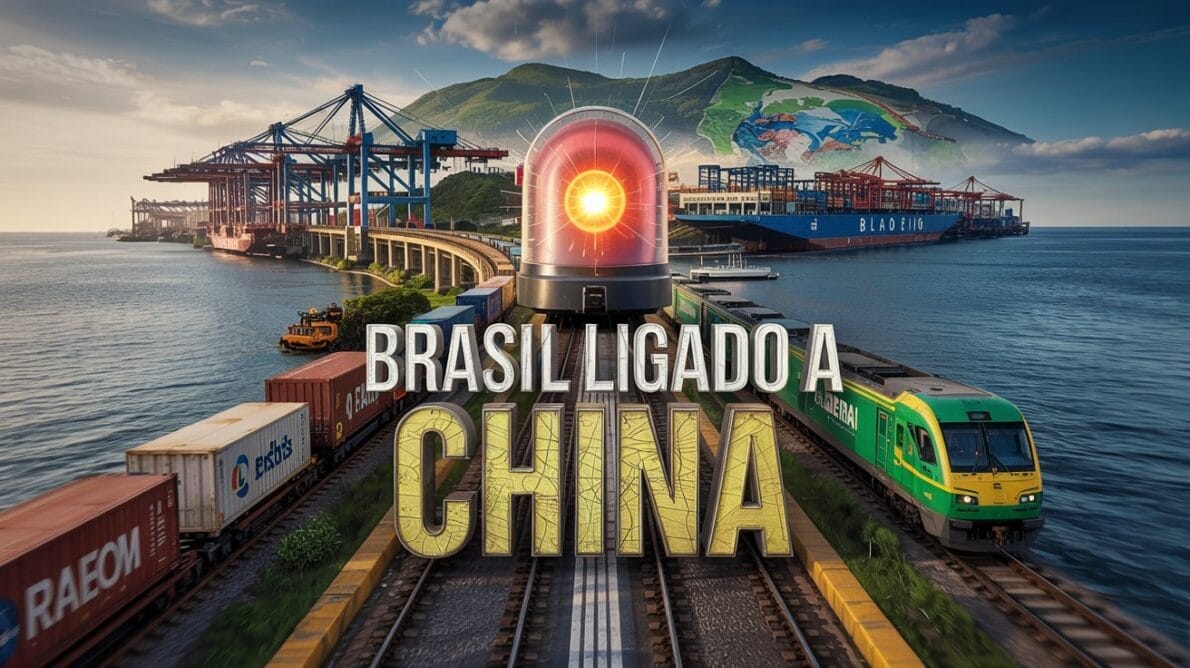
Construction of a Bioceanic Corridor Between Brazil and Peru Promises to Transform Cargo Transport, Connecting the Atlantic to the Pacific. China Has a Fundamental Role in This Project, with Great Implications for International Trade Between the Continents.
A delegation of railway engineers from the Chinese government arrived in the city of Ilhéus, Bahia, on Wednesday (16), with the mission of assessing the progress of the East-West Integration Railway (Fiol) works.
During the visit, the technicians examined Fiol 1 and the South Port, with the aim of studying the feasibility of an ambitious project for a bioceanic corridor that will link Brazil to Peru.
This project aims to create a strategic route for the transport of cargo between the Atlantic Ocean and the Pacific, connecting the South Port in Bahia to the port of Chancay in Peru, which is about 80 kilometers from Lima.
-
The institute that trained the greatest aerospace engineers in Brazil has just opened its first campus outside São Paulo after 75 years: ITA Ceará will have R$ 445 million, new courses in energy and systems, and classes are expected to start in 2027.
-
Luciano Hang, owner of Havan, goes to Juiz de Fora after the tragedy in February, brings R$ 1 million, hands out R$ 2,000 cards, and donates up to R$ 15,000 to victims in the region.

-
The Brazilian passport allows legal residence in dozens of countries without the need for a prior visa, and most Brazilians are unaware that they can apply for residency directly upon arriving in nations in South America, Africa, and even Europe.
-
Petrobras sends a message to Brazilian truck drivers after fuel collapse and reveals plan to have 100% domestic diesel.
The main intention of the Brazilian government is to enable a structuring railway corridor that runs across the country from east to west, passing through states such as Bahia, Goiás, Mato Grosso, Rondônia, and Acre.
This logistical axis will allow the flow of grain, minerals, and other products from the central region of Brazil to the port of Chancay.
The National Secretary of Railway Transport, Leonardo Ribeiro, highlighted that the railway infrastructure will be essential to optimize cargo transport in Brazil.
The Brazil-Peru Bioceanic Corridor: A Route to Strengthen International Trade
According to the secretary, China has committed to conducting a new study on the implementation of the Brazil-Peru Bioceanic Corridor, with the aim of improving trade connections between the two countries and expanding the flow of goods between South America and Asia.
This project could significantly reduce transportation time for cargo between the two continents, facilitating the export of Brazilian products to international markets.
Marcus Cavalcanti, Special Secretary of the Investment Partnership Program at the Civil House, emphasized the importance of the project by stating that the implementation of the railway corridor will contribute to reducing approximately 10 days in the travel time of ships departing from Brazil to Asia.
The reduction in transportation time will be a significant advantage for the international trade of Brazilian products, such as iron ore and soybeans, which make up a large portion of exports to China.
The North-South Railway and Its Integration with the Bioceanic Corridor
The integration railway network of Fiol plays a crucial role in the success of this project.
The East-West Integration Railway (Fiol) is already one of Brazil’s main logistical routes, and the extension of the system with the South Port in Ilhéus is seen as a fundamental strategy for the construction of an efficient bioceanic corridor.
Bahia Mineração S.A. (Bamin), the concessionaire responsible for the construction of the railway section, is also responsible for building the South Port, essential for cargo flow.
Additionally, the Fico-Fiol is one of the main initiatives of the New PAC and represents the concession to the private sector for the Central-West Integration Railway (Fico) and Fiol.
The project, covering 2,700 kilometers of railway, is one of the federal government’s major bets to transform Brazil into a strategic logistical hub for international trade.
The extension of Fico-Fiol between Bahia, Goiás, and Mato Grosso is being developed with an estimated investment of R$28.7 billion.
The goal is to improve the flow of grains and minerals to the Atlantic ports and, in the future, enable the connection with the Pacific to expand trade with Asia.
Leonardo Ribeiro detailed that starting from Lucas do Rio Verde (MT), the project could extend to Peru, with the construction of a railway connecting Brazil to the port of Chancay.
The Strategic Role of the Chinese Visit to Brazil
The visit of the Chinese delegation began with an inspection of the works of the junction between Fico-Fiol and the North-South Railway, in the municipality of Mara Rosa, Goiás.
These integration points are fundamental for creating a railway network that allows for the transport of goods from north to south of the country.
On Tuesday (15), the technicians from China were received at the Civil House in Brasília for a meeting aimed at aligning actions and discussing the logistical partnership between the two countries.
On Thursday (17), the delegation would proceed to the Port of Santos (SP), where they would continue evaluating Brazilian railway infrastructure, focusing on the integration of routes for the Brazil-Peru Bioceanic Corridor.
The agenda of the Chinese visit occurs weeks before President Luiz Inácio Lula da Silva’s official trip to Beijing, scheduled for May 12 and 13.
The meeting, which is part of the agenda for strengthening trade and infrastructure ties between Brazil and China, reflects the growing partnership between the two countries, especially regarding logistical and transport projects.
Perspectives for the Future: The Economic and Environmental Impact
The potential of the Bioceanic Corridor is significant not only for trade but also for reducing Brazil’s environmental and logistical costs.
The use of railways for transporting minerals and grains, products that account for a large share of Brazilian exports to China, is seen as a more efficient and sustainable solution than road transport, with less impact on the environment and greater reduction in operational costs.
The numbers are impressive: Brazil exports about 350 billion dollars per year, with more than a third of that value destined for China.
The majority of this cargo, as mentioned earlier, consists of iron ore and soybeans, which are heavy and bulky products, making the railway a much more efficient option for the flow of these resources.
The Strategic Importance of the Project for Brazil and China
For Brazil, creating a railway corridor to the Pacific represents a significant logistical transformation, which could improve the country’s competitiveness on the global stage.
The infrastructure, by shortening transport time and improving distribution efficiency, will bring benefits to Brazilian companies seeking to expand their presence in Asian markets, especially in China, one of Brazil’s largest trading partners.
The Question Remains: Will Brazil Be Able to Turn This Logistical Dream into Reality?
Time will tell if the partnership with China will be the path to a more prosperous future, where integration between the continents will facilitate the flow of goods and further strengthen trade relations between the two countries.
What do you think about the impact that this new route could have on international trade? Leave your opinion in the comments!








Seja o primeiro a reagir!