





 Portuguese
  English
  Spanish
  5 min of reading
  0 comments


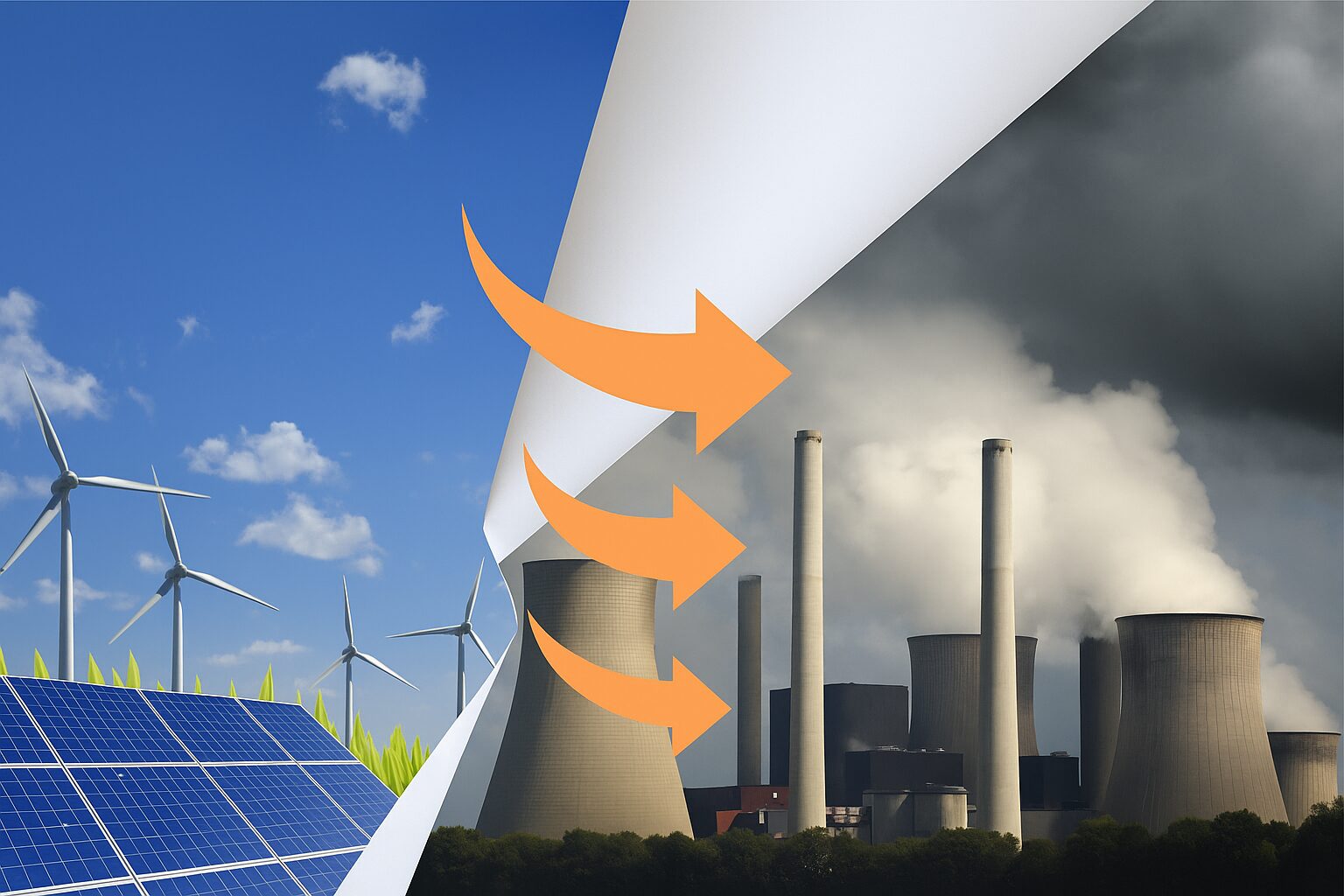
Brazil Stands Out In The Global Scene By Leading The Use Of Renewable Sources With Environmental, Economic And Social Benefits, But Still Faces Challenges To Ensure A Fair Energy Transition Free Of Negative Impacts
The fight against climate change requires concrete actions to reduce greenhouse gases. One of the most effective ways is to abandon fossil fuels and expand the use of renewable sources. Besides the environmental impact, this transition also directly influences the economic and social growth of countries.
At COP28, held in 2023, 118 countries made a bold commitment: to triple renewable energy generation by 2030. The goal aims to reduce energy costs and cut 10 billion tons of emissions by the end of the decade.
Brazil stands out in this scenario. According to ANEEL, 84.25% of the country’s electricity already comes from renewable sources. In the total energy matrix, Brazil ranks third in the world in renewable capacity, according to the BRICS Climate Ambition report.
-
A Canadian retiree creates a hydroelectric system on a real river, generating energy continuously throughout the day and demonstrating how the power of water can supply a house with stability even in a simple structure.

-
Petrobras reaffirms its commitment to the market and ensures that it will carry out the energy transition safely to maintain national sovereignty.

-
Researchers discover a possible hydrogen deposit of up to 46 million tons beneath an ancient coal basin, and the volume could exceed half of the entire global production.

-
China bets on the Fishery-PV model and transforms fish farms into giant solar plants, covering ponds with panels that generate energy while utilizing the same space for large-scale aquaculture production.


The World Economic Forum ranked the country as number one in the Americas in the Energy Transition Index among emerging nations.
This leadership did not come out of nowhere. The trajectory began back in 1889, with the first hydroelectric plant. In the 1970s and 1980s, with the oil crisis, came Pró-Álcool, Itaipu, and biomass.
Wind energy emerged in 1992 and solar energy in 2002. Over time, the country has accumulated knowledge that can serve as an example to the world.
1. Renewables Help The Climate
Renewable sources emit fewer pollutants and, therefore, help combat global warming. In 2024, the planet recorded the highest average temperature in history: 1.6°C above pre-industrial levels, according to Copernicus.
This was also the year with the highest emissions from fossil fuels. If the current pace continues, there is a 50% chance that the world will exceed 1.5°C of warming in the next six years.
While G20 countries still heavily depend on fossil fuels — 58% in the United States, 65% in Australia, and 43% in Germany — Brazil leads with renewables.
Climate Analytics estimates that it will be necessary to reach 10 terawatts of solar and wind capacity by 2030. Currently, we have 2.4 terawatts. If the growth of 25% over two years is maintained, the goal is feasible.
2. Renewables Support The Economy
Clean sources are also economically beneficial. The renewable electricity matrix could add up to US$ 100 billion to GDP by 2040, according to Mckinsey consulting. It also reduces health costs and makes energy more stable, without the fluctuations of oil.
Solar energy, for example, can be installed locally, creating jobs in installation, maintenance, and manufacturing. Communities in Pará and Pernambuco are already feeling the benefits with support from the Light for All program.
Data from FIEMG indicate that in 2021, the average cost of renewable MWh was R$ 179.5, compared to R$ 441.8 for non-renewables.
According to SEBRAE, small businesses benefit from savings on electricity bills and positive marketing. About 60% of entrepreneurs express interest in investing in solar energy.
A national survey in 2024 indicated that 64% of the population supports eliminating fossil fuels.
3. Diversification Of The Matrix Guarantees Sovereignty
During the blackout from 2001-2002, Brazil relied almost exclusively on hydroelectric power, with 89% of the matrix. The crisis revealed the risks of dependence. Today, investing in solar and wind helps reduce this vulnerability.
The Clean Energy Coalition warns that climate change could affect rainfall patterns in the North and Northeast. However, winds and solar radiation tend to increase, reinforcing the potential of these regions.
Investing in electric transportation and strengthening biofuels also bolsters energy sovereignty. This reduces dependence on oil and gas, which are limited and subject to global instabilities.
4. Renewable Energy Needs To Be Fair
Despite progress, not all renewable energy is free of negative impacts. Cases like Belo Monte and Itaipu show that large projects can affect communities and the environment.
Belo Monte, for example, caused deforestation, harm to indigenous peoples, and destruction of fishing in the Xingu River. Itaipu flooded 1,350 km² and harmed the Avá-Guarani.
In the Northeast, reports of abuses in contracts, destruction of dunes, and excessive noise caused by wind farms are emerging. The campaign “Renewable Yes, But Not Like This” and the “Socioenvironmental Safeguards” propose fairer paths.
Examples like the quilombo Serra dos Rafaéis (PI) show the importance of popular participation. The motto “Nothing About Us, Without Us!” summarizes the struggle of these communities.
5. Renewables Bring Energy To Remote Places
In the Amazon, about one million people still live without electricity. Many use expensive and polluting diesel generators. Since transmission lines are unfeasible in many locations, the solution is decentralized solar energy.
In the last five years, more than 150,000 people have benefited from solar kits through the Light for All program. Off-grid technology, with batteries, is silent, clean, and works well in isolated areas.
6. Gas Is Not Transition Energy
Between 1995 and 2022, the share of renewables in the electricity matrix dropped from 97% to 89%. The reason was the increase in gas-fired plants, which raise energy costs and increase emissions.
Even with the support of politicians and Minister Alexandre Silveira, the use of liquefied natural gas (LNG) goes against climate commitments. The justification that gas compensates for the variations of clean sources is still being discussed.
7. Politics Is Still Slow To Progress
Despite the existence of PLANTE (National Energy Transition Plan), there is a lack of budget, clear goals, and real commitment. In 2025, the Fuel Consumption Account (CCC) will cost R$ 10.35 billion. This amount would be enough to replace the use of fossil fuels in the Amazon.
Brazil has everything to be a world leader in the energy transition. Sun, wind, water, and knowledge are not lacking. However, while part of the elite insists on the oil from the mouth of the Amazon River, the world demands urgent action for the climate.
With information from Clima Info.








Seja o primeiro a reagir!