





 English
  Francês
  Alemão
  Italiano
  Japonês
  Norueguês
  Portuguese
  Spanish
 4 min of reading


Pipelines Rota 1 and 2 Connected to Petrobras Units in Macaé and Caraguatuba are Overloaded, Rota 3 is the Major Bet to Drain Offshore Gas from the Pre-salt and Reduce Imports
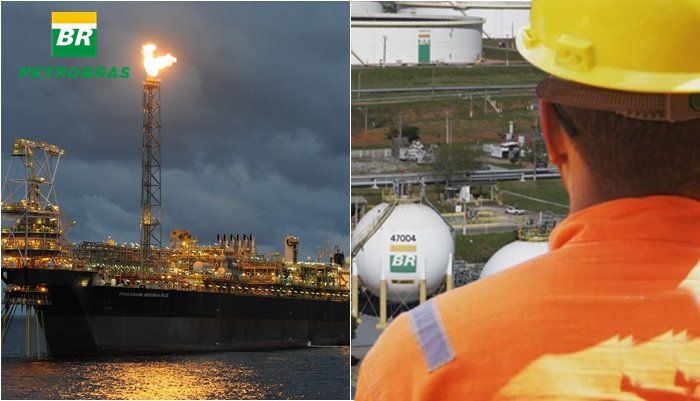
Petrobras is enhancing its pipeline and offshore natural gas processing capacity, while the federal government is exploring alternatives to tackle what is one of the main bottlenecks in the country to stimulate fuel consumption. Currently, the cities of Macaé and Caraguatuba receive and process gas from the pre-salt.
Read also: Natural Gas Infrastructure is the Topic of a Webinar This Friday
The state-owned company will receive bids this week for the adaptation of the natural gas treatment unit in Caraguatatuba (UTGCA), in São Paulo. The project aims to enable it to process up to 10Mm3 / d (million cubic meters per day) of gas from the pre-salt of the Santos basin without the need to mix it with post-salt gas, Petrobras informed in a press release.
-
Petrobras finds high-quality oil in the pre-salt at 113 km from RJ and reignites expectations about strategic reserves in the Campos Basin.

-
Ocyan opens registrations for startups focused on innovation in the oil and gas sector and will select projects for Innovation Day with the support of Nexio.

-
Petrobras announces new oil discovery in the pre-salt of the Campos Basin and reinforces Brazil’s prominence with high-quality reserves that can increase production and energy revenues.

-
Alert in the fuel market: Analysts and a former director of ANP warn that oil prices may worsen in the coming months due to global instability.

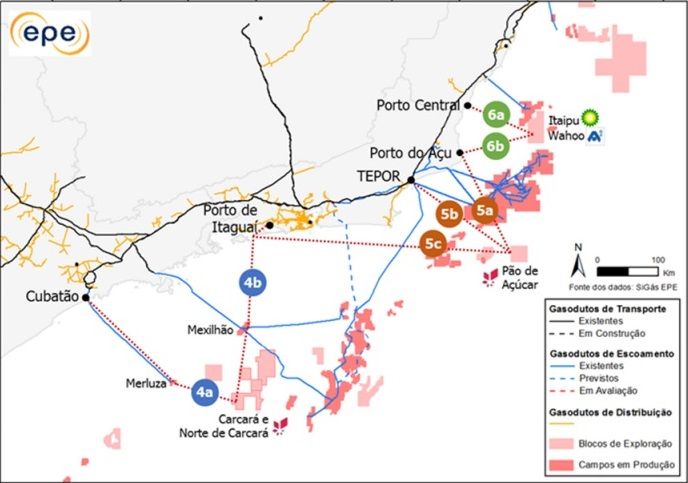
Another important investment from the company is the Rota 3 pipeline, which will connect the pre-salt fields to a new natural gas processing unit (NGPU) under construction in Itaboraí, in the state of Rio de Janeiro. Scheduled to commence operations in 2021, the 355 km pipeline will have a capacity of 18Mm3 / d of gas, while the NGPU will be able to process 21Mm3 / d.
Currently, Brazil has two pipelines that transport gas from the pre-salt to the mainland: Rota 1, with a capacity of 10Mm3 / d connected to the Monteiro Lobato Gas Treatment Unit (UTGCA), and Rota 2, with up to 16Mm3 / d connected to the Cabiúnas terminal (Tecab) in Macaé, also in the state of Rio. The processing capacities of the two units are 10Mm3 / d and 13Mm3 / d, respectively. Remember that Macaé will build 12 thermoelectric plants that will use this gas and create 1,500 jobs.
Petrobras’ three pipelines are also utilized by companies such as Shell, Petrogal (Galp), and Repsol Sinopec, which hold stakes in the Lula and Sapinhoá pre-salt fields, among others.
Infrastructure Bottlenecks
The federal government expects that the total capacity of the pipelines will be reached by 2025. Starting that year, it would be necessary to deploy new pipelines in the Santos and Campos basins to increase the transportation of natural gas from the pre-salt to the coast for export.
The Energy Research Company (EPE) has so far mapped 11 indicative pipeline projects connected to NGPUs, seven of them based on pre-salt volumes and four others based on post-salt volumes. The pipelines have a total length of about 2,100 km, and some of them offer options for transporting gas from the same sedimentary basins (Santos, Campos, Espírito Santo-Mucuri, and Sergipe-Alagoas).
Considering the construction of only one alternative for each basin, the projects could add more than 77Mm3 / d of export capacity from the offshore areas, in addition to NGPUs with a total processing capacity exceeding 70Mm3 / d.
Brazilian Cosan presented two potential offshore pipelines to the environmental regulatory agency Ibama, considered by EPE. Rota 4, with a length of 270 km, is planned to connect block BM-S-8 in the Santos basin to a new natural gas treatment unit in Cubatão, São Paulo, while its Rota 4b pipeline, 231 km long, would connect the same block to the port of Itaguaí in Rio de Janeiro.
Financing
Given the complexity of structuring and financing such projects, the federal development bank BNDES proposed a new business model through a special purpose vehicle, which would be responsible for operating the shared gas transportation infrastructure. Oil and gas operators would connect their production fields to an offshore hub, and from there, a pipeline capable of transporting the production from multiple fields would connect to an onshore NGPU.
Gas Reinjection
According to the oil and gas regulatory agency ANP, around 24% of Brazil’s total natural gas production in 2019 was reinjected. The country’s main producer, Petrobras, states that reinjection is a “noble” way to utilize gas produced in its offshore fields, as the technique is important for increasing the oil recovery factor. However, local experts say that the bottleneck in transportation and processing infrastructure is one of the main reasons why monetizing offshore gas in the country remains a challenge.








Seja o primeiro a reagir!