





 Portuguese
  English
  Spanish
 5 min of reading
  2 comments


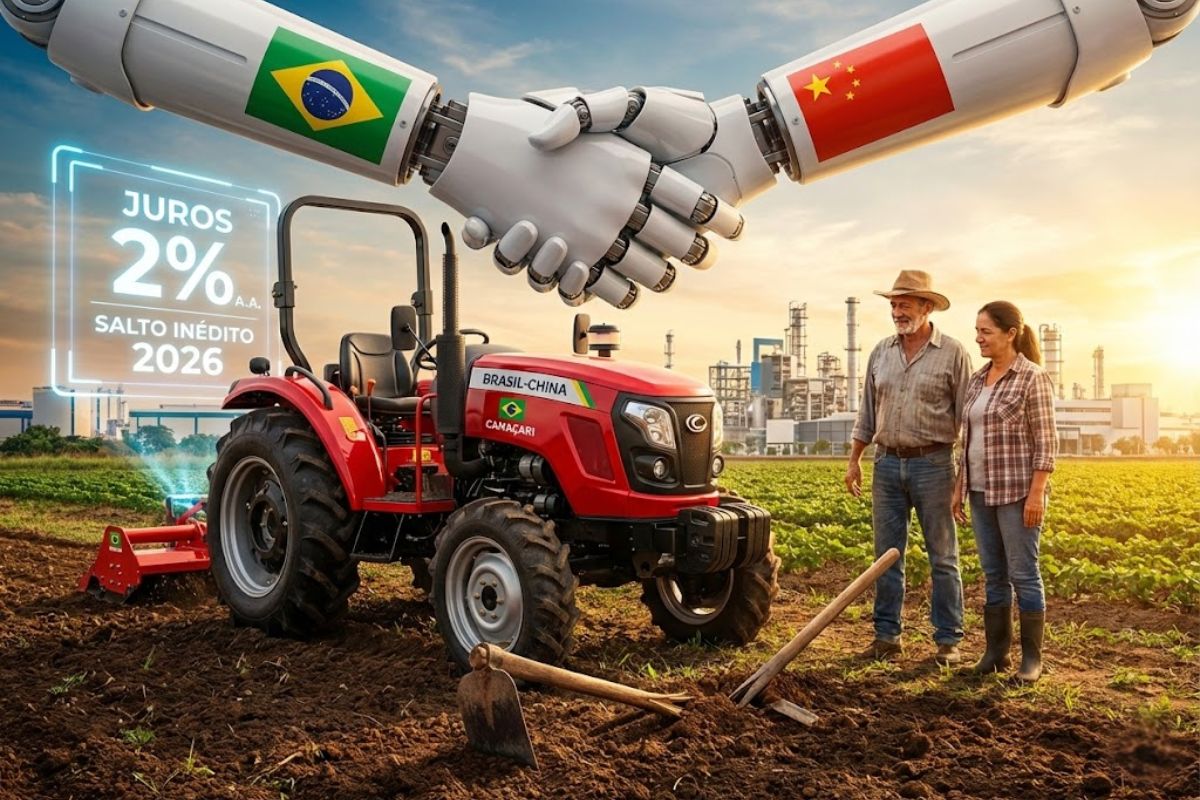


Partnership Between LiveFarm and Hans Machineries Leads National Production of Compact Tractors from 7 to 20 Horsepower to Camaçari, Ceará and Paraíba, with Technology Transfer, Financing at 2% per Year and Focus on Mechanizing Family Farming, Keeping Youth in the Fields and Reducing Historical Inequalities in the Fields in Brazil
The formalization of the partnership between Brazilian LiveFarm and Chinese Hans Machineries marks a turning point in the supply of compact tractors for small rural producers. With an initial factory in Camaçari and expansion planned for Ceará and Paraíba, the agreement directly targets the reality of family farming, which still largely operates with a hoe.
The Ministry of Agrarian Development and Family Agriculture (MDA) treats the project as a structural intervention: it is not limited to selling machines but aims to create a new industrial base in the Northeast, with compact tractors, automatic brush cutters and implements designed for small areas, with subsidized financing at 2% per year and focus on productive inclusion in the fields.
Industrial Partnership Focuses on Compact Tractors for Small Properties

A joint venture announced on November 26, 2025, brings together LiveFarm, responsible for industrial implementation in Brazil, and Hans Machineries, a manufacturer with a presence in 54 countries and established experience in small machinery.
-
Petrobras sends a message to Brazilian truck drivers after fuel collapse and reveals plan to have 100% domestic diesel.

-
Mothers and daughters come together, create an ‘express’ beauty salon and turn the idea into a network with 21 units, revenue of R$ 16.7 million and 12,000 subscribers.

-
End of the 6×1 schedule: how the reduction of hours can affect service companies, industry, and agribusiness.

-
Brazil Ignores Trump’s threats to BRICS, Buys 42 tons of gold and reduces the Dollar’s share by 6.45% in international reserves.


The plan is to install production plants in Camaçari (BA) and then in states like Ceará and Paraíba, forming an industrial axis focused on the production of compact tractors between 7 and 20 horsepower, as well as automatic brush cutters and other implements specific for small areas.
According to Joelcio Carvalho, executive director of LiveFarm, the goal is clear: replace extreme physical effort with accessible mechanization, with machines capable of operating in small plots, sloped terrains, and properties where large tractors simply cannot enter or are not economically viable.
Technology Transfer and Strategic National Content
Hans Machineries brings to the country a portfolio already tested in dozens of markets, but the partnership was structured to avoid simple importation of ready-made kits.
The declared goal is to advance in technology transfer, with adaptation of projects and local production of components.
The requirement for national content is not just rhetoric.
The compact tractors and other machines produced in the partnership must meet minimum standards to be financed at interest rates of 2% per year, according to the rules announced by the federal government for small equipment manufactured in Brazil.
This combination of external technology and internal industrialization is seen by the MDA as a way to:
reduce dependence on imported machines for small properties
lower maintenance and replacement costs
consolidate a regional hub for small agricultural equipment
The explicit bet is that compact tractors cease to be an exception and become the standard for mechanized family farming.
Retirement of the Hoe and Staying of New Generations in the Fields
In the speech of Minister Paulo Teixeira, the image chosen to summarize the impact of the partnership was direct: “retirement of the hoe”.
The expression translates the social goal of the public policy behind the compact tractors.
The mechanization of small areas reduces the physical workload, allows accomplishing in hours what previously took days, and creates space for better property management. This has concrete effects:
less physical wear on women and the elderly who lead many family units
greater attractiveness of the fields for young people, who tend to reject routines based on extreme manual labor
gaining time for planning, food processing, and direct sales
For the government and the architects of the partnership, retiring the hoe does not mean abandoning the fields, but qualifying rural work with technology.
Financing at 2% and the Role of Cooperatives
One of the pillars of the project is access to credit.
Minister Paulo Teixeira emphasized that small machines with national content could be financed at interest rates of 2% per year, a rare condition in the recent history of family farming.
The president of Unicafes, Fátima Torres, highlighted that the entry cost is still the main barrier for many farmers, even with cheaper lines.
Therefore, affiliated cooperatives must take on decisive functions:
organizing collective purchases of compact tractors and implements
negotiating conditions with manufacturers and financial institutions
combining credit, technical assistance, and training in the use of machines
The logic is simple: the more coordinated the demand, the lower the final cost per producer and the greater the chance of mechanization spreading beyond the more structured hubs.
Mechanization of Family Farming and Correction of a Historical Deficiency
Family farming accounts for a central part of the food supply in Brazil, but has always lagged behind in mechanization compared to large-scale agribusiness.
While larger farms have become showcases of high technology, millions of farmers still rely on physical strength and manual tools.
The arrival of compact tractors produced in Brazil, financed at low interest rates and adapted for small areas, addresses part of this deficiency.
The policy precisely targets the weakest link in the chain: the producer working on a few hectares, in areas with difficult topography and low individual investment capacity.
The partnership with Hans Machineries is treated by the government as a late but necessary technological insertion, which brings the machinery park of Brazilian family farming closer to standards already established in other countries that have long invested in equipment dedicated to the segment.
Challenges of Scale, Distribution, and Technical Assistance
Despite the potential, the very formulation of the policy recognizes that the production of compact tractors alone does not guarantee transformation in the fields.
There are explicit challenges:
ensuring that machines reach remote territories from the main centers
guaranteeing continuous technical assistance for operation, adjustment, and maintenance
avoiding concentration of mechanization only in already established cooperatives
It will also be crucial to transform technology transfer into real autonomy, with progressive mastery of engineering, local supply chains, and the ability to update models over time.
Without this, the policy risks being limited to assembling projects dependent on external decisions.
2026 as a Symbolic Milestone in Light Mechanization
The schedule released by the MDA and LiveFarm foresees the launch of the first equipment at the beginning of 2026, with a presentation at a machinery fair scheduled for Campinas in March.
The date serves as a symbolic milestone for a new phase of light mechanization in the country.
If production consolidates, compact tractors are expected to become the gateway to a new generation of rural equipment, including automatic brush cutters, small soil preparation implements, and solutions for less exhausting daily management.
By concentrating factories in the Northeast and connecting financing, technology transfer, and cooperativism, the government tries to align industrial policy with agricultural policy and regional development.
In the end, the central question is simple and practical: do you think that the compact tractors produced in Camaçari and other plants in the Northeast will really retire the hoe in family farming or will access to credit still be the biggest barrier in the fields?








Aposentarão as enxadas e mudarão o sistema de organização dos produtores rurais que derrubarão muitas barreiras no campo inclusive o acesso ao crédito.
Os tratores compactos e implementos voltados à pequenas propriedades trarão uma grande mudanca na agricultura brasileira e na organização cooperativa que durrubarao as barreiras no campo.