





 Portuguese
  English
  Spanish
  4 min of reading
  0 comments


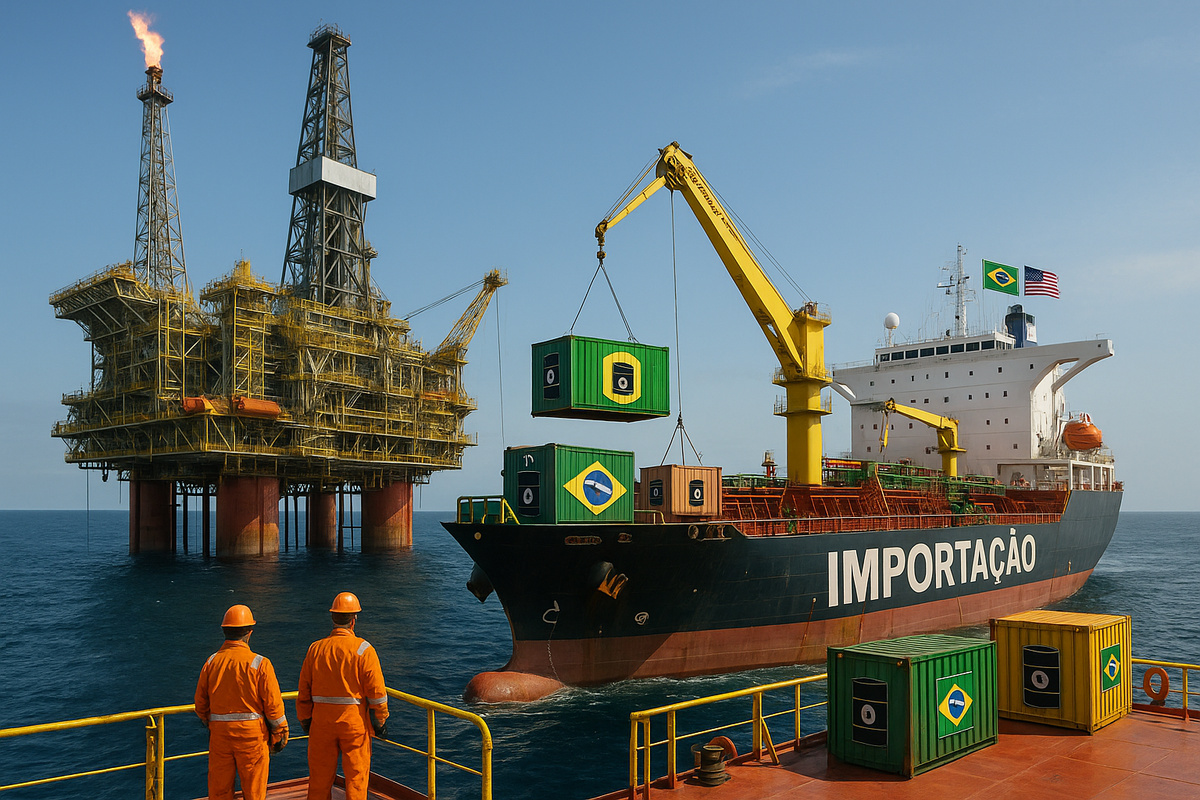
Productive Stagnation, Auction Suspension, and Regulatory Challenges Sound the Alarm for the Future of Brazilian Oil, According to Official Sources and Experts.
Even though the country has a tradition as an exporter, a silent turnaround is already emerging and could change everything.
For this reason, official studies project that Brazil, recognized as a major exporter, may start importing oil as early as 2030.
Meanwhile, the United States, on the other hand, continues to expand production and, consequently, leads the international market with surprising and constant technological advances.

Official Projections Point to Decline Risk
According to forecasts from the Ministry of Mines and Energy released in 2024, based on the Energy Research Company (EPE), national production may stagnate by 2030.
Moreover, it could drop by half by 2040 and, thus, practically reach zero by 2050.
However, this scenario has been publicly announced and is backed by sector experts.
For this reason, the situation worries the automotive sector, the energy market, and the government itself.
Strategic Factors Widen the Gap Between Brazil and the U.S.
Although Brazil and the United States have both increased production since the 2000s, their trajectories, however, have taken opposite paths.
On one hand, Americans prioritize extraction onshore, utilizing shale gas, with lower costs and greater flexibility.
On the other hand, Brazil bets on pre-salt oil, which requires high technology and deep-water operations.
-
The rise in oil prices could ensure an extra revenue of R$ 100 billion for the Federal Government, indicates a recent economic study.

-
Naturgy begins an investment of R$ 1.6 million to expand the gas network in Niterói and benefit thousands of new residences and businesses.

-
A major turn in the Justice system suspends tax increases and directly impacts oil and gas companies in Brazil by affecting costs, contracts, and financial planning, leaving uncertain what could happen to the sector if these costs had increased.

-
Brava Energia begins drilling in Papa-Terra and Atlanta and could change the game by reducing costs in oil while increasing production and strengthening competitiveness in the offshore market.
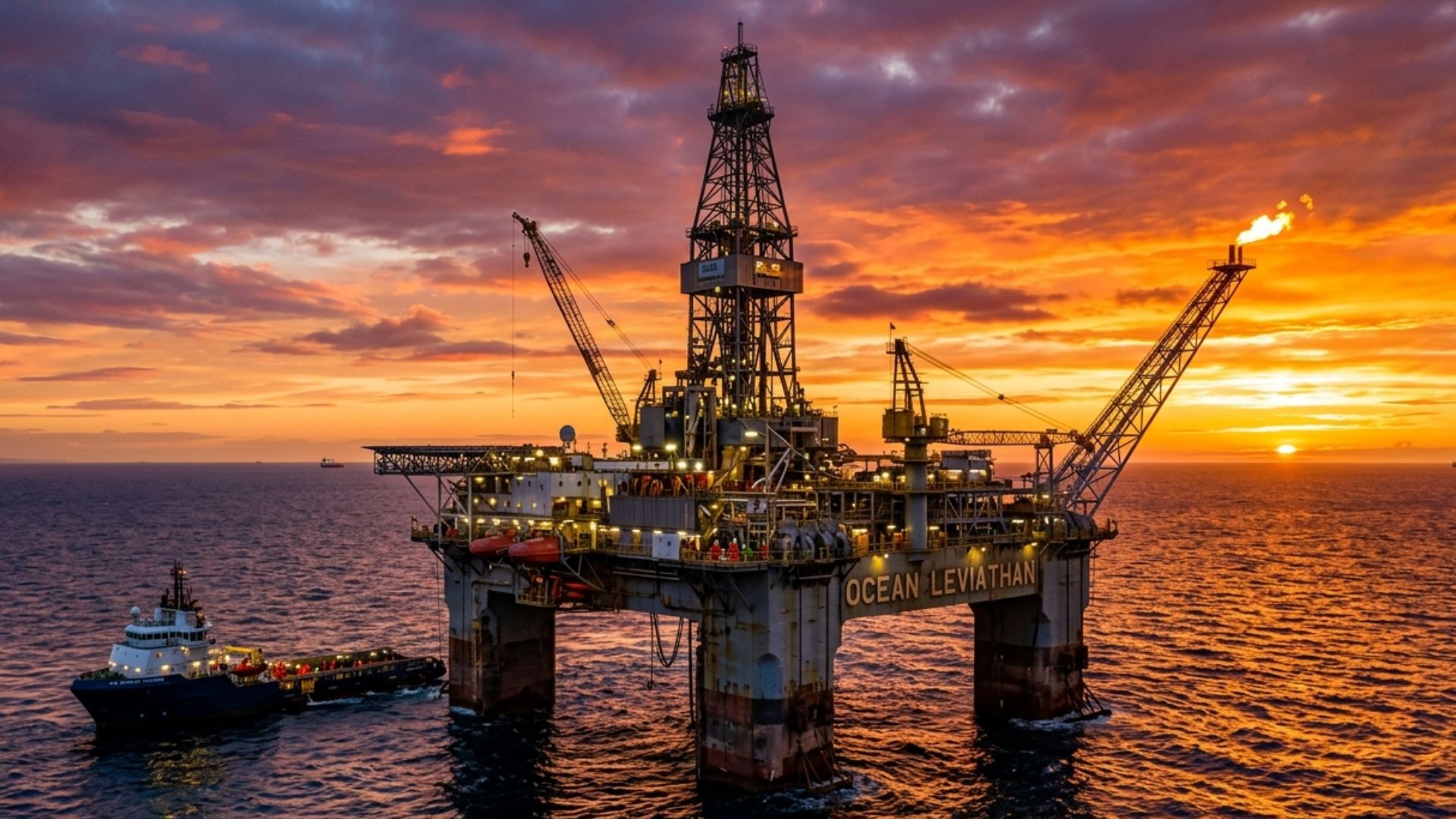

As explained by Adriano Pires from the Brazilian Center for Infrastructure (CBIE) to CNN in 2024, the Brazilian government suspended auctions between 2008 and 2013 during the discussion of the sharing model.
Therefore, this interval drastically limited the country’s exploratory progress.
As a consequence, the lack of new auctions led to a decrease in the number of productive areas.
Thus, this movement ultimately generated stagnation in the Brazilian oil sector.
Pre-Salt Boosts Production, But Cycle Is Short
While technological success is undeniable, more than 80% of Brazilian oil currently comes from the pre-salt, a reserve discovered by Petrobras in 2006.
However, Roberto Ardenghy, president of the Brazilian Institute of Oil and Gas (IBP), warns that Brazilian conventional reserves produce for only 27 to 30 years.
Therefore, time is short and, consequently, requires constant renewal of productive areas.
Additionally, the Campos Basin, explored since 1977, is already showing signs of depletion.
Meanwhile, the pre-salt, whose exploration began in 2008, is rapidly approaching maturity.
For this reason, expectations are growing around the Equatorial Margin (northern frontier), as well as the Pelotas Basin (southern frontier), both with unprecedented production potential.
Auctions, Investments, and Regulatory Environment in Focus
The suspension of auctions between 2008 and 2013 — a critical period for the sector — limited national production.
According to Adriano Pires, as a consequence, the country could today have double the production.
Moreover, he and Ardenghy claim that conducting new auctions is urgent.
They also emphasize that attracting foreign investments is essential.
Without these measures, Brazil may become an oil importer.
“Without regulatory predictability and a competitive environment, Brazil may lose self-sufficiency and become dependent on imports”, highlights Ardenghy, from IBP, in June 2024.
U.S. Technology Changes the Global Game
Even though many do not realize it, the trajectory of the United States is impressive.
Oil production jumped from 4.99 million barrels/day in 2005 to 13.5 million in 2024, according to data from ANP.
Meanwhile, Brazil reached a record of 3.7 million barrels/day in May 2024.
This American advancement is due to the so-called “shale boom”.
They use hydraulic fracturing (fracking), prohibited in Brazil since 2019 by state law in Paraná.
According to Roberto Ardenghy, countries like the U.S., China, and Argentina use fracking safely and achieve significant economic results.
“The change allowed the U.S. to shift from being the largest importer to the largest exporter on the planet”, emphasizes Marco Tavares, CEO of Gas Bridge, in an interview in 2024.
South American Competition and Brazil’s Strategic Role
Argentina, for its part, has heavily invested in shale and opened its market.
As a result, it has already been exporting half of its production since 2023, after identifying the second largest reserve in the world, according to Gas Bridge.
Consequently, this trend creates more competition in Latin America.
This movement may benefit the region’s energy security and simultaneously stimulate innovation.
“Argentina has become a direct competitor, but it is good for the market and strengthens the continent’s security”, concludes Ardenghy, IBP, in 2024.
Environmental Licenses and International Diversification Are Determinants
Finally, experts like João Victor Marques from FGV Energia advocate for expanding auctions and accelerating the entry of foreign players.
Additionally, they highlight the need to release environmental licenses, especially for the Equatorial Margin.
Marques states that Chinese companies are strategic to meet the growing Asian demand.
This need increased after global changes caused by the Ukraine war in 2022.
“Brazil is seen as a reliable supplier, but it needs to maintain predictability to continue exporting”, reinforces Marques, FGV Energia, in 2024.
Therefore, the future of Brazilian oil now depends on quick decisions, efficient regulation, and technological innovation.
Moreover, the country faces the challenge of remaining relevant in the international market.








-

-

2 pessoas reagiram a isso.