





 Portuguese
  English
  Spanish
  5 min of reading
  1 comment





In a moment when military spending soars around the world and geopolitical tensions resurge, Brazil faces a dilemma that mixes urgency and fiscal challenge. President Luiz Inácio Lula da Silva’s government tries to balance its accounts while evaluating whether to release a billion-dollar fortune to reverse the dilapidation of the Armed Forces and get off the ground strategic projects stalled for years.
In light of rising geopolitical tensions, President Luiz Inácio Lula da Silva (PT) gathered ministers to discuss a plan that could change the course of the federal budget in favor of the Armed Forces.
The proposed plan under evaluation aims to create a new exception to the fiscal framework, opening up space for investments in strategic programs of the Armed Forces.
The idea under study at the Palácio do Planalto involves sending to the National Congress a complementary law project removing R$ 30 billion from the spending cap.
-
The Federal Revenue issues a good alert for Brazilian taxpayers: 60.9% are already using the pre-filled tax return, automatic refunds via Pix reach millions, and the government plans for a fully automated income tax in the coming years.

-
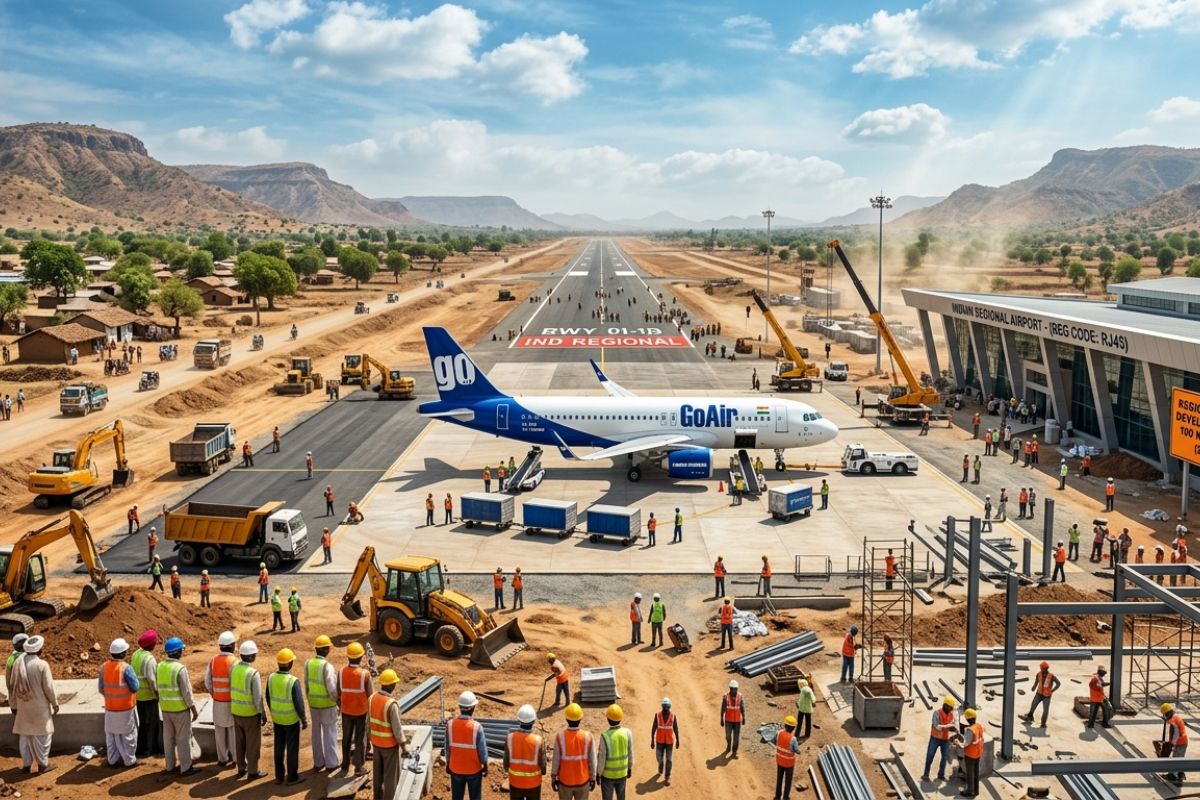
India announces a plan of $3.06 billion to bring aviation to forgotten regions: 100 new airports, $1.07 billion in subsidies, and regional routes guaranteed for 10 years, from 2026 to 2036, away from the centers.
-
Brazil blocked a proposal from the United States at the WTO that would make the exemption from tariffs on digital products like streaming and ebooks permanent, favoring American tech giants at the expense of developing countries.

-
IPTU exemption for seniors in 2026: see how to secure the benefit.


This amount would be distributed over six years and applied exclusively to modernizing the Army, Navy, and Brazilian Air Force (FAB).
According to a report from CNN Brasil, among the projects that could progress with the new resources are the Sisfron (Integrated Border Monitoring System), the development of Brazil’s first nuclear submarine, and the renewal of the Gripen NG fighter jet fleet.
Private Discussions With Ministers and Comparison to PEC 55
The topic was discussed privately by Lula with ministers Rui Costa (Casa Civil), Fernando Haddad (Finance), and José Múcio (Defense). Meetings are expected to continue in the coming days.
One of the government’s arguments is that this alternative would be politically more viable than PEC 55.
This constitutional amendment proposal would guarantee the Ministry of Defense an annual budget equivalent to 2% of GDP. It was presented in 2023 but is stuck in the Senate.
Critics of PEC argue that creating a new constitutional linkage is counter to the recent trend of seeking budgetary unlinking, as seen in health and education floors.
New restrictions increase the risk of growing public debt and worsening fiscal indicators.
Nevertheless, the economic team acknowledges the need to increase defense spending.
For the technicians, however, it would be necessary to include countermeasures such as reforming the social protection system of the Armed Forces and ending the so-called “fictitious death,” which pays benefits to families of military personnel discharged from service or convicted of crimes.
These two measures were sent to the Congress at the end of 2023 as part of a package to curb public spending, but remain virtually paralyzed in the Legislature.
The Global Arms Race and the Stagnation of Brazilian Armed Forces
Global military spending reached its highest level in four decades in 2024. There was a growth of 9.4% compared to 2023, reaching US$ 2.718 trillion.
In Brazil, however, strategic projects face successive delays due to lack of resources. The discrepancy draws the attention and concern of the military.
FAB Delays Schedule of Gripen Fighters
Last week, during a debate in the Senate’s Foreign Relations and National Defense Committee (CRE) regarding PEC 55, FAB announced another postponement in the delivery schedule of the Gripen fighters.
Brigadier General Walcyr Josué Araújo, head of the Air Force’s General Staff, presented an updated calendar. The last batch, with five aircraft, has been pushed to 2032. Previously, the forecast was to complete the package in 2027.
Out of the 36 contracted fighters, only 16 are expected to arrive in Brazil by 2027. “We have made successive additive terms. We are currently on the 12th, and you can see that we already have the perspective of the last aircraft being delivered in 2032,” Araújo told senators.
Budgetary Issues Increase the Project Cost
According to the brigadier, the lack of budgetary predictability hinders the proper planning of resources. “The lack of budgetary predictability means we cannot apply resources in a completely rational and balanced way in this contract,” he stated.
He added that the project is already 13% more expensive than the initial value. “We are already investing more than 13% above the initial value due to the need for adjustments and rebalancing. This difference alone would equate to acquiring six more aircraft out of the 36 originally contracted,” he highlighted.
Sisfron Also Suffers from Successive Delays
In June, CNN revealed new delays in Sisfron and the rescheduling made by the Army due to lack of funds. The system aims to enhance surveillance capacity over nearly 17,000 kilometers of borders.
The initial forecast was to complete the project by 2021. Less than 30% of it has been executed so far. The deadline has now shifted to 2039. Previously, a rescheduling had moved the deadline to 2035, but that adjustment also became unfeasible.
By the end of this year, just under R$ 3 billion of the projected R$ 15 billion will have been invested, according to Army data.
The slow pace worries the military, who fear for the security of the borders.
Navy Tries to Save the Nuclear Submarine Schedule
In the Navy, the focus is on developing Brazil’s first nuclear submarine.
The program’s budget, which also includes the final stage of conventional submarines and the construction of a multipurpose nuclear reactor in Iperó (SP), remains stable at around R$ 2 billion per year.
At the program’s inception, when the country was experiencing an economic boom, the budget reached nearly R$ 4 billion annually.
Later, during the recession of 2015 and 2016, it fell to about R$ 1.5 billion. It then stabilized. In 2025, it returned to around R$ 2 billion.
Current Value Does Not Guarantee Launch Before 2040
Navy officials interviewed by CNN state that, even with these amounts, the funds are insufficient to maintain the schedule that foresees launching the nuclear-powered submarine in 2034 or 2035.
If investments continue at the current level, the forecast will be pushed to the end of the next decade, closer to 2040.
To maintain the 2034 or 2035 date, admirals estimate that at least an additional R$ 1 billion per year would be necessary.
In addition, the Navy faces another budgetary challenge.
The naval force needs to decommission 43 vessels by 2028, about 40% of its fleet, due to reaching the end of their useful life. There are no guarantees for replacement so far.
Political Decision and Fiscal Impasse
With the rise of global tensions and the escalation of military spending around the world, pressure for investments in Brazilian defense is growing.
Lula and his ministers are trying to find a way to bolster strategic projects without causing imbalance in public accounts.
The potential exception to the fiscal framework has become the main avenue under study.
However, to move forward, the government will need to convince Congress and also offer countermeasures that reduce other military expenditures.
Meanwhile, the Army, Navy, and Air Force continue to try to prevent the collapse of their most ambitious projects with increasingly tight budgets.








Submarino nuclear e Gripe de novo nessa novela ?