





 Portuguese
  English
  Spanish
  4 min of reading
  14 comments


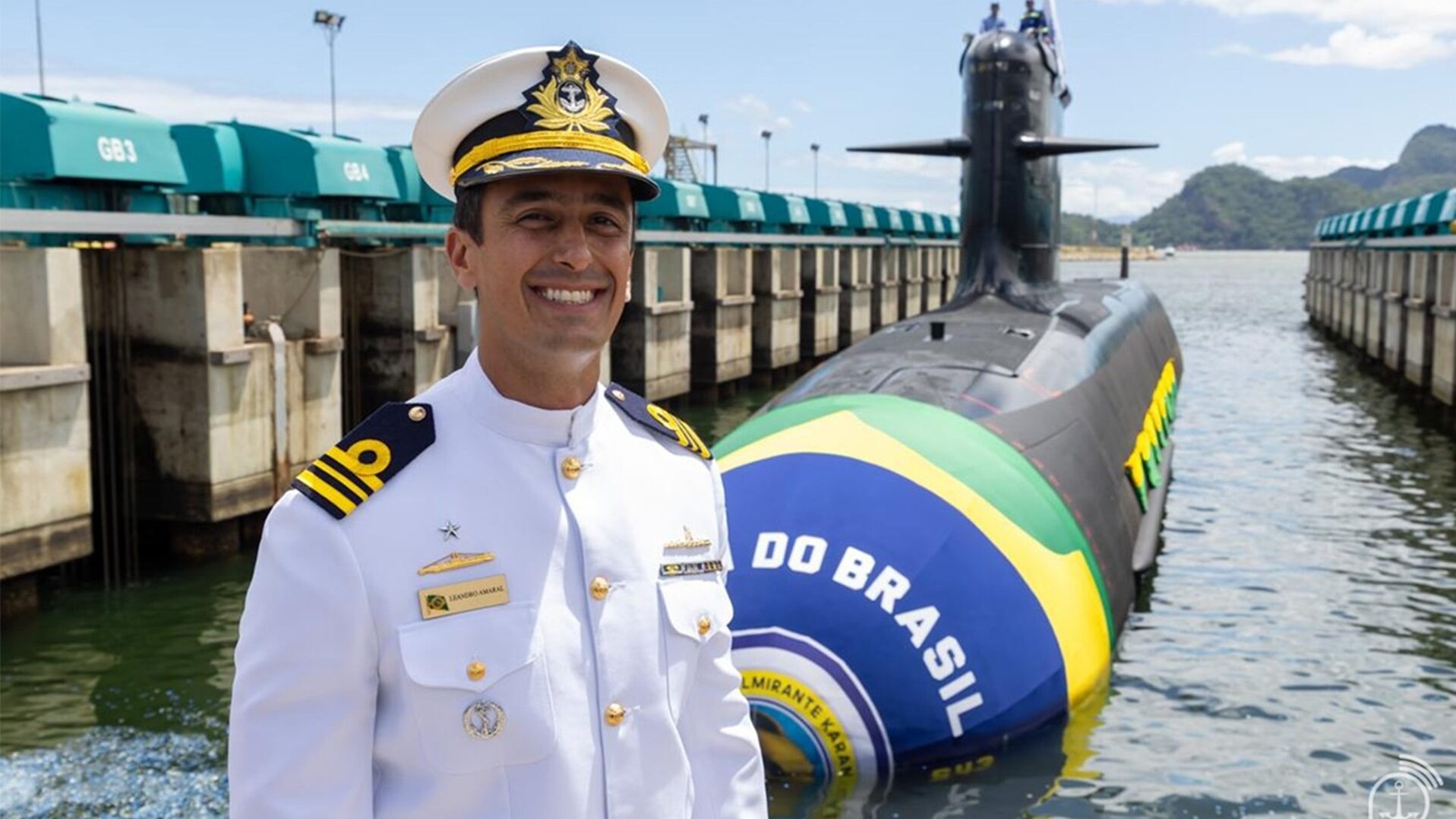


Brazil consolidated another step in developing its fleet by launching the submarine Almirante Karam on November 26 at the Itaguai Naval Complex. The submarine now begins an extensive testing phase before integrating into the national fleet.
The ceremony for the 4th Brazilian submarine included the presence of civilian and military authorities and highlighted the contrast between the expansion of the Brazilian naval industry and the absence of operational submarines in Argentina, which is currently dependent on international agreements to rebuild its capacity.
The Almirante Karam is the fourth submarine built in the country under the program initiated with French technology transfer. The vessel is expected to undergo at least one year of technical evaluations on the surface and submerged before final delivery.
The submarine honors Admiral Alfredo Karam, who began his career in 1941 and dedicated over 80 years to the Navy. His contributions were notable for modernizing the force and reviving Brazil’s submarine structure.
-
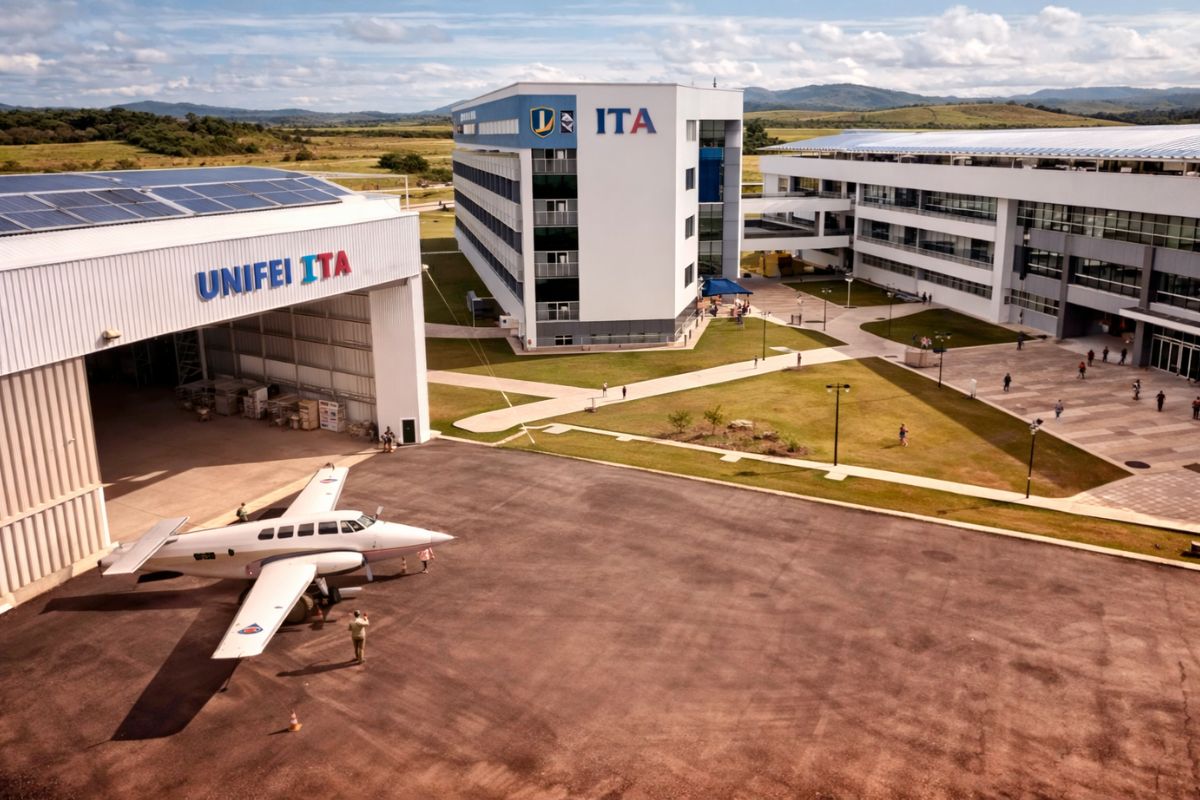
The institute that trained the greatest aerospace engineers in Brazil has just opened its first campus outside São Paulo after 75 years: ITA Ceará will have R$ 445 million, new courses in energy and systems, and classes are expected to start in 2027.
-
Luciano Hang, owner of Havan, goes to Juiz de Fora after the tragedy in February, brings R$ 1 million, hands out R$ 2,000 cards, and donates up to R$ 15,000 to victims in the region.

-
The Brazilian passport allows legal residence in dozens of countries without the need for a prior visa, and most Brazilians are unaware that they can apply for residency directly upon arriving in nations in South America, Africa, and even Europe.

-
Petrobras sends a message to Brazilian truck drivers after fuel collapse and reveals plan to have 100% domestic diesel.


The tradition of breaking the bottle dates back to different ancient peoples and symbolizes protection for the ship and its crew. The practice also reinforces the solemn character of launching military vessels.
The Almirante Karam will proceed to sea trials conducted in different conditions, both on the surface and submerged. Only after this stage can the submarine be transferred to the operational sector of the Navy.
With a length of 72 meters, a maximum width of 6 meters, and approximately 2,000 tons of displacement, the Almirante Karam (S43) can remain submerged for up to 70 days and reach speeds of about 40 kilometers per hour.
Its operational crew consists of 38 military personnel, including officers and enlisted ranks. The submarine also features an advanced combat system, which includes six tubes for launching torpedoes, missiles, and mines.

Parallel Expansion of the Brazilian Fleet
The Brazilian program also includes progress on the Tonelero submarine, completely built in the country by Itaguaí Construções Navais.
The Tonelero was divided into four structural sections and equipped with six tubes capable of launching torpedoes, missiles, and mines. The crew was trained on simulators before the sea trials, a decisive stage for operational evaluation.
The commander of the Navy, Admiral of the Fleet Marcos Sampaio Olsen, emphasized that maritime dominance distinguishes states throughout history. He stated that the sea projects economic power, technological autonomy, and political strength of nations.
This set of factors has been used by Brazilians and Argentines to compare the performances of the two countries on social media, especially following the announcement of the launch of the Almirante Karam.
Argentinians’ Reactions to Brazilian Advancement
Comments from Argentinians gained notoriety as they lamented that Brazil is expanding its fleet while Argentina remains without active submarines. One of the most reproduced comments stated that Brazil already has four units and is building a nuclear submarine.
The reaction reflected growing frustration in Argentine society, which has been observing the loss of naval capacity since the tragic sinking of the ARA San Juan in 2017. The incident left the naval force virtually without means for submarine patrol.
Argentina has nearly 5,000 kilometers of coastline, as well as Antarctic projections and sub-Antarctic islands, making the recovery of its submarine surveillance capacity in the South Atlantic urgent.
Currently, the country does not have a single operational submarine. The ARA Santa Cruz is in the Tandanor shipyard and is considered unrecoverable. The ARA Salta is anchored in Mar del Plata and serves only for training.
Negotiation of the Scorpène Submarines
The possible purchase of three Scorpène submarines gained momentum with negotiations between Argentina and Naval Group. The deal is estimated at around two billion dollars and has been progressing since the signing of a letter of intent in 2024.
The Scorpène is a diesel-electric powered submarine with an AIP system option and operates in various countries, including Brazil. For Argentina, it represents the chance to regain naval presence in its extensive exclusive economic zone.
The negotiation, however, depends on obtaining financial guarantees and credit from European banks. These historical requirements have already hindered previous operations and remain the main obstacle to formalizing the contract.
Structural Differences Between Brazil and Argentina
The contrast between the countries became evident because Brazil builds its own submarines, with technology transfer and internalization, while Argentina attempts to rebuild a capacity lost for years from scratch.
This scenario reinforces perceptions of technological and industrial disparity. For some Argentinians, the comparison with Brazil has become a symbol of accumulated lag and the urgency to modernize naval infrastructure.
For France, the possible signing of the contract consolidates Naval Group as a global supplier of conventional submarines. For Argentina, it represents the first concrete step towards the recovery of strategic capabilities.
The launch of the Almirante Karam marked the end of an important stage in the Brazilian submarine program and symbolized the continuity of investments that enhance the country’s industrial autonomy.
The ceremony also reinforced historical traditions and highlighted the trajectory of key figures in the Navy.
While Argentina attempts to rebuild its fleet through external acquisitions, Brazil maintains a pace of expanding national production, deepening the difference between the two nations in the submarine field and strengthening its strategic presence in the South Atlantic.










Por otro lado, sí, Brasil está construyendo un submarino nuclear, pero como se le quemaron los papeles llamaron al INVAP por la parte nuclear. Faltan más políticas de estado, no nos olvidemos que hubo décadas de desidia y abandono a nuestras fuerzas. Fabricar y ser independientes. Eso espero de Milei
No desplaza 2 toneladas, tiene que ser 2000 toneladas.
Que liviano. Eso es lo impresionante 2 toneladas.