





 Portuguese
  English
  Spanish
  4 min of reading
  65 comments


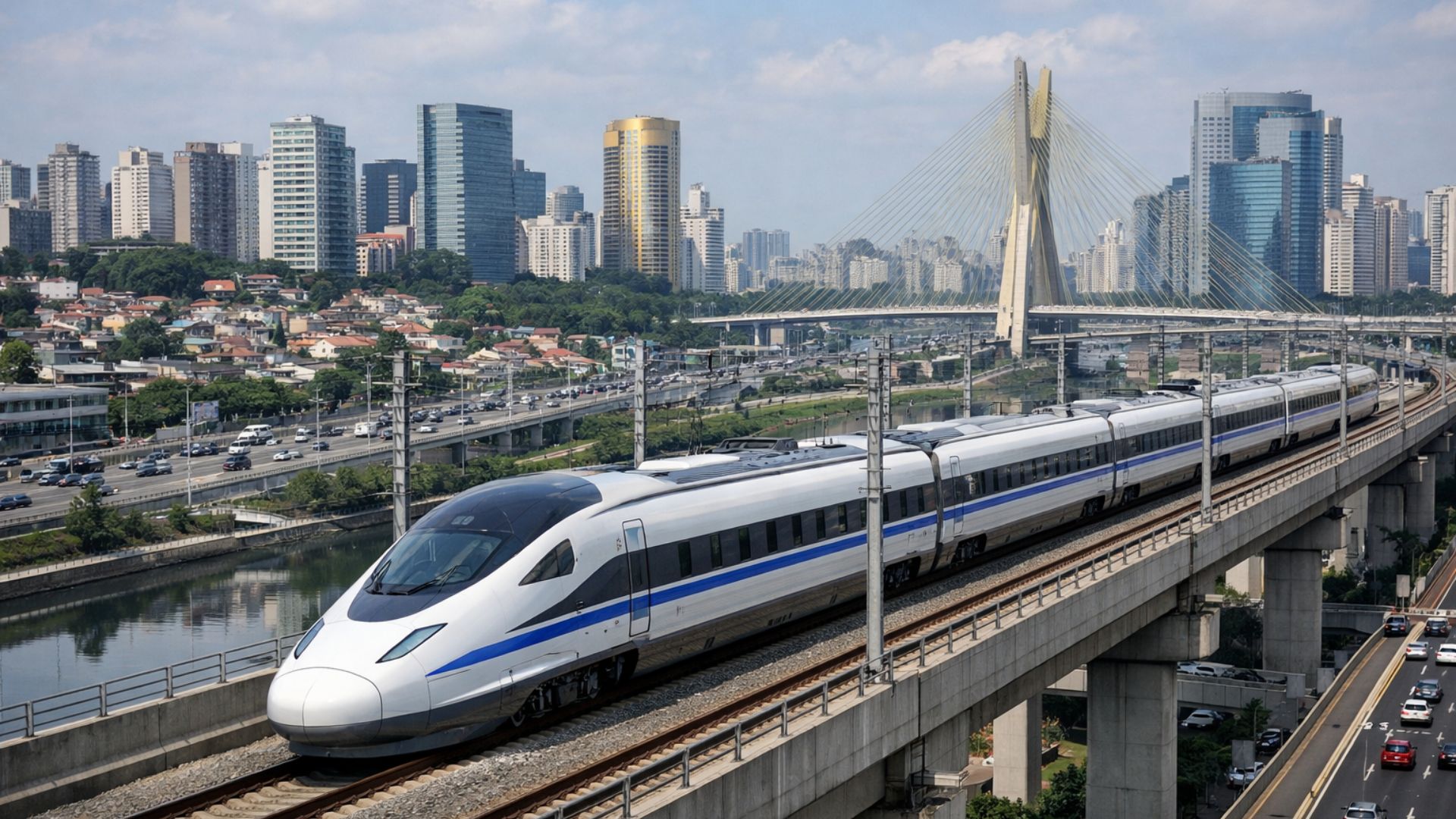


High-Speed Train Project Reignites Debate on Infrastructure Promising to Shorten Journey Between São Paulo and Rio to About 1h45.
A high-speed train project has returned to the center of the debate on infrastructure in Brazil by promising to shorten the journey between São Paulo and Rio de Janeiro to about 1 hour and 45 minutes.
Despite the “inauguration” discourse circulating in texts and social media, what exists so far is a private proposal in the structuring and study phase, with regulatory authorization to develop the railway, but without ongoing operations and completed works.
São Paulo–Rio–Campinas Connection in Focus
The idea put forward by the company TAV Brasil is to create a dedicated line for high-speed passenger trains connecting Rio de Janeiro, São Paulo, and Campinas.
-
He started running at 66 years old, broke records at 82, and is now a subject of study for having a metabolic age comparable to that of a 20-year-old, in a case that is intriguing scientists and inspiring the world.

-
Oldest tree on the planet reappears after 130 years of searches: Wattieza, 385 million years old, was 10 meters tall and had no leaves or seeds; Gilboa fossils in New York solved the mystery in 2007.

-
A 48-square-meter house assembled in hours with 4,000 bricks made of recycled plastic that does not absorb moisture, has natural thermal insulation, and costs less than 90,000 reais in a complete kit.

-
Luciano Hang revealed that Havan’s air fleet has already accumulated more than 20,000 landings, 10,000 flight hours, and 6 million kilometers traveled, and he says that without the planes, the company would never have grown so quickly.


The design of the project is based on the modern railway model, with a segregated track and stricter safety standards than conventional lines to enable high speeds.
Behind the scenes, the initiative seeks to differentiate itself from previous attempts that never got off the ground.
The goal is to transform the busiest air corridor in the country into a corridor also served by rail, with travel times competitive with door-to-door air travel, depending on urban integration and frequency.
ANTT Authorization and Pending Stages
In February 2023, the National Land Transport Agency (ANTT) announced the railway authorization related to TAV Brasil.
The act formalizes the possibility for the company to advance with the steps outlined in the legal authorization framework, but also lists requirements and milestones to be met, including environmental licenses and an implementation schedule, before any opening to traffic.
This helps to separate two points that many publications mix up. One thing is the regulatory permission to conduct the project.
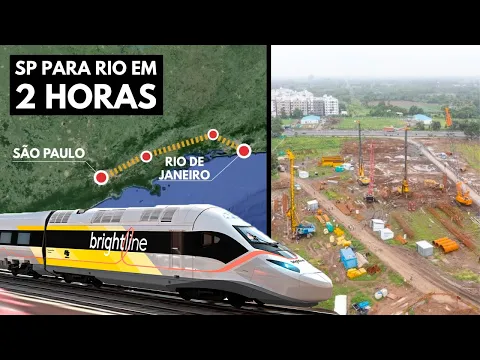

Another, quite different point is having construction executed, system tested, and commercial operation authorized. In the current scenario, the high-speed train is still in the planning and fundraising stages.
Speed of 350 km/h and Time of 1h45 as Projection
The most quoted numbers for the journey between the capitals vary according to the source and the version of the layout.
According to a report by Exame, for example, estimates for the journey were discussed as taking 105 minutes and parameters of cost and structuring presented by the company were discussed, in the context of seeking investors and consolidating the feasibility study.
The maximum speed disclosed in articles and reproductions of the project usually appears in the range of up to 350 km/h, frequently associated with the goal of placing Brazil among high-performance systems at the international standard.
Nevertheless, this is a project reference, not a service in operation, and may be adjusted based on technical decisions, licensing, and final modeling.
Shinkansen as Reference and Engineering Challenges
The comparison with the Shinkansen in Japan and with European networks serves as a shortcut to explain the type of solution intended: exclusive track, advanced traffic control, security redundancies, and strict maintenance standards.
In lines of this type, tunnels and viaducts are common to reduce curves and maintain stability at high speeds, especially in regions with complex terrain.
On the other hand, the use of these solutions increases costs and expands the weight of environmental licenses and land acquisitions.
That is why the debate on feasibility tends to revolve around the EVTEA, the study that ties together technical, economic, and environmental aspects, cited as a central step before any advancement on-site.
Billion-Dollar Investment and Proposed Timeline

The figures associated with the bullet train vary according to the context.
There are estimates in dollars in the range of double-digit billions in reports that echo the plan, while a figure in the tens of billions of reais also circulates in discussions about total investment, which depends on the scope considered and the exchange rate of the period.
As for the calendar, publicly disclosed schedules indicate windows such as the start of construction from 2027 and operations around 2032.
In practice, these milestones are conditioned to the closing of financing, the advancement of the EVTEA, licensing, and the detailing of the layout, factors that can expedite or postpone stages.
Impact on Mobility and Limits on Freight Logistics
Proponents of the project argue that a high-speed passenger railway can reorganize movement flows in the richest axis of the country, with effects on tourism, business travel, and integration between metropolitan regions, especially if there is efficient connection to subways, urban trains, and terminals.
Still, the proposal should not be confused with a direct solution for freight logistics.
In general, high-speed trains are designed for passengers, while the transport of goods depends on another type of infrastructure, with different operational priorities.
The debate on economic benefits, therefore, involves delineating what the system intends to deliver and how it would integrate with the existing railway and highway network.
The discussion gains even more attention because, in parallel, there are regional railway projects underway, such as the Intercity Train in São Paulo, which have scopes and speeds very different from a bullet train, but also seek to reduce travel times and increase capacity in daily mobility.
If the high-speed train does indeed advance to construction and operation, the country will join a small group of nations with this type of service.
Until then, what exists is an initiative authorized to structure itself and that seeks to prove technical and economic viability in a complex and costly corridor to implement.








Cadê? Saia do papel!
Prá quê Uma Mega OBRA Dêssa, quê Custará Bilhões pelas Construtoras brasileiras e o Câncer dos Políticos; Sendo, q/ a Mesma Obra é Feita pelos Países da EUROPA por METADE ou 70 % Mais Baratos. Antes, Ficar sem Êssa Obra e Deixar p/ a Classe Média e Pobre, para “PAGAR” . 🤦🤦 👎
Gente, são tantas pessoas para aprovar algum papel, que resulta em tanta propina, que, sem ser pitonisa, digo que em menos de 30 anos esse trem não roda no Brasil. É muito **** no Brasil. A escala vai desde os mais altos escalões, até à pobreza. **** total.