





 Portuguese
  English
  Spanish
  5 min of reading
  0 comments


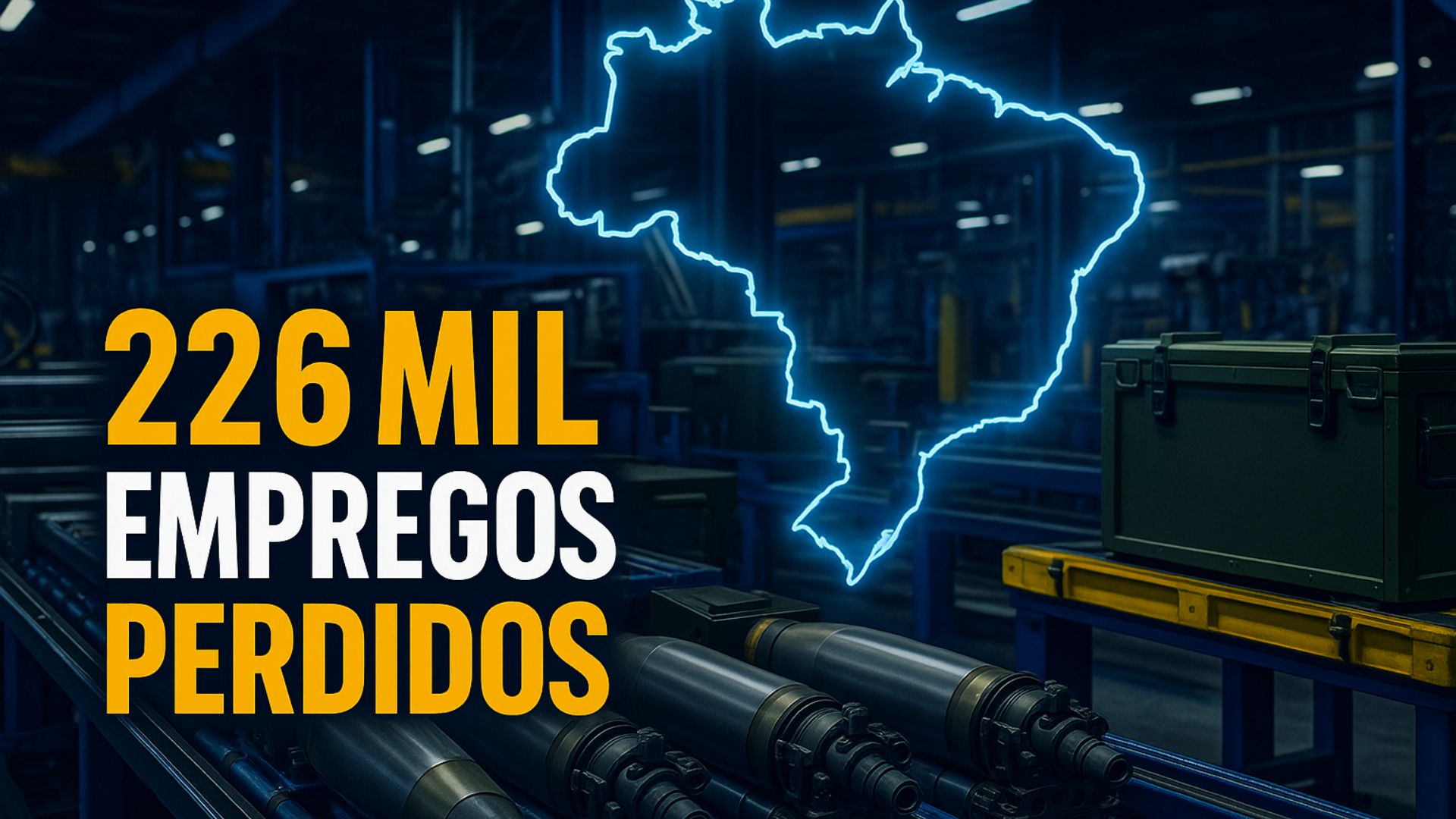
Study By CNI Indicates Billion-Dollar Economic Impact And Strong Job Creation If Part Of The Imported Defense Products Is Produced In Brazil.
Brasília — A new simulator by the National Confederation of Industry (CNI) indicates that the low national production of defense goods leaves Brazil dependent on foreign sources and unable to capture a potential of up to 226,000 direct and indirect jobs and approximately R$ 9.9 billion in taxes and social contributions.
This amount could be activated if the country began to produce internally about 30% of the defense and security products it currently purchases from foreign suppliers.
According to the report prepared by the National Industry Observatory, partial replacement of imports with domestic production would have an estimated impact of R$ 60.9 billion on the total production value.
-
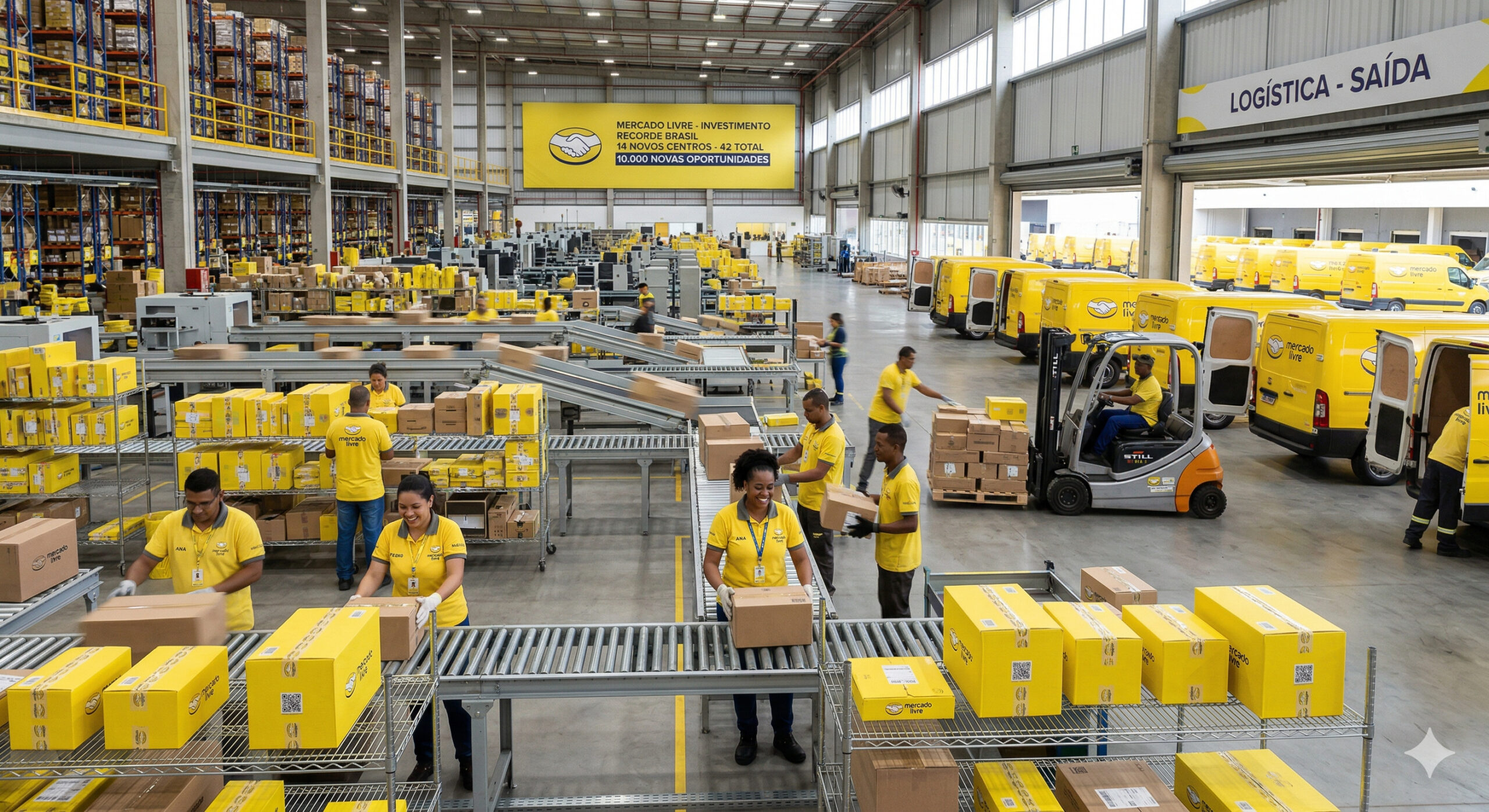
Mercado Livre “opens the vault” and announces a record investment of R$ 57 billion in Brazil in 2026, a value 50% higher than the previous year, with an expansion plan that includes 14 new logistics centers, totaling 42 units in the country and hiring an additional 10,000 employees.
-
How investment in technology can revolutionize the national economy and enhance industrial gains, according to a study that highlights the direct impact on productivity, innovation, and wealth retention within Brazil.

-
The largest food company on the planet, JBS, has just opened a 4,000 square meter laboratory in Florianópolis to develop customized proteins that modulate muscle mass gain, immune response, and metabolic performance.

-
After nearly 30 bids and competition among industry giants, a Spanish company purchases one of the largest airports in Brazil for almost R$ 3 billion and takes over the management of Galeão in a concession that will last until 2039.


The data was presented at the 26th meeting of the Defense Industry Development Council (Condefesa), held at CNI’s headquarters in Brasília, with participation from businessmen, specialists, and representatives of the Armed Forces.
Job Creation And Collection
The simulation indicates that expanding national production in defense would create opportunities for thousands of high-skilled positions.

A significant portion of the 226,000 projected positions is associated with engineers, technicians, researchers, and professionals related to research, development, and innovation (R&D).
This characteristic means that the effect is not limited to job and income generation in the short term.
The defense industrial base tends to demand complex production chains, involving everything from electronic component suppliers to software and specialized service companies.
According to CNI, this contributes to elevating the technological level of the economy and creating opportunities for both large companies and startups and research centers.
In addition to jobs, the simulator calculates that domestic production of about one-third of currently imported items could result in R$ 9.9 billion in indirect taxes and social contributions, strengthening the collection for the federal government, states, and municipalities.
This is revenue that currently does not circulate internally, as it is associated with the purchase of products manufactured in other countries.
External Dependence And Sovereignty
The study reinforces the assessment that Brazil maintains significant dependence on foreign suppliers in sectors considered sensitive for national security.
Currently, the country imports an average of R$ 70.8 billion per year in defense and security products, a set that ranges from ballistic vests and bomb suits to missiles, radars, and components for military aircraft.
Although there is an established industrial base capable of producing armaments, aircraft, command and control systems, and other strategic equipment, it does not yet operate at the level of utilization that would be possible in an environment of greater predictability and prioritization of domestic content in public procurement.
For CNI, this combination of external dependence and underutilized internal capacity raises questions about the degree of productive sovereignty of the country in the defense sector.

In practice, the importation of critical inputs and a significant portion of finished products leaves Brazil more exposed to supply restrictions, technological embargoes, and variations in the foreign policies of exporting countries.
In situations of international crisis or geopolitical tension, this vulnerability tends to become even more evident.
Dual-Use Technology And Broad Impacts
The CNI survey highlights that more than 90% of Brazil’s defense imports are classified as dual-use, meaning they have both military and civilian applications.
This profile expands the range of potential economic effects associated with the nationalization of part of the production.
Fields such as telecommunications, aerospace, automotive, cybersecurity, energy, and high-complexity electronics can benefit directly from a policy to strengthen the defense industrial base.
This is because many of the components, software, sensors, and materials used in military systems are also employed in civilian applications, such as communication networks, satellites, autonomous vehicles, navigation systems, and cybersecurity solutions.
In this context, CNI argues that investment in defense should not be viewed solely as expenditure directed at the public sector or the Armed Forces but as a vector for transversal innovation, with effects on high-tech production chains.
Strengthening the defense industry tends to radiate knowledge, professional qualification, and productivity gains to other segments of the economy.
Public Procurement As The Engine Of National Industry
One of the central points of the diagnosis presented by CNI is the role of defense public procurement as a tool to stimulate domestic production.
The organization argues that medium- and long-term contracts, combined with mechanisms that value local content, can deepen industrial chains and provide predictability for private investments in productive capacity and innovation.

In the industry’s assessment, the existence of companies capable of developing and manufacturing armaments, radars, missiles, aircraft, and embedded systems is not sufficient to reduce external dependence if there is not an institutional environment that prioritizes domestic supply whenever it is technically and economically viable.
This involves clear bidding rules, regulatory frameworks aligned with the sector’s reality, and coordination among different government agencies.
The National Industry Observatory simulator was developed precisely to measure the socioeconomic effects of public policy choices in this area.
The tool considers impacts on employment, income, collection, and productive linkages, allowing comparisons of scenarios with greater or lesser degrees of substitution of imports for national production.
Paths To Transform Potential Into State Policy
Despite the favorable diagnosis for expanding domestic production in defense, CNI acknowledges that turning this potential into tangible results depends on long-term decisions.
The organization assesses that it is necessary to improve coordination between the government, Armed Forces, and the productive sector to align strategic priorities, budget planning, and available industrial capacity.
Another challenge mentioned is the competition with foreign suppliers who, in many cases, operate in highly concentrated markets and receive strong support from their home governments.
This support may include financing, guarantees, cooperation agreements, or technology transfer.
For the Brazilian industry, the lack of equivalent instruments makes it difficult to compete for space in international tenders and, at times, even in purchases made within the country.
The discussion also encompasses the training and retention of skilled labor.
Strengthening the defense industrial base requires professionals with high specialization in engineering, exact sciences, information technology, and related fields.
CNI emphasizes that opportunities in high-tech projects can help reduce the outflow of Brazilian talents abroad, provided there is stability and a horizon of continuity for industrial programs.









Seja o primeiro a reagir!