





 Portuguese
  English
  Spanish
  6 min of reading
  0 comments


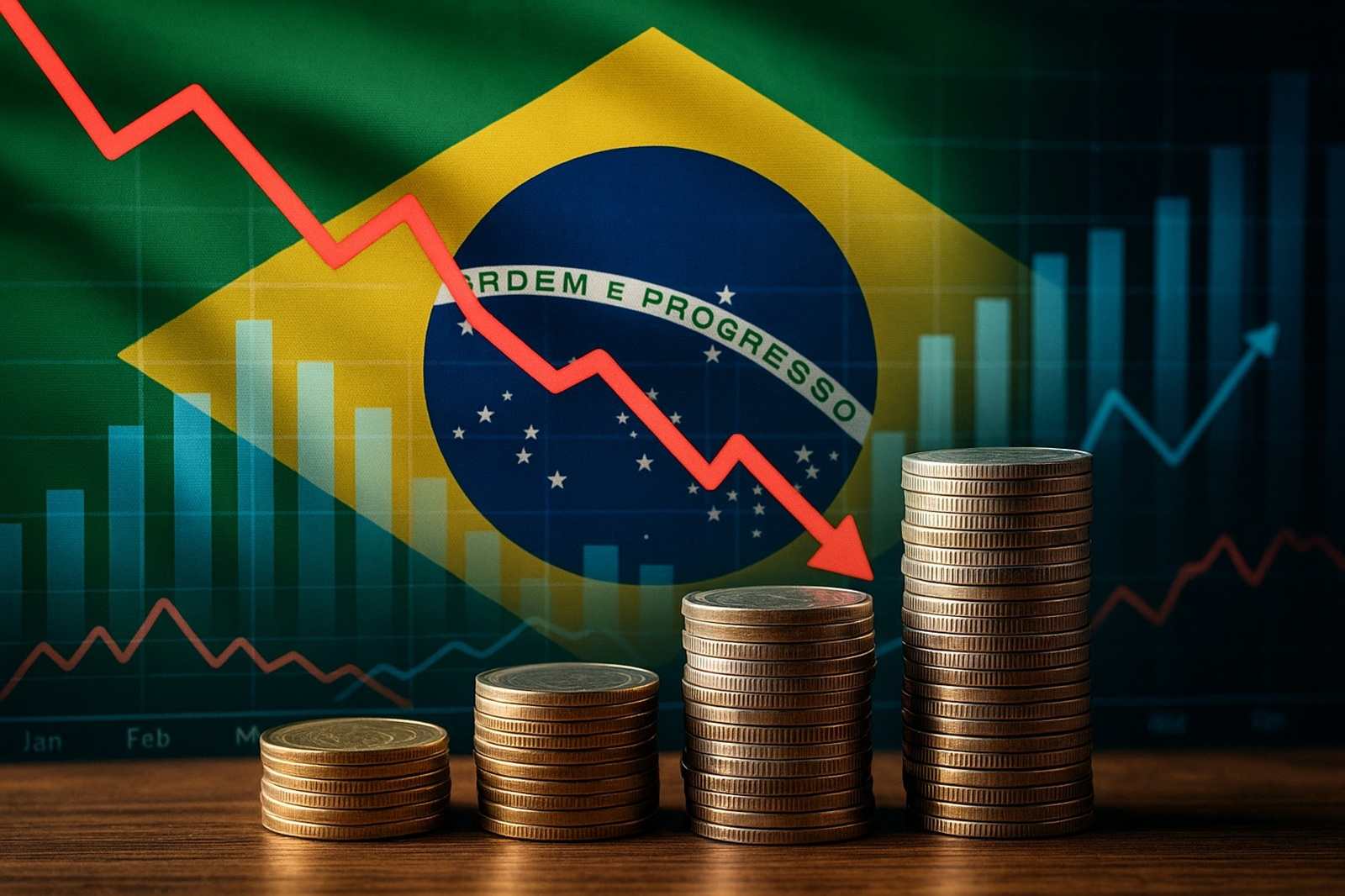
Experts Reveal How Crises, 81% of GDP Debt, High Interest Rates, and Low Productivity Prevented Brazil’s Economy from Becoming a World Power
The question echoes in the workplace, in economists’ analyses, and even in bar conversations: why doesn’t Brazil’s economy grow?
Growth is what generates jobs, increases income, and lifts millions out of poverty. When Brazil’s economic growth is not sufficient, everything comes to a halt.
And that seems to be exactly what is happening. The country moves as if it has an elastic band tied around its waist — any progress is quickly pulled back.
-
The Federal Revenue issues a good alert for Brazilian taxpayers: 60.9% are already using the pre-filled tax return, automatic refunds via Pix reach millions, and the government plans for a fully automated income tax in the coming years.

-
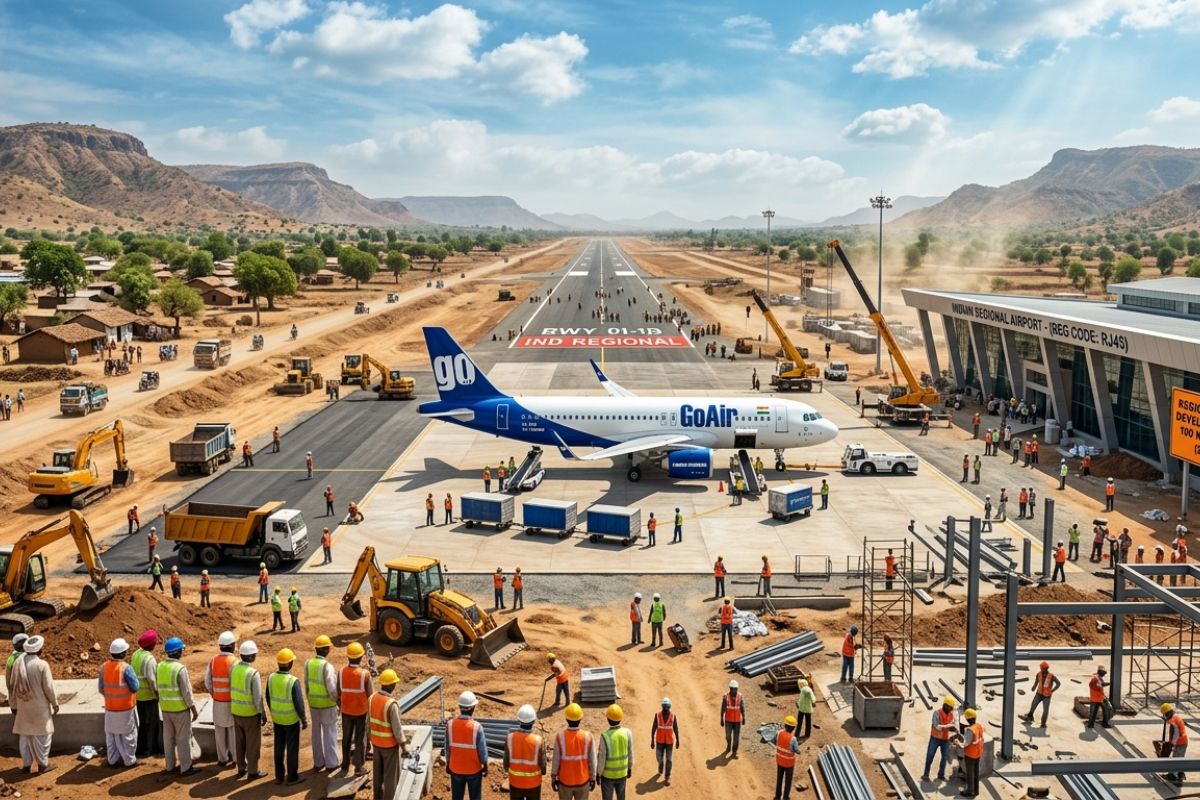
India announces a plan of $3.06 billion to bring aviation to forgotten regions: 100 new airports, $1.07 billion in subsidies, and regional routes guaranteed for 10 years, from 2026 to 2036, away from the centers.
-
Brazil blocked a proposal from the United States at the WTO that would make the exemption from tariffs on digital products like streaming and ebooks permanent, favoring American tech giants at the expense of developing countries.

-
IPTU exemption for seniors in 2026: see how to secure the benefit.


In recent years, some indicators have shown positive signs. The unemployment rate has fallen to historically low levels.
The number of formal jobs has increased. Average income has risen. And extreme poverty has shrunk.
But just looking out the window reveals that this improvement seems fragile. Violence, poverty, and lack of basic services continue to mark daily life.
The reality clashes with the statistics, exposing a contradiction: the country advances in numbers, but not in quality of life. And when it grows, it grows little and for a short time.
Brazil’s Economy Shows a History of Short Flights and Long Falls
This pattern of intermittent growth has become a trademark of the Brazilian economy.
Economists call it a “chicken flight”: the country makes small leaps but cannot sustain them.
Since the 1980s, this oscillation has repeated itself. There have been 26 years of growth and 14 years of crises.
It’s an impressive number. While other emerging economies have faced three or four recessions during this period — some none — Brazil has faced fourteen.
The result is that the country has fallen behind. In the last decade, Brazil’s GDP has grown on average 1.6% per year. That is less than Chile and Colombia, and half the pace of Peru. In the same period, China has grown 6.4% and India 7.2% per year.
If the timeframe is even broader — since the early 2000s — Brazil’s average annual growth is only 2.4%. The comparison with China is symbolic: in 1960, Brazil’s per capita GDP was almost three times that of China. Today, the Chinese are already richer than Brazilians. This shows the extent of the chasm that has opened.
Unbalanced Public Accounts and Suffocating Interest Rates
The roots of this delay are diverse, and one of the main issues lies in public accounts. The government spends more than it collects and depends on loans to balance the budget. Since 2014, the country has entered into a chronic deficit that has become routine.
This hole pushes interest rates up. High rates make credit more expensive, which stalls investments. While Chile and Mexico have public debt around 40% of GDP, and India 56%, Brazil carries 81.2%.
This burden suffocates the state’s capacity for action and undermines investor confidence. And without confidence, capital flees.
Another problem lies in how Brazil spends. In fiscal benefits for organized sectors alone, the country gives up 4% of GDP. That is more than Argentina’s 3% and double that of Peru and Chile.
Payroll expenses also weigh heavily: 10% of GDP, almost double that of India. With so many mandatory expenses, there is little left for productive investment. The economy is marked by low savings, low investment, and consequently, low growth.
A Model That Creates a Snowball Effect
To make matters worse, Brazil operates under a model that many economists refer to as “spend first and tax later.” In other words: the government spends first and tries to collect later. When it fails, it resorts to more borrowing.
This mechanism creates a snowball effect. The more the government borrows, the higher the interest rates rise. The higher the interest rates rise, the more investment is stalled.
The economy becomes trapped in a vicious cycle: high spending, high interest, expensive credit, low investment, and anemic growth.
The Persistent Shadow of Inflation
Another ghost that continues to loom is inflation. Decades of instability have left deep scars. Even when prices are under control, inflationary memory haunts decisions. Just one negative surprise, and fear returns.
Out of fear, companies and consumers stall investments and spending. Interest rates then rise, credit dries up, and the paralysis cycle repeats.
Experts say that it is not enough to spend less — it is necessary to spend better, with planning, clear priorities, and evaluation of results. Without this, each real invested yields little.
Education: The Bottleneck that Prevents Growth
Perhaps the most visible obstacle lies in education. Brazil invests a share of GDP similar to that of Germany and even greater than that of the United States, Switzerland, and several emerging markets that have grown more.
But the results are weak. Very weak.
The country industrialized from the late 1940s to the 1960s with an educational delay. It built factories, but did not prepare people. To this day, it has not corrected this.
Underqualified workers earn less, have low productivity, and produce little value. This pulls the entire economy down.
World Bank data shows that Brazil invests a lot but reaps little. In contrast, Asian countries have shown that spending money wisely is just as important as spending. They grew because they were efficient. We did not.
Low Productivity, Lack of Innovation
This low productivity appears in the global scenario. South Korea, China, and India have created multinational giants — Samsung, Hyundai, Huawei, TikTok — that have conquered the planet. Brazil has not created anything like that.
Fearing competition, the country opted to close itself off. It created barriers, tariffs, rules, and protectionism. Foreign products come in slowly, and ours also go out slowly. However, excessive protection leads to complacency. Without competition, there is no pressure for innovation.
While the world is forming trade agreements and integrating, Brazil remains isolated. Mercosur is moving slowly and not opening doors. This is costly: lost markets, technology that does not arrive, productivity that does not grow.
The Cost of Living in Isolation
This strategy of closing itself off from the world has left deep marks. The national industry does not face real competitors, and therefore, does not improve. There is a lack of modernization, scale, technology, and productivity.
With low exports and little openness to imports, the economy moves in circles. The result is a lukewarm, costly, and uncompetitive market. While the rest of the planet competes for space, Brazil watches from the sidelines.
Reforms as a Turning Point
To break this cycle, experts advocate for deep structural reforms. The pension system has undergone changes but still consumes a large share of the budget.
The administrative reform could reduce personnel costs and make the state lighter. The recently approved tax reform promises to simplify rules, eliminate distortions, and create predictability for businesses. If it works, it could improve the economic environment and attract new investments.
With balanced accounts, interest rates could fall. Lower rates make credit cheaper, increase investments, and create jobs. It is the beginning of a virtuous cycle that Brazil has never managed to sustain for long.
Education as the Foundation of the Future
But even with reforms, nothing will work if education remains stagnant. Without qualified labor, there is no innovation. Without innovation, there is no productivity. Without productivity, there is no growth.
Young people need technical, scientific, and technological training to face market challenges. Only then will the country be able to compete with other emerging economies.
Asian countries have shown that this approach works. They made productivity leaps because they invested in quality education applicable to development.
Brazil needs to do the same — spend better, focus on what yields returns, demand results. Only then will investments turn into real progress.
A Collective and Courageous Effort
There is no magic solution. There is no silver bullet. It will take political courage, planning, and joint effort. Government, businesses, investors, civil society, and the judiciary will have to pull in the same direction.
We have been in worse situations, it is true. But we are still far from what we could be.
If the country aligns its accounts, invests efficiently, and opens up to the world, it may finally leave behind the chicken flights and build true growth — firm, continuous, and for all.
The road is long. But it exists. And it is waiting to be traveled.







-

-

5 pessoas reagiram a isso.