





 English
  Francês
  Alemão
  Italiano
  Japonês
  Norueguês
  Portuguese
  Spanish
  3 min of reading
  0 comments


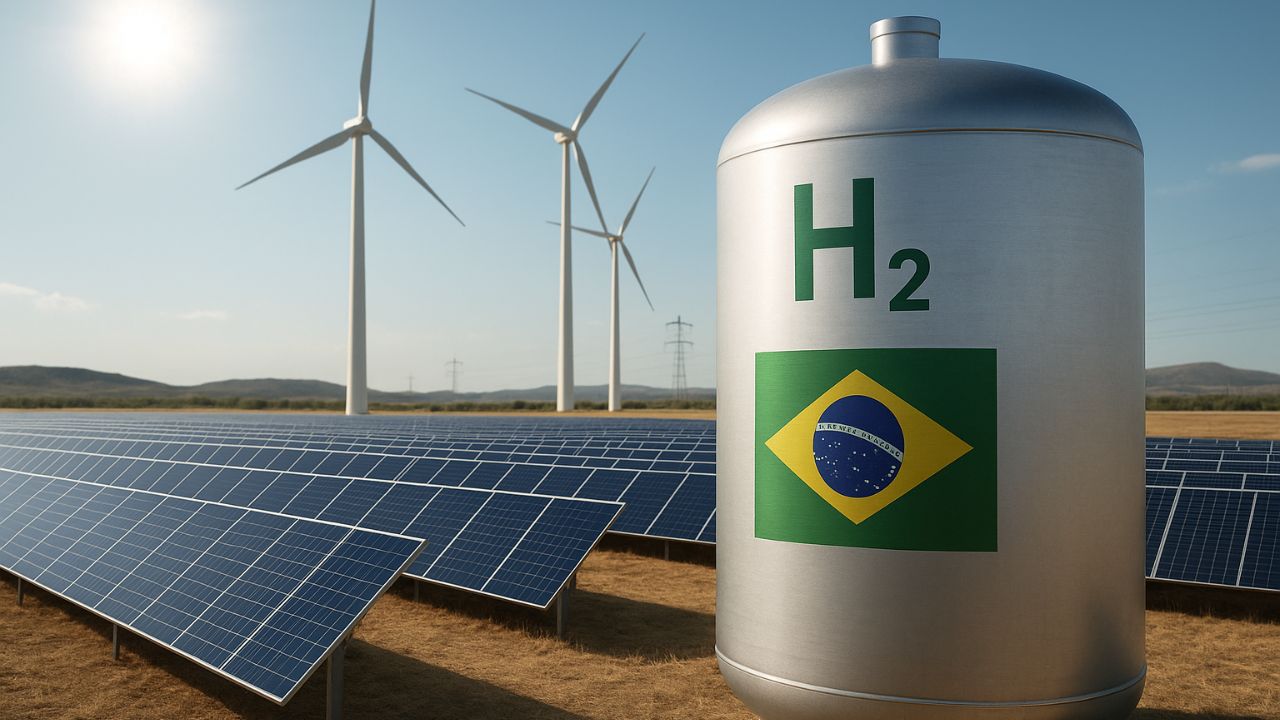
Even With Renewable Matrix and Unified National Electric System, Country Faces European Regulatory Barriers for Hydrogen Export
Brazil has unique conditions to become a leader in global green hydrogen production, with over 90% of its renewable electric matrix and a nationally interconnected system. However, regulatory obstacles from the European Union jeopardize the country’s competitiveness in this strategic sector.
Historic Opportunity for Brazil in Green Hydrogen
With a predominantly renewable electric matrix and the National Interconnected System (SIN), which allows for the distribution of clean energy throughout the territory, Brazil is in a privileged position to stand out in the green hydrogen market. According to an analysis published by Eixos Energia, the country possesses the ideal technical and geographical prerequisites for supplying low-carbon hydrogen on an industrial scale.
The Brazilian advantage lies in its capacity to generate solar or wind energy in regions such as the Northeast and utilize it to produce hydrogen in other locations, without compromising the renewable origin of the source. This logistical and structural advantage is rare globally and could transform Brazil into a significant exporter of clean energy.
-
Renewable energy advances over protected areas in Brazil, and a survey by the Energy Transition Observatory reveals silent impacts that challenge environmental conservation and pressure sensitive traditional territories.

-
Rio Grande do Sul accelerates energy transition: State invests in renewable technologies and consolidates decarbonization strategies and pathways to attract billions in new industrial investments.

-
With 160,000 m² of collectors, an area larger than 20 football fields, Silkeborg, in Denmark, hosts a solar thermal plant that heats 19,500 homes and could become the largest solar heating plant in the world.

-
A study reveals the expansion of renewable energy procurement in Brazil and shows how companies are taking advantage of opportunities to reduce expenses, ensure energy efficiency, and strengthen strategic environmental commitments.


European Regulatory Barriers
Despite the technical advantage, Brazil faces a significant challenge: the European Union’s regulation for the recognition of hydrogen as “green.” According to current European regulations, the fuel will only be certified as renewable if produced with energy generated at the same location and at the same time as the electrolysis, which does not fit the Brazilian reality based on an interconnected electrical grid.
This limitation, as highlighted by Eixos Energia, ignores the traceability and efficiency of the Brazilian system. Without a change in this understanding, large green hydrogen projects in Brazil run the risk of becoming economically unviable, which would block trade agreements and strategic investments with the European bloc.
Regulatory Flexibility Could Open Doors for Brazil
Fortunately, discussions are underway within the European Union to relax these requirements, recognizing that they could hinder sector growth outside the continent. This is a crucial moment for Brazil to diplomatically advocate for the recognition of its energy model — more efficient, sustainable, and scalable.
Energy diplomacy needs to clarify that, even with a system different from the European one, Brazil ensures 100% renewable origin for its hydrogen, with traceable data and regulatory audits. The country has much to offer but needs to communicate this better on the international stage.
Hydrogen as a Strategic Asset for Brazil
Green hydrogen is one of the pillars of the new global low-carbon economy. Countries that position themselves now will get ahead. Brazil has all the elements to lead this agenda: abundant natural resources, mature electrical infrastructure, and ongoing projects in various regions.
However, without a clear communication strategy and international pressure, the country may see this opportunity slip away. It’s time to align diplomacy, energy policy, and industry to ensure that Brazilian hydrogen is recognized as a key player on the world stage.






Seja o primeiro a reagir!