





 Portuguese
  English
  Spanish
  3 min of reading
  0 comments


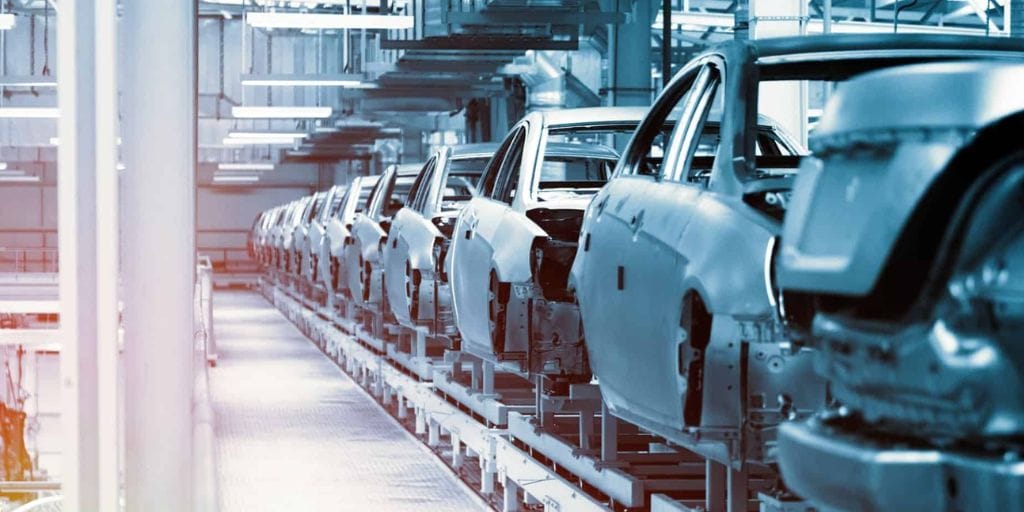
Brazil’s Ambition to Position Itself as a Leader in Hybrid Car Production Is a Strategy That Is Shaking Up the Automotive Industry Behind the Scenes. With Bold Plans Not Only to Import Electric Vehicles but to Produce Them Internally with Advanced Technology, the Country Is Aiming High to Stand Out Globally.
According to Aloizio Mercadante, president of BNDES, Brazil does not want just to import technology but to develop it right here. “We are not interested in just importing electric cars. We want investment in Brazil,” Mercadante said at a recent seminar on the 50th anniversary of diplomatic relations between Brazil and China.
“We want to produce electric buses and hybrids here, which is our calling, after 50 years of ethanol. The hybrid car will have double the range of the electric car. And it decarbonizes more than the electric car,” he emphasized.
The New Industry Brazil (NIB), launched in January of this year, is the industrial policy guiding these bold objectives. The plan aims to attract foreign investments committed to technology transfer and job creation in the country.
-
“No one will make us change the Pix,” says Lula after the US report.

-
Less than a Tera TSI, up to 710 km of range and charging in 9 minutes: the new BYD Song Ultra expands the Chinese brand’s bet on increasingly faster, more technological, and competitively priced electric SUVs.

-
Lula responds directly to Trump and says that Pix is from Brazil and will not change under pressure from anyone, after a report from the United States pointed out the Brazilian payment system as an American trade barrier.

-
Amazon has just announced a new fee on all deliveries, and your online purchases will become more expensive starting April 17, including for those buying from the United States here in Brazil.


In the automotive sector, this technology transfer will be crucial for developing innovative projects, such as hybrid cars – which combine electric energy and biofuels.
During the seminar held in Brasília, Mercadante emphasized the importance of strengthening the production chains of the Brazilian industry, especially in the renewable energy sectors. He cited, among other examples, the production of green hydrogen and electric vehicles, highlighting the role of BNDES in promoting these projects through the NIB and the More Production Plan.
“What interests me most here, in this discussion, is the path that China has pursued to get where it is, always demanding technology transfer for foreign investment,” Mercadante said. “We want much investment from China, a strong presence of China, but within Brazil, producing here, generating jobs, generating work.”
Uallace Moreira, Secretary of Industrial Development, Innovation, Commerce, and Services of MDIC, also emphasized the importance of attracting foreign direct investments that are strategic for economic development. “One of the strategic points for promoting economic development is foreign direct investment. However, not all foreign direct investment is positive,” warned Uallace.
“If the investment comes into Brazil denationalizing productive capabilities, decreasing the degree of verticalization, increasing imports, and sending profits back to its headquarters, you are deepening external dependence, you are destroying a nation’s capacity for development,” he explained.
To avoid these problems, Uallace highlighted that investment must play a strategic role. “The NIB has this purpose of using foreign direct investment, using partnerships with countries like China as a strategic element,” he stated.
“In the project of neoindustrialization of the government of President Lula, led by Vice President and Minister Geraldo Alckmin, what we want is to make the industry once again the protagonist of economic growth, job creation, and income in this country.”
The industrial policy, according to Uallace, should be used as a tool to reduce inequalities. “There is no economic development without industry. There is no social inclusion without industry. A technology-intensive industry, technologically complex, demands high-skilled and high-income services, generating jobs, income, and promoting the process of economic development,” he concluded.
Brazil’s bold strategy to lead in hybrid car production not only aims to transform the automotive industry but also to strengthen the economy and promote social inclusion. With technology transfer and the attraction of strategic foreign investments from brands like Toyota, Volkswagen and Chevrolet, the country seeks to ensure sustainable growth and a prominent position on the global stage.
And you, what do you think about Brazil becoming a leader in hybrid car production? Will this bold strategy bring the expected results? Comment below!







Seja o primeiro a reagir!