Portuguese
  Spanish


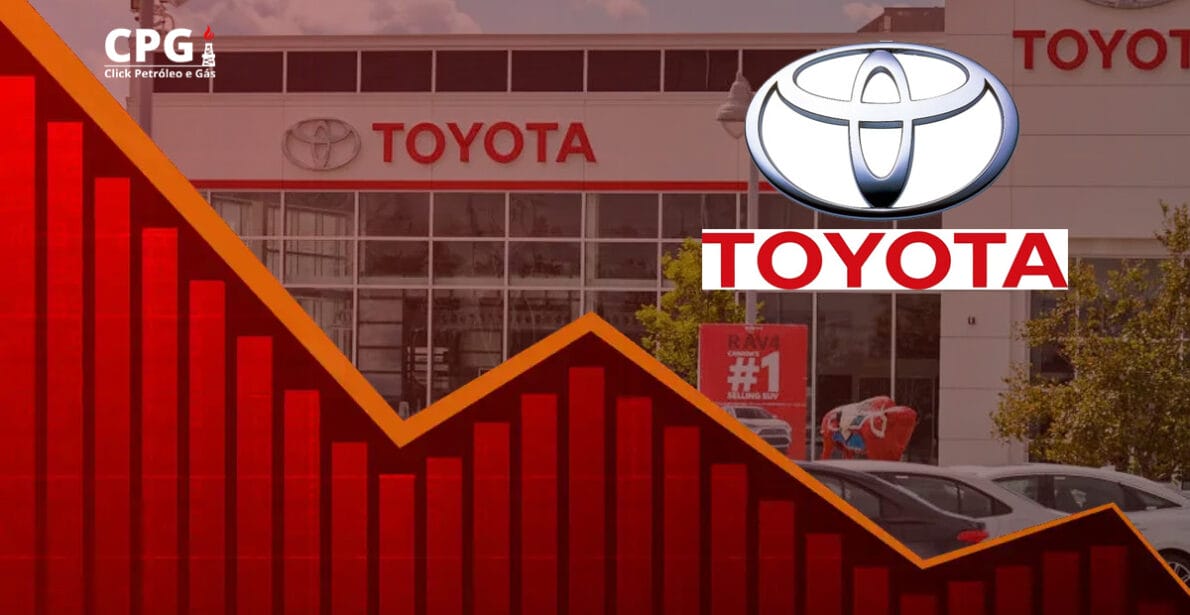

Toyota, An Automotive Icon, Is Facing a Crisis with Declines in Global Sales, Overcome by the Rise of Chinese Cars and Certification Scandals. In Brazil, However, the Brand Resists and Even Grows.
Toyota, one of the giants of the automotive industry, is undergoing a turbulent period that could change the course of the vehicle market.
With a history of success and innovation, the Japanese brand is now dealing with obstacles that affect its global sales. But what is behind this turnaround? While other brands are standing out, Toyota appears to be at a critical crossroads, and the scenario is more complex than one might imagine.
According to recent data, Toyota’s global sales have recorded a consecutive decline for five months, culminating in a 5% drop in the first half of 2024.
-
How to Identify and Remove Superficial Scratches Before Spending on Car Bodywork

-
Electric Car with Extended Range: Company Patents Hybrid Transmission System Using Gasoline Engine for Backup
-
GM Developed the Chevette to Rival the Beetle, Launched it in Brazil Before Europe, Sold 1.6 Million Units, and Left a Generation with Gas Station Trauma

-
Former Marketing Agency Owner Thrives on Foraging for 250 Days, Sampling Over 170 Plants, and Says He No Longer Remembers Supermarkets


This negative performance resulted in the sale of only 4.6 million vehicles, a sharp decline of 13% in June, with 796,000 units sold. But what could be driving this significant drop in sales?
One of the main reasons cited is the fierce competition from Chinese vehicles, which have been increasingly gaining ground in the global market. Brands like BYD, Huawei, and Geely are winning over consumers with more affordable prices, representing about 21% of global sales in the sector.
Low Prices of the Chinese
The price competitiveness is one of the most notable advantages of these vehicles, making them an attractive choice for many consumers.
In response, some nations, including the United States and European Union countries, have imposed trade barriers, increasing import taxes on Chinese cars to protect their local industries.
Despite these measures, the growth of Chinese cars remains strong in other regions, challenging the major traditional brands.
In addition to the competition, Toyota is also facing internal problems. A scandal involving vehicle certification in Japan, which also affected other manufacturers such as Honda, Suzuki, and Mazda, revealed fraud in safety and emissions tests.
The case, which is still under investigation, has damaged the brand’s reputation and may have contributed to the decline in sales.
Another blow to Toyota was the recall of more than 100,000 defective engines in the United States, equipping models such as the Tundra pickup and the Lexus LX600 SUV. The defect in the crankshaft bushings, which can lead to engine seizure, generated over 800 reports of issues, further affecting the brand’s image.
The Company in Brazil
Despite global challenges, in Brazil the situation for Toyota is more positive. The brand’s sales grew by 2.2% in the first half of 2024 compared to the same period in 2023, totaling around 93,000 vehicles registered. This growth contrasts with the global scenario, showing that the brand still maintains a solid consumer base in the Brazilian market.
Will Toyota be able to overcome these challenges and regain its prominent place in the global automotive market? The outlook is uncertain, and the brand will need innovative strategies to recover and face the growing competition from Chinese cars.