





 English
  Francês
  Alemão
  Italiano
  Japonês
  Norueguês
  Portuguese
  Spanish
  2 min of reading


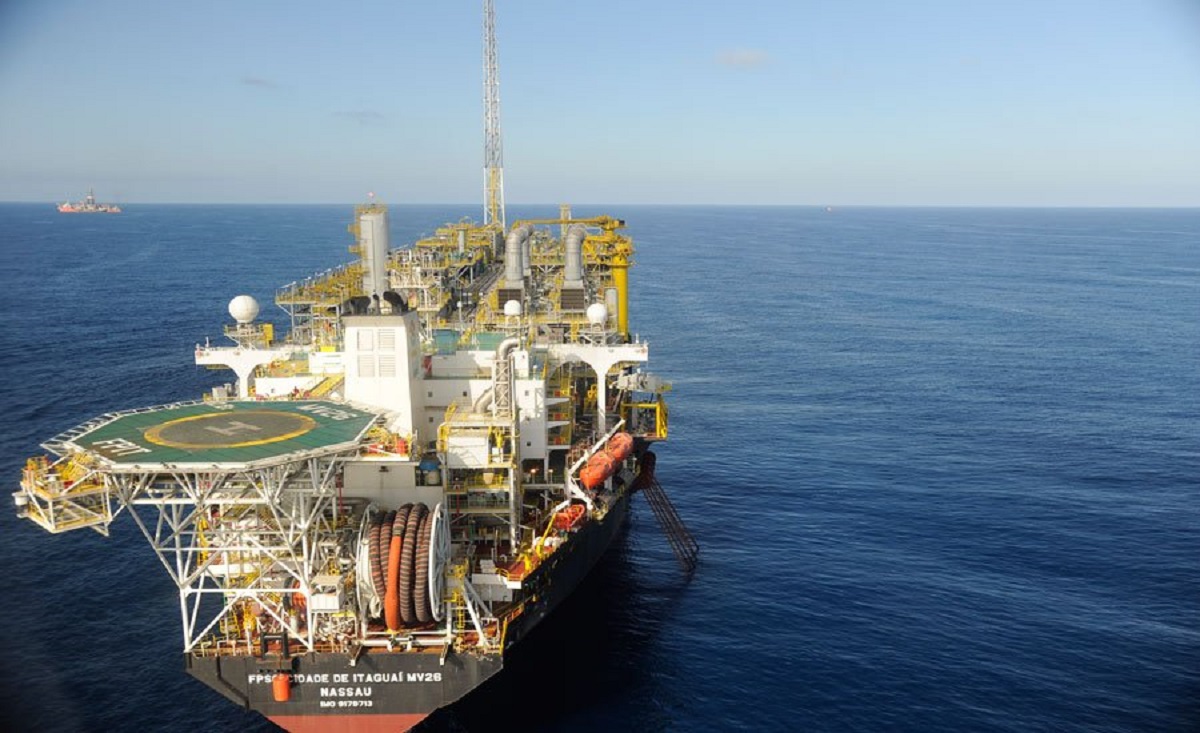
Brazil May Double Its Oil Reserves If Geological Studies Are Confirmed, And The Government Is Already Considering Offering Blocks Beyond Its Borders In Upcoming Auctions
The Brazilian government is considering offering exploratory blocks (it would be the first time) beyond the 200 nautical miles limit (about 370 kilometers), which is the limit established by the UN, in its upcoming auctions.
Based on geological studies indicating significant potential for oil reserves beyond these borders, Brazil has been trying since 2004 for the UN to approve its request, but even without full approval for the extension from 200 nautical miles to 300 or 350 nautical miles, the
exploration and production of oil in the Santos Basin region has already been authorized.
The matter is under review by the CNPE (National Council for Energy Policy), and the ANP has already suggested to the agency that blocks outside the EEZ (Exclusive Economic Zone) should be included in the auction scheduled to take place in 2020.
According to geologist Pedro Zalán, who has a career at Petrobras and now runs the consulting firm Zag, Brazil is facing a significant additional wealth, which was not anticipated two years ago.
-
Government unlocks R$ 554 million for a highway that has been requested for decades and accelerates the duplication of BR.
-
Without bricks, without cement, and without endless construction: the cardboard house that is assembled in modules and can be moved.

-
Billions of barrels on the equatorial margin could lead Amapá to double its oil production in Brazil — the state aims to enter the route of companies in the Campos Basin, attract investments, and boost jobs and businesses in the oil and gas sector.
-
Without bricks, without cement, and without endless construction: the cardboard house that is assembled in modules and can be moved.

To put it in perspective, the current pre-salt has a reserve of about 40 billion barrels, and the current pre-salt reserve beyond 200 nautical miles could range between 20 and 30 billion barrels of oil and gas in prospective resources, which is how it is referred to when these resources have not yet been found. Therefore, Brazil may be close to nearly doubling its pre-salt reserves.
The expectation of achieving an extension of Brazil’s borders is quite optimistic, considering there is already legal precedent in the case.
Canada is a good example of a country that has successfully expanded its maritime borders from 200 to 350 nautical miles.
Risks and Obstacles
Every seismic study involves risks, so the expectation is that after drilling wells thousands of kilometers long, failure cannot be overlooked.
Experts in the oil field warn that the activity being beyond 200 miles faces technological and logistical challenges much more difficult than those currently faced, as it would exceed the operational range of current helicopters and require supply bases along the way, for example.
Not to mention the difficult prospecting, as the water depth can exceed 3,000 meters; for reference, in the Lula field, the largest producer in the country, it is about 2,200 meters.





Seja o primeiro a reagir!