





 Portuguese
  English
  Spanish
  5 min of reading
  0 comments


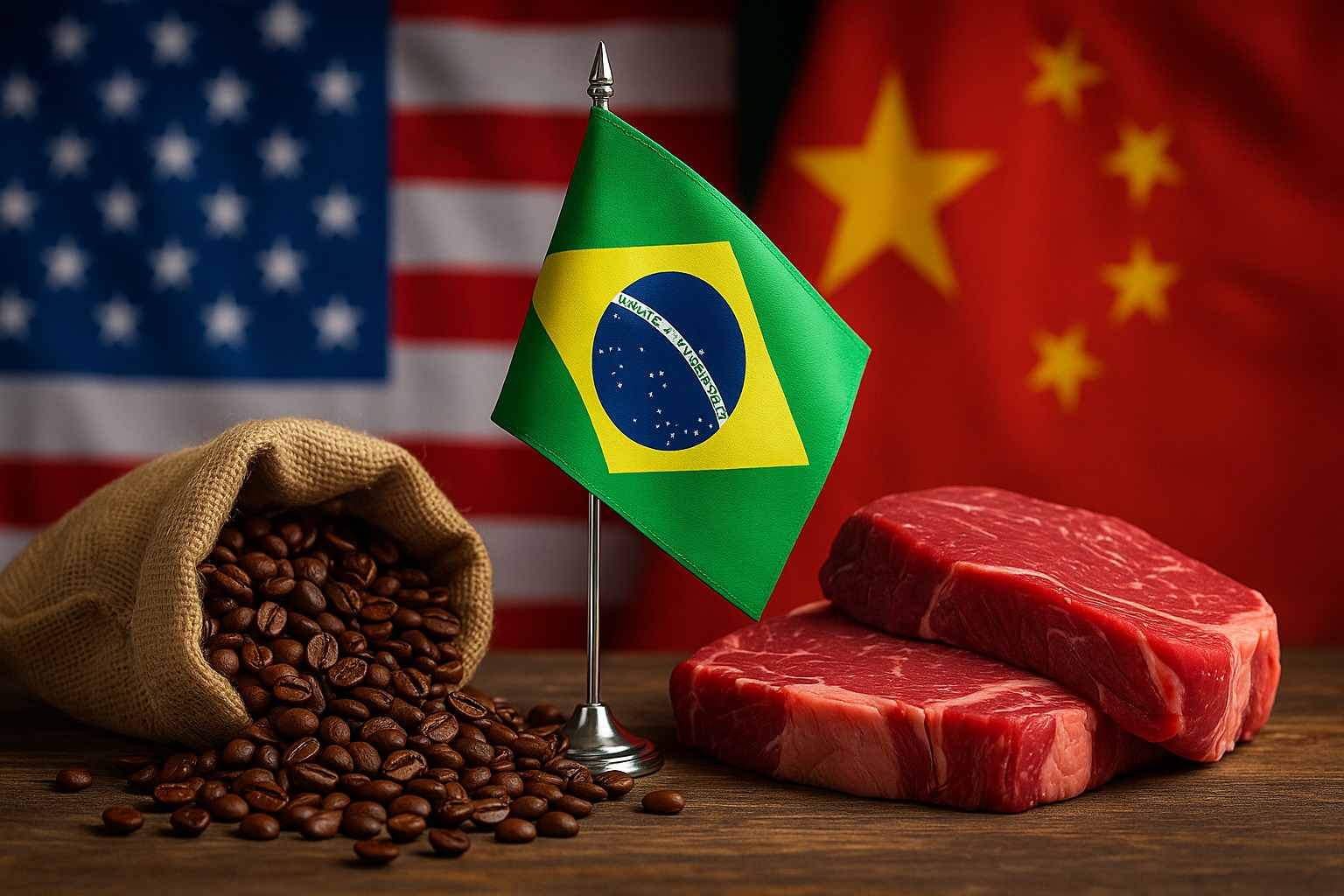
Even with the loss of US$ 375.5 million in sales to the United States, Brazil managed to redirect exports and increase profits. Coffee and beef led the movement, with significant growth in shipments to Mexico, Europe, Japan, and China.
In recent months, Brazil adjusted its export strategy to circumvent the effects of the U.S. tariff policy. By redirecting shipments in August and September, the country was able to compensate for lost revenue caused by the tariff imposed by Donald Trump’s government on key Brazilian products sold to the North American market.
The strategic move kept the trade balance vibrant and highlighted a reconfiguration of international trade relations, although it raised concerns about the concentration of sales in certain markets, especially in China.
Redirecting Ensures Compensation for Losses
Among the 20 most exported products to the United States and affected by tariffs, nine recorded a decline in sales to the American market, while they grew in other countries or saw a smaller decrease compared to the same months in 2024.
-
The eggshell that almost everyone throws away is made up of about 95% calcium carbonate and can help enrich the soil when crushed, slowly releasing nutrients and being reused in home gardens and vegetable patches.

-
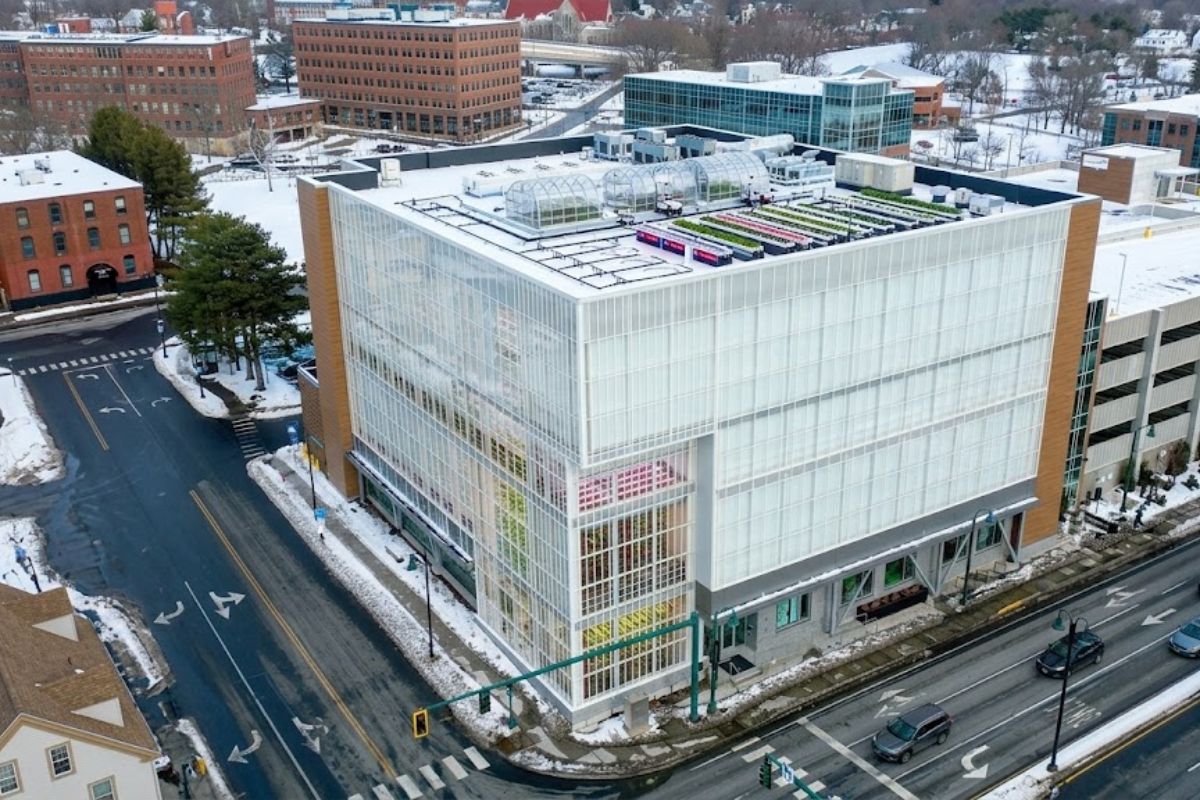
This farm in the United States does not use sunlight, does not use soil, and produces 500 times more food per square meter than traditional agriculture: the secret lies in 42,000 LEDs, hydroponics, and a system that recycles even the heat from the lamps.
-
The water that almost everyone throws away after cooking potatoes carries nutrients released during the preparation and can be reused to help in the development of plants when used correctly at the base of gardens and pots, at no additional cost and without changing the routine.

-
The sea water temperature rose from 28 to 34 degrees in Santa Catarina and killed up to 90% of the oysters: producers who planted over 1 million seeds lost practically everything and say that if it happens again, production is doomed to end.


Despite losing US$ 375.5 million in revenue from these exports to the U.S., Brazil gained an additional US$ 1.25 billion from shipments to other destinations during the same period.
The success of the compensation occurred mainly due to the increase in exports of unroasted coffee and boneless frozen beef, whose revenues were also boosted by the appreciation of international prices.
Coffee and Beef Drive Expansion into New Markets
Data from the Foreign Trade Secretariat (Secex) indicate that Brazilian coffee was redirected to European countries, such as Germany and the Netherlands, as well as Japan.
Beef, for its part, found expanded space in China and the Philippines.
Mexico also stood out as an alternative destination. Exports of frozen beef to the country nearly quadrupled, with a rise of 292.6%, while coffee sales grew by 90%, compared to August and September 2024.
Experts point out that part of these operations may be related to using Mexico as a gateway to the American market.
Diversification of Destinations and Impact on Revenues
According to a study conducted by economist Lia Valls from the State University of Rio de Janeiro (Uerj) and researcher at FGV Ibre, in collaboration with the newspaper Valor, the 20 analyzed products account for 29.3% of everything Brazil sold to the United States in the two analyzed months.
The analysis shows that the impacts of the tariff were varied. In six products, exports to the U.S. grew, although at lower rates than those recorded in other markets. In five items, there was an increase in sales to Americans while shipments to the rest of the world decreased or grew less.
As a result, the United States’ share in Brazilian exports of these 20 products fell from 28% to 21.4%. In total Brazilian exports, the American share decreased from 11.6% to 9%.
Greater Decline in Industrial Items
Not all sectors were able to fully compensate for the losses. Semi-manufactured iron or steel — the main item exported to the U.S. among those affected — recorded a decline of 19.4% in shipments, equivalent to US$ 86.7 million less in revenue.
The 36% increase in exports of these products to other countries resulted in only an additional US$ 31.5 million, which was insufficient to cover the total loss.
A similar situation occurred with food preparations, beef preserves, and electrical transformers, whose revenues in the global market did not fully compensate for the decline in the American market.
Agriculture Leads Brazilian Reaction
The Brazilian agribusiness was the most successful sector in reconfiguring markets. Frozen beef exports to the U.S. fell by 58%, with a loss of US$ 90.9 million, but a 70% increase in sales to other countries ensured an additional US$ 1.16 billion.
In the case of unroasted coffee, exports to the United States declined by 11.3%, with a loss of US$ 27.52 million, while shipments to other markets grew by 9.1%, with an increase of US$ 155.3 million.
According to Rafael Cagnin, chief economist of the Institute for Studies on Industrial Development (Iedi), the reduced dependence of these products on the American market and the rise in prices facilitated the compensation. This allowed exporters to negotiate favorable prices even with the change in the final destination of the goods.
Significant Growth in Sales to China
The most significant change occurred in frozen beef exports. The U.S. share in this market fell from 8.6% to 2.3%, while China’s share jumped from 58.8% to 67.2%. Sales to the Asian country grew by 81.8% during the period.
Mexico also showed significant expansion, with an increase of 292.7%, although starting from a smaller base.
José Augusto de Castro, president of the Brazilian Foreign Trade Association (AEB), emphasizes that exporters are taking advantage of the moment to diversify markets. At the same time, China is expanding its presence in global imports, absorbing the growing Brazilian production of meats and other products.
Risks of Chinese Dependence and Future Challenges
Despite the good performance, the concentration of exports to China concerns experts. Cagnin warns that the growing reliance on the Chinese market increases the vulnerability of the Brazilian economy to potential changes in trade policy or demand from that country.
In addition, there are products that recorded a decline in exports both to the United States and to the rest of the world, such as parts for diesel engines, certain types of plywood, and sugar from cane and beets.
These cases highlight the need to further diversify destinations, exploring opportunities in the European Union and South America.
Items with Surprising Growth in the U.S.
Even with tariffs, some products registered significant increases in exports to the United States. Rubber tires used in buses and trucks saw an increase of 417.3%, while loaders and tractors, such as bulldozers and angledozers, grew by 66.2% and 707%, respectively.
Valls points out that part of this increase may be linked to the presence of Brazilian companies in global production chains and intra-company trade.
Additionally, loopholes in tariff classification codes or specific exemptions may have favored the entry of certain products into the American market.
Brazil Redefines Trade Strategy in Uncertain Scenario
The overall analysis reveals that Trump’s tariff caused a significant reconfiguration in Brazilian foreign trade. The country demonstrated the ability to adapt by redirecting products to other markets and compensating for losses with the United States, especially in agribusiness.
However, the scenario also presents strategic challenges. The growing concentration of exports in China exposes vulnerabilities that may compromise the future stability of external revenues. For experts, this episode reinforces the need for market diversification and the search for more reliable partnerships in the global landscape.
As Cagnin summarizes, the main transformation resulting from U.S. tariff policy is that “the United States has ceased to be a reliable partner” — a signal that Brazilian trade diplomacy will need to adjust to a new global reality.










Seja o primeiro a reagir!