





 English
  Francês
  Alemão
  Italiano
  Japonês
  Norueguês
  Portuguese
  Spanish
  4 min of reading



Brazil Leads Global Ranking of Chinese Investments. Brazilian Ethanol, Electric Car Production, and Renewable Energy Plants Come Under China’s Radar!
Brazil is in China’s sights! According to the Brazil-China Business Council report, the country was the top destination for Chinese investments in 2021. Just last year, US$ 5.9 billion was injected into electricity, oil, and technology, totaling 28 major projects, with the largest in the oil sector.
The total amount invested by China in Brazil increased by over 200% compared to 2020, and the country surpassed the growth of Chinese investments globally, which rose only 3.6%, totaling US$ 113.6 billion worldwide.
See Below the Major Chinese Investments in Brazil
- In Brazil, the energy sector had 46% of Chinese projects in 2021, with 13 ventures;
- Information Technology had 36%, with ten projects;
- Oil stood out, with 85% of the total invested by the Asian country, totaling more than US$ 5 billion.
The oil sector was particularly highlighted due to two specific co-investments in the Búzios Field, in the pre-salt layer in Santos (SP), involving Brazilian oil giant Petrobras with state-owned entities China National Offshore Oil Corporation (CNOOC) and China National Oil and Gas Exploration and Development Company (CNODC).
-
Unemployment rises again to 5.8% at the beginning of 2026, raising alarms about the end of temporary positions and its impact on the Brazilian job market.

-
Document organization can cut invisible costs in small businesses, a simple step that prevents waste, rework, and losses in daily operations.

-
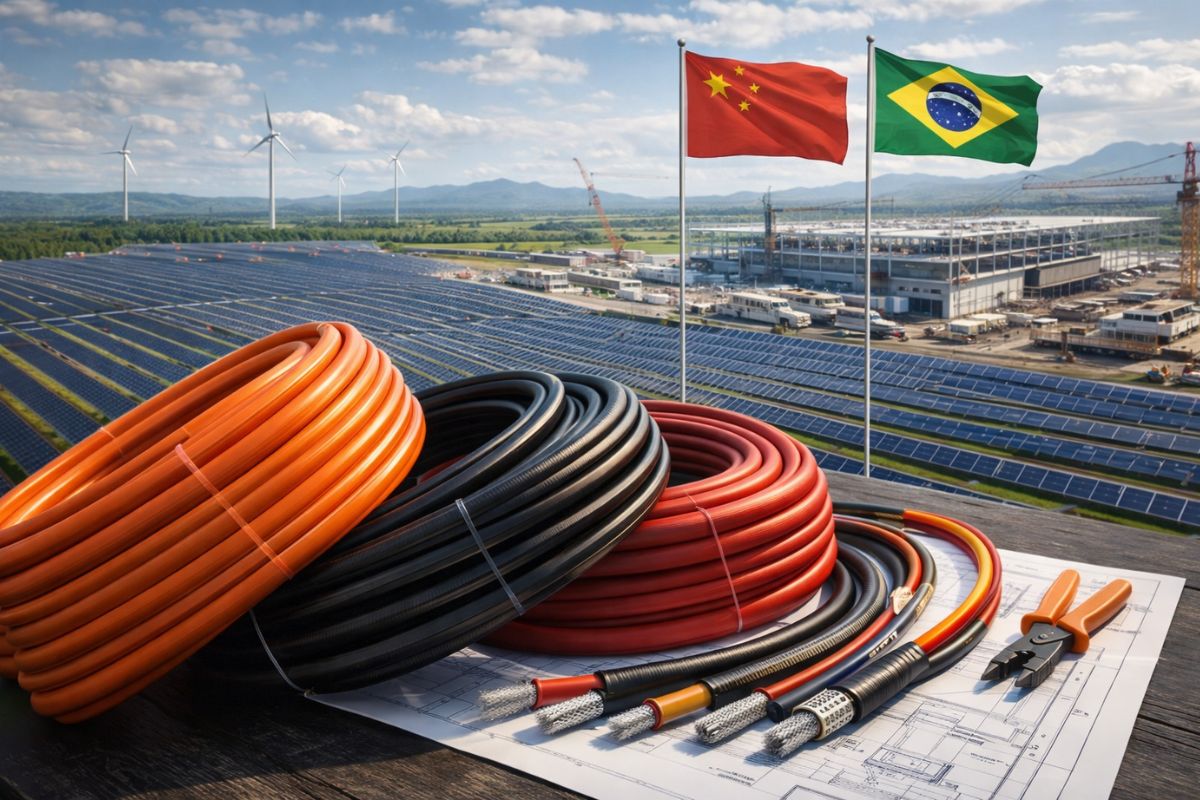
Chinese giant worth nearly R$ 4 billion that manufactures cables for electric cars, solar energy, and robotics wants to open a factory in SC.
-
Many employers do not know, but the law guarantees domestic workers a 25% increase in salary during trips, 50% for overtime, 20% for night shifts, and 17 additional benefits that can lead to labor lawsuits if not paid.


CEBC data from last Wednesday, the 31st, indicated that despite the prominence in the pre-salt, the agenda of Chinese investments has become more diversified and includes technology transfer.
“The Chinese are not just coming here to invest in commodities; this is very clear,” says Tulio Cariello, Coordinator of Analysis and Research at CEBC, at an event about the report.
There Are Chinese Enterprises in More Than 20 Brazilian States!
According to CEBC, there are Chinese enterprises in more than 20 Brazilian states.
Tatiana Rosito, senior consultant at the New Development Bank (NDB), points out that the investments seen in 2021 are not something that happens “from one year to the next.” “In many cases, Chinese companies are in Brazil for the long term,” she states, listing examples such as electricity, where China and Brazil share similarities like continental dimensions, along with a clear regulatory environment and “mutual respect” built in the sector, according to Rosito.
In contrast to Brazil, China has been withdrawing its presence and investing less in markets like the USA and Australia due to political clashes. In the USA, Chinese investments have reached their lowest level since 2005, with a 27% decline.
“Among the bets for the coming years, investments in energy will continue to guide Chinese contributions in Brazil,” says Cariello, “especially due to the high volume of resources required in this sector and the long-term relationship already established.”
Brazil has a large consumer market, more cell phones than inhabitants, and there is still a lack of internet in several regions. Despite being the most promising, the technology sector is also sensitive in international relations at the moment, as shown by the 5G auction in Brazil.
Brazilian Electric Car Production and Renewable Energy Become Targets for the Chinese!
At a CEBC event – from the banking, energy, and automotive sectors, Pedro Bentancourt, director of external and governmental relations in Brazil for car manufacturer Great Wall, stated that the Chinese matrix found no difficulty in investing in the country.
“Besides this initial investment of about R$ 4.5 billion, R$ 4.6 billion for the installation of the factory we acquired, we have a ten-year plan,” he says. He claims that investments in a “first cycle” could reach “R$ 10 billion or R$ 12 billion.”
Brazil is the first country in the Americas with Great Wall factories, which arrived in Brazil this year to build its fourth factory – outside China. “And for a few years, it may remain the only one,” says Bentancourt.
Brazil is the “gateway” to not just the South American market but also the United States. “Why not export to Mexico, to the USA, to Canada?”, he states.
Brazilian Ethanol Attracts Investments from Chinese Automaker Great Wall
And the investments from the Chinese electric car manufacturer don’t stop there! Included in the automaker’s plans, starting in the coming years, are partnerships with Brazilian universities for project development and plans on how to explore ethanol as an alternative resource.
The Brazilian operation is the company’s largest outside China, states José Renato Domingues, corporate vice president of CTG Brazil, the local arm of the Chinese energy company China Three Gorges.
Domingues reports that the investment in internal research and development has already reached R$ 25 million and that R$ 3 billion has been invested in modernizing the Jupiá and Ilha Solteira plants on the Paraná River, whose concession was won by CTG in 2016.
“Renewable expansion projects are our top priority,” says Domingues. He states that CTG is designing the “largest solar park in Brazil” in Minas Gerais and that two wind farms will begin construction next year in the Northeast region. “The idea is to bring not only solar panels but also to bring here the most modern and interesting high technology.”
by – Exame








Seja o primeiro a reagir!