





 Portuguese
  English
  Spanish
  5 min of reading


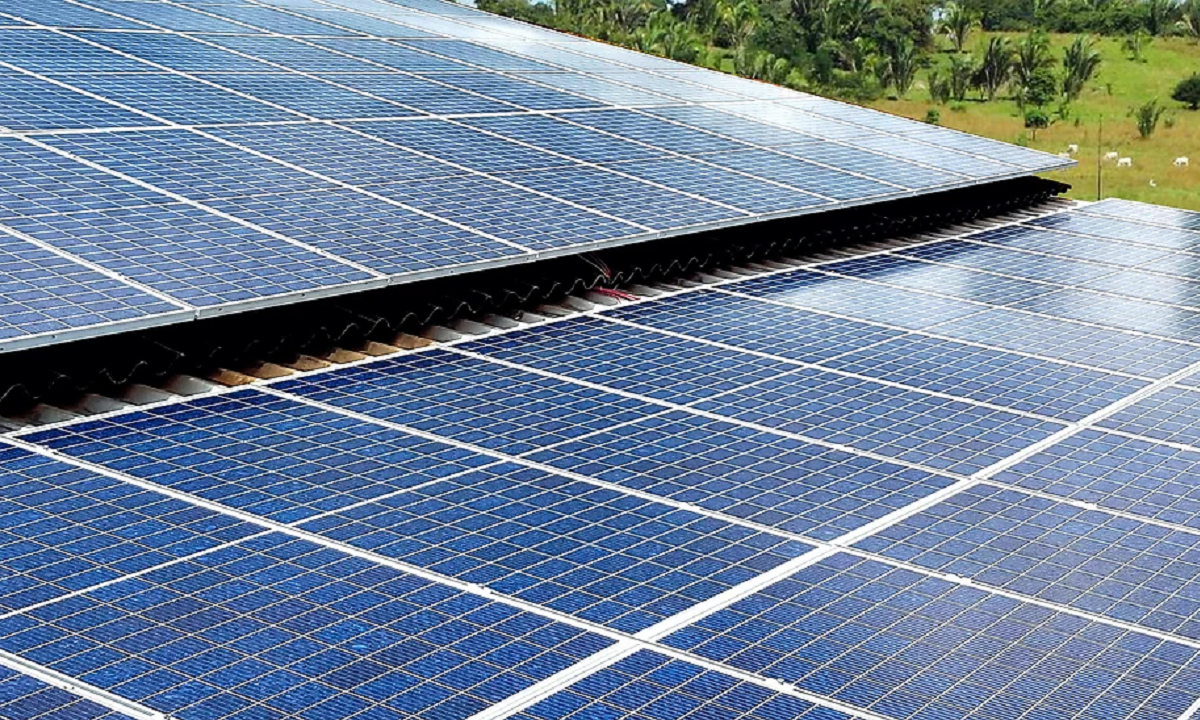
The Company’s Goal with the Construction of Solar Power Plants Is to Open Up the Market to the Opportunity to Participate in a Green, Renewable Investment Aligned with ESG Standards and With Predictable and Attractive Returns
Usinas Brasil Solar (BRS) is a company specialized in distributed generation. It created a Private Equity Fund for Infrastructure Projects (FIP-IE), OBB Brasil Solar. The first capital raise will take place in 2022 and aims to raise R$ 400 million. In 2023, if approved by the shareholders, there will be a second phase of the fund aiming to raise another R$ 500 million and enable an additional 65 MW in projects. The purpose is to finance the construction of 38 solar power plants in the country, which will be located in the southeast.
What Is the Motivation for Financing?
In 2022, the fund will be open only to professional investors, represented by those with a minimum net worth of R$ 10 million. Starting in January 2023, however, it will be open to qualified investors, who have a net worth of R$ 1 million, with a minimum ticket size of R$ 50 thousand.
In an interview with EXAME IN, Rafael D’Angelo, director of Usinas Brasil Solar, stated that the company’s goal is to open up the market to the opportunity to participate in a green, renewable investment aligned with ESG standards and with predictable and attractive returns.
-
A Canadian retiree creates a hydroelectric system on a real river, generating energy continuously throughout the day and demonstrating how the power of water can supply a house with stability even in a simple structure.

-
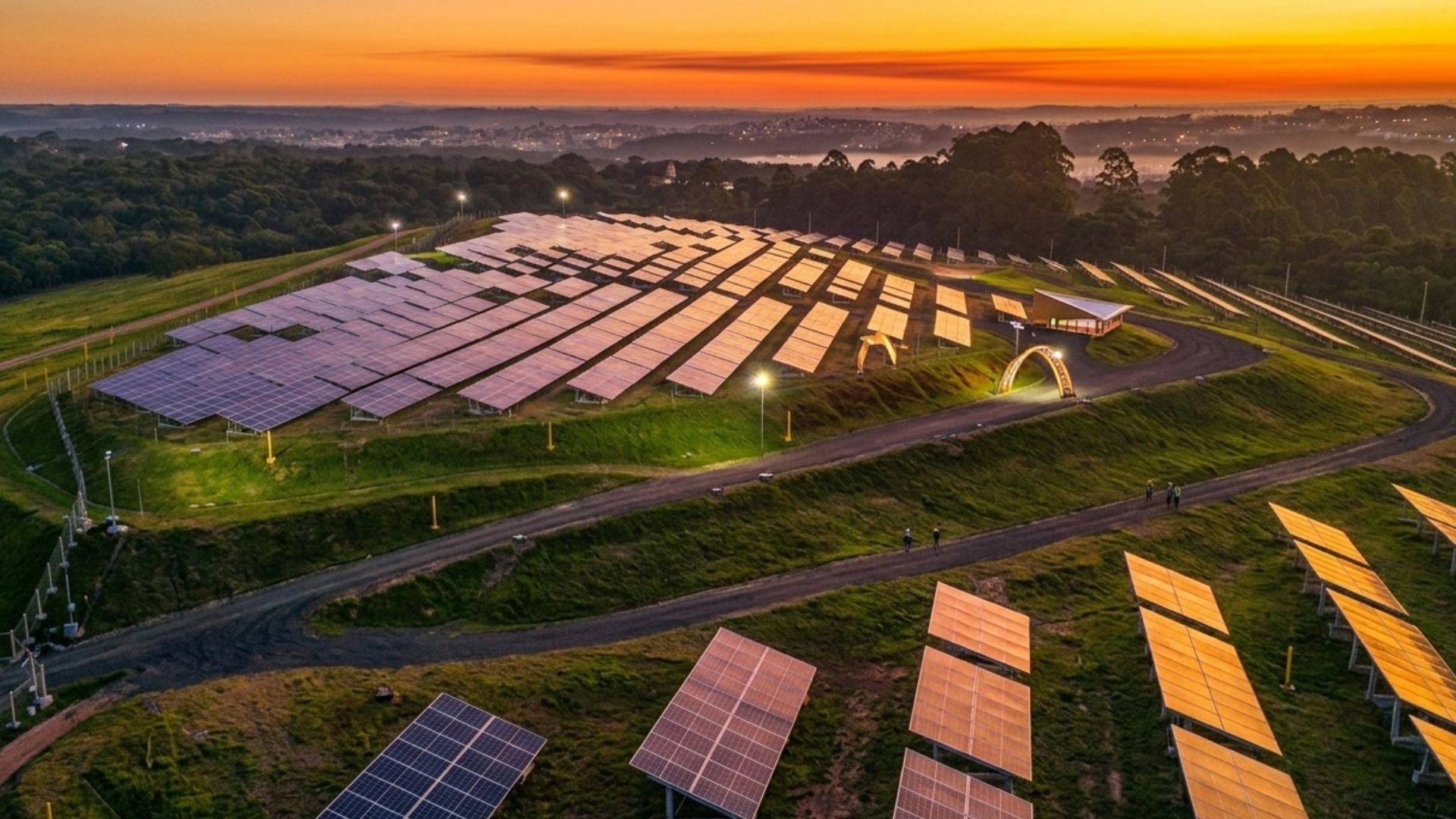
Solar Pyramid draws attention by converting solar energy into million-dollar savings and repositioning the City Hall of Curitiba as an example of innovation, sustainability, and intelligent use of public resources.
-
Petrobras reaffirms its commitment to the market and ensures that it will carry out the energy transition safely to maintain national sovereignty.

-
Researchers discover a possible hydrogen deposit of up to 46 million tons beneath an ancient coal basin, and the volume could exceed half of the entire global production.

The expected return for Usinas Brasil Solar is IPCA+14% per year. BTG manages the fund, and OBB Capital manages this fund. For individual investors, the responsible manager is André Caminada, who has over 34 years of experience in the market, having worked at Citibank, Itaú, and Victoire.
D’Angelo, when asked about the high return to investors, especially with a high basic interest rate, points to two reasons for the high profitability. The first reason is Usinas Brasil Solar’s expertise with photovoltaic energy projects, as the company is fully verticalized and handles everything from the installation of solar panels to project management.
The fact that it is a company that owns the solar power plants and participates in the entire construction and management process makes the client, even if there may be intermediaries involved, the trump card that the company has to convince investors that it is possible to invest resources in its projects safely.
The director of Brasil Solar, D’Angelo, states that the company will have a control center in Barueri, at its headquarters, with remote monitoring of all the plants and a team prepared to make repairs when necessary. This way, there will be no ‘surprises’ for the investor.
The second reason for the high profitability is the high energy tariff in Brazil, which allows final consumers to benefit from a discount on their bills while still ensuring profitability for companies in the sector. According to a survey conducted by the International Energy Agency (IEA), based on 2018 data, Brazil has the second most expensive electricity in the world.
The Legal Framework for Distributed Generation (Law 14.300/2022), which provided a solid basis for the operation of the sector in the country, influenced the company’s idea to create an investment fund to finance its expansion, even with the popularization of solar panels in the country since 2016. Combining this factor with a company that, despite being new, has experienced executives in the sector at the helm was the perfect opportunity to structure the investment platform.
D’Angelo states that because it is a sector with high return potential, it attracts many “adventurers.” However, as they do not know much about how the sector works, they end up promising returns at the start of projects that do not materialize over time. This is not the case for Usinas Brasil Solar.
Where Will the Funds Go?
The funds will be used to finance the construction of 38 new solar power plants in Brazil, mainly for the purchase of equipment and solar panels. There will be no land acquisition with the money, but leases will be made to install the solar panels at each of the sites. The plants will be located in three regions: São Paulo, Rio de Janeiro, and Minas Gerais. These states were chosen because they combine an attractive energy tariff, tax incentives, and high energy demand.
The future capacity of each of the plants will be 1MW. The executive says that selling blocks of 1MW is easier for attracting investors, but the company is not limited to this, as the plants are prepared for expansion and could reach 2.5MW.
Considering only the starting point, without expansions, the generation will be 1,800 Mwh/year, enough to supply about 1,000 households, based on the average consumption in the country. Despite the comparison, the energy will initially be sold mainly to small and medium-sized commercial establishments, which aim to reduce their energy costs compared to the traditional supply system. An important point is that all future capacity of the plants to be built is already contracted.
Currently, Brasil Solar’s installed capacity consists of two plants that will start operations later this month: Avelar 1 and Avelar 2, located in the mountainous region of Rio de Janeiro. They have a power output of 1MW, as required by the company’s standard, serving, individually, 24 clients, equally distributed. They are predominantly restaurants and offices, but the company’s aim is to focus increasingly on diversifying this audience, laying the foundations to serve individual clients.
Solar Energy Sector Creates Competition
Usinas Brasil Solar is not the only company seeking investors to stimulate investment in solar energy. Sunrun, a U.S. company that provides photovoltaic systems for homes, acquired the competitor Vivint Solar in 2020 in a deal worth US$ 3.2 billion. The goal was to target the U.S. market, where distributed generation has only a 3% penetration rate.
Turning attention to Brazil, in June of this year, the U.S. renewable energy company Energea announced that it is expanding its focus, especially in solar energy in Brazil. According to information published by Reuters, the company has about 60 solar power plants in Brazil and plans to increase its capacity to 0.5 gigawatts, from the current 100 megawatts. Co-founder Mike Silvestrini told the news agency that Brazil is undeniably the most attractive solar energy market in the world.
This is due to the high solar irradiation levels in the country. A common comparison in the sector is with Germany, a country that continuously invests in this type of generation. In Brazil, the light incidence is 50% higher than in Germany, allowing for greater energy generation in virtually all regions of the country. Furthermore, an estimate from Absolar suggests that by 2022, the installed capacity of this matrix will reach 24.9GW in Brazil, a growth of more than 90% compared to the end of last year.
Brasil Solar aims to demonstrate, amid the recent approval of the regulatory framework for the sector and the increasingly frequent discussions about this generation model as an alternative to advance amid a growing demand, that it has the capacity to be the company that will bring ‘the energy of the future’ ever closer.








Seja o primeiro a reagir!