





 Portuguese
  English
  Spanish
  5 min of reading
  0 comments


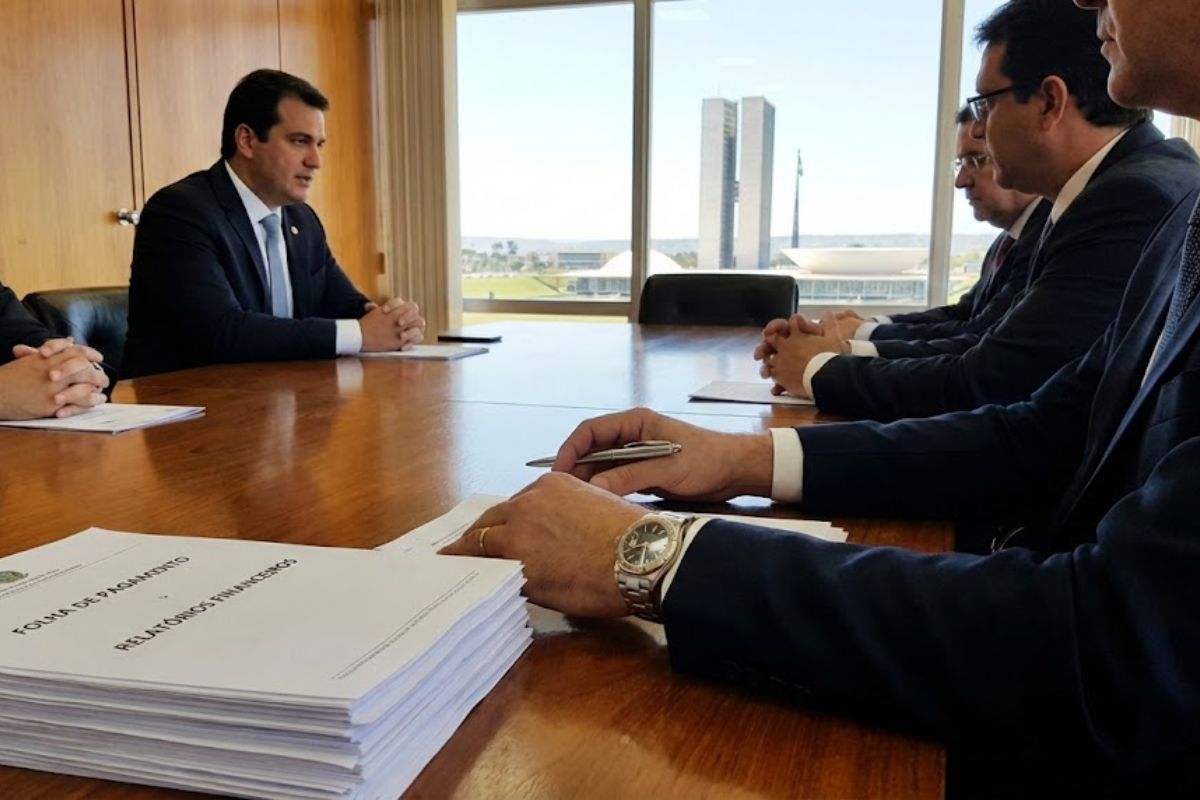
Study with 50 Million Payrolls Reveals That 53 Thousand Public Servants Exceed the Salary Ceiling with Extras and Allowances, Costing R$ 20 Billion Annually and Putting Brazil at the Top Among USA, Europe, and Latin America in Comparison with Other Public Systems in the World Severe Fiscal Crisis Today.
Fifty-three thousand Brazilian public servants receive above the salary ceiling, currently limited to the salary of STF ministers, around R$ 46 thousand per month. In total, the super salaries paid to this minority drained about R$ 20 billion in just 12 months, in a country that is discussing budget cuts and spending tightening.
The data is part of a study that analyzed around 50 million payrolls of about 4 million active and retired public servants from various branches, including Executive, Judiciary, and Public Ministry, as well as federal and state agencies. The survey shows that this elite of the public service has become an outlier, isolated from the rest of the category and the fiscal reality of the country.
53 Thousand Public Servants Above the Ceiling and a Bill of R$ 20 Billion
According to the study, 53 thousand people, equivalent to 1.34 percent of the total analyzed public servants, receive amounts well above the limit set by the Constitution. The rule is clear on paper: the remuneration of public servants cannot exceed the monthly salary of an STF minister.
-
Oil surged to $115 a barrel due to the war in the Middle East, and diesel in Brazil has already risen to R$ 7.45 per liter, while the United States…

-
Brazilian city bets on the business environment to generate jobs and attract investments in the energy sector — secretary reveals strategy at Macaé Energy 2026.

-
50 viaducts, 4 tunnels, 28 bridges, and 40 kilometers of bike paths: BR-262 in Espírito Santo will receive 8.6 billion reais for the largest engineering project in the state’s history, inspired by the Immigrant Highway in São Paulo.

-
Brazil produces too much clean energy and doesn’t know what to do with it: over 20% of solar and wind capacity was wasted in 2025 while investors flee and 509 renewable generation projects were abandoned in the last year.


In practice, what exceeds this ceiling are the so-called allowances. These include unlimited bonuses, accumulated aids, retroactive benefits, and cost allowances that keep growing. It is this bundle of extras that pushes salaries to levels that the law itself aimed to avoid.
The result appears in the bill: between August 2024 and July 2025, the expense exclusively with what exceeds the ceiling reached R$ 20 billion. This is enough money to cover budget gaps in areas such as education, health, and social assistance.
Where Are the Highest Super Salaries in Public Service
The survey shows that the top of the pyramid is in the judiciary. Only among judges and appellate judges, 21 thousand receive above the ceiling, concentrating a large share of these super salaries.
In the Federal Executive Branch, the study indicates 12 thousand public servants with remuneration that exceeds the constitutional limit. In the Public Ministry, combining federal and state spheres, there are 10 thousand members in the same condition.
The overall picture is clear. A minority of very well-placed public servants, in high-paying careers, manages to breach the ceiling with the help of a mix of outdated rules, legal loopholes, and benefits that accumulate month after month.
Brazil Soars in Comparison with USA, Europe, and Latin America
When the research compares Brazil with ten other nations, the gap becomes even more glaring. Considering the money spent on payments above the ceiling, converted into dollars and adjusted for purchasing power parity, Brazil’s bill reaches US$ 8 billion in a year.
In second place is Argentina, with about US$ 381 million in extra ceiling expenses, a value several times smaller.
Following are the United States, Mexico, the United Kingdom, Chile, France, Italy, Colombia, and Portugal. In Germany, the study indicates that there is no comparable spending with super salaries above a formal ceiling.
Another noteworthy statistic is the comparison of salaries. According to the survey, a judge in Brazil can earn up to six times more than the highest authorities of the judiciary in Portugal, and four times more than ministers of constitutional courts in Germany, France, Argentina, and the United States. Compared to Chile and Colombia, Brazilian remuneration can reach tripling the highest salaries of local judges.
Super Salaries of Public Servants and Fiscal Crisis
The author of the research, Sergio Reis Guedes, does not soften the diagnosis. For him, maintaining super salaries in a scenario of budget tightening is a complete contradiction.
In the researcher’s calculations, the R$ 20 billion spent on extra ceiling in one year would be enough to cover recurring “gaps” that appear in budget discussions, such as a lack of resources for education or social programs.
In other words, it is money that is going to those who already earn very well, while other areas continue to compete for crumbs from the public budget.
The executive director of the People First Movement, Jessika Moreira, emphasizes that the distortion is concentrated in a minority: about 1 percent of the public servants analyzed. Even so, the impact is heavy.
According to her, each real allocated to these super salaries is taken away from schools, hospitals, and public services that serve the general population.
Administrative Reform Targets Allowances and Single Ceiling
In Congress, the debate on administrative reform is gaining traction driven precisely by the super salaries.
Deputy Pedro Paulo, author of the proposal, asserts that the central point is to cut allowances and bring all effective salaries within the ceiling.
According to the legislator, the text is under negotiation with political leaders and the government, seeking an agreement that allows for voting in plenary.
The idea is to directly address the mechanisms that authorize additional amounts and benefits that push the remuneration of some public servants to levels well above what is envisioned in the Constitution.
He highlights that the vast majority of public servants earn modest salaries, without any super salary, while the elite of the public service enjoys advantages that skew the perception of public service as a whole.
What the Judiciary and Federal Government Say
The National Justice Council (CNJ) responded that the Judiciary is an independent power, with courts that manage their own budgets and define salary ranges within legal norms.
The agency also states that it analyzes potential irregularities and has created an observatory dedicated to monitoring integrity, governance, and transparency in the Judiciary.
The Ministry of Management argues that cases where the ceiling is exceeded generally involve indemnity payments, authorized by current legislation.
At the same time, the department acknowledges that it is necessary to address privileges, but emphasizes that any change in this area depends on broad dialogue and political consensus among the government, Congress, and Judiciary.
Why the Debate About Public Servants and Super Salaries Matters
The discussion about super salaries is not only moral but also fiscal and political. In a constrained budget, R$ 20 billion allocated to extra ceiling in one year can mean less investment in infrastructure, essential services, and social programs.
Moreover, the existence of a layer of public servants with remuneration far above the ceiling fuels the perception of inequality within the State itself.
Meanwhile, base-level servants, such as teachers, health professionals, and security agents, continue to face low salaries and precarious working conditions.
In the end, the debate about cutting or maintaining allowances determines who pays the bill and where taxpayer money goes.
And that is where public opinion pressure can influence the pace of the administrative reform and any potential legal changes.
For you, should super salaries of public servants above the ceiling be cut immediately or need a transition with softer rules for those who already receive these amounts?









-

Uma pessoa reagiu a isso.