





 Portuguese
  English
  Spanish
  5 min of reading
  1 comment


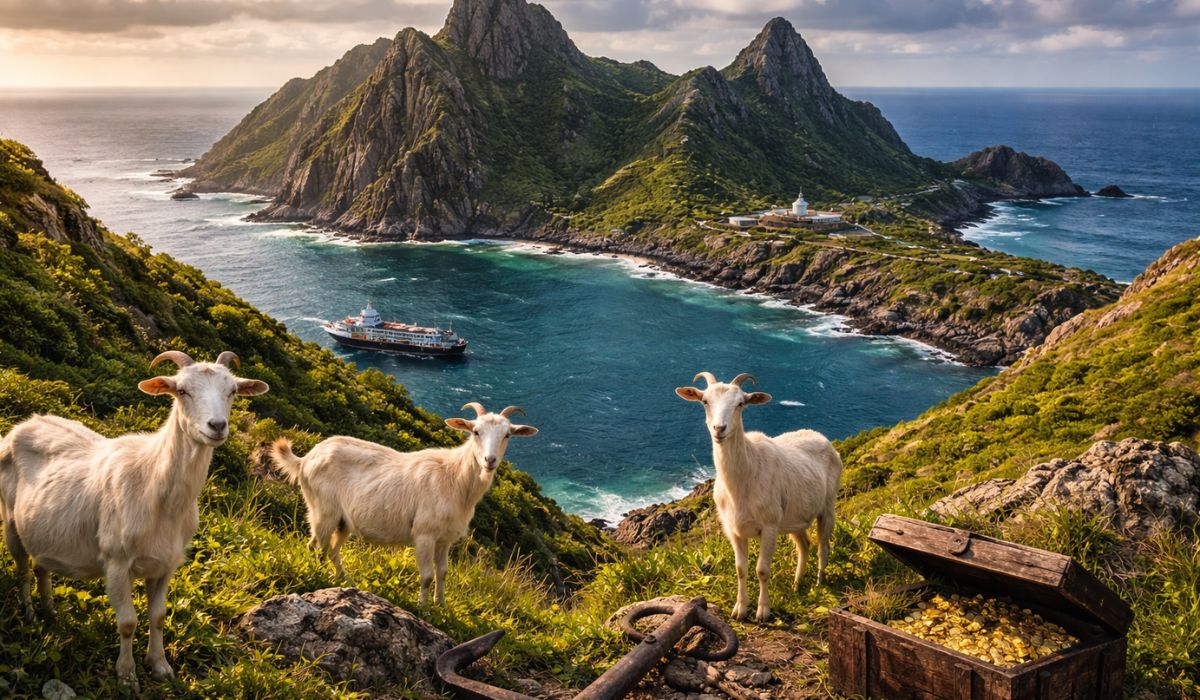

Trindade Island, in the Atlantic, has controlled access and a restricted routine, but gained fame for stories that span decades, among environmental research, military presence, and ancient narratives about pirate treasure and sightings.
Trindade Island, a Brazilian territory in the Atlantic, has controlled access and does not receive tourists, according to information released by official bodies and researchers working in the area.
Isolated and with a permanent military presence, the island is usually occupied by Navy personnel and authorized scientists for research missions.
Located about 1,200 kilometers off the coast of Espírito Santo, Trindade is frequently cited as one of the most remote points in the country.
-
He started running at 66 years old, broke records at 82, and is now a subject of study for having a metabolic age comparable to that of a 20-year-old, in a case that is intriguing scientists and inspiring the world.

-
Oldest tree on the planet reappears after 130 years of searches: Wattieza, 385 million years old, was 10 meters tall and had no leaves or seeds; Gilboa fossils in New York solved the mystery in 2007.

-
A 48-square-meter house assembled in hours with 4,000 bricks made of recycled plastic that does not absorb moisture, has natural thermal insulation, and costs less than 90,000 reais in a complete kit.

-
Luciano Hang revealed that Havan’s air fleet has already accumulated more than 20,000 landings, 10,000 flight hours, and 6 million kilometers traveled, and he says that without the planes, the company would never have grown so quickly.


Because of the distance and difficult logistics, common visitation does not occur, and staying on the island depends on authorization and operational support.
The entry restriction contributes to public interest and the perception that it is a place shrouded in secrets.
In practice, the routine described by those who work in the area involves maintenance of structures, monitoring activities, and research focused on the insular environment and the surrounding sea.
Trindade Island and the Navy’s Access Control
Trindade is part of a strategic area for Brazil in the Atlantic, according to institutional communications about military presence in the region.
The Navy maintains a detachment on the island and supports activities that depend on human presence, such as observations and records in a difficult-to-access environment.

At the same time, the island is pointed out by researchers as a place of great scientific interest due to its unique insular ecosystems and rare natural conditions in the national territory.
This combination makes part of the expeditions focus on biodiversity, environmental dynamics, and monitoring of the distant ocean coastline.
Still, access control is treated as a rule.
Authorization for researchers is usually linked to specific projects and missions, precisely because the local structure is limited and transporting personnel and equipment requires planning.
Scientific Research in the Atlantic: What is Studied in Trindade
The scientific teams arriving on the island conduct fieldwork and gather information on land and in the surrounding marine area, according to reports from researchers who have participated in expeditions.
Since it is a remote area, the pace of research tends to follow the available logistical windows and weather conditions in the Atlantic.
In different projects, interest falls on vegetation, soil, fauna, and the relationship between native species and external factors.
There are also studies that seek to understand how insular ecosystems react to environmental impacts and how they reorganize when pressure decreases.
For researchers, oceanic islands often serve as environments that allow for more concentrated observations of changes, due to limited space and the presence of species adapted to isolation.
This perspective frequently appears in academic work on islands and is cited as a reason for the attention given to Trindade.
Goats on Trindade Island and the Recovery of Native Vegetation
One of the best-known chapters in Trindade’s environmental history involves the introduction of goats by navigators, during a period that extended over decades.
These animals, according to records about the island, advanced over the native vegetation and contributed to the degradation of areas that already faced natural limitations, such as shallow soil and rugged terrain.
Over time, the presence of goats became associated with the loss of plant cover and imbalances in the local ecosystem, according to technical reports.


In response, there was an operation conducted by the Navy with the support of researchers to eliminate the animals and reduce the impact on the flora.
After this action, natural regeneration became one of the themes monitored by scientists.
Field studies and observations began to register the return of greenery in areas that were previously more degraded, as well as the reappearance of species that were seen less frequently.
Researchers also point out that recovery processes vary according to climate, terrain, and the availability of seeds and seedlings in the environment.
Therefore, the advancement of vegetation tends to be monitored over time, with comparisons between different areas and periods.
Trindade Treasure: The Legend of Pirate Treasure on the Island
Outside the scientific field, Trindade is mentioned in legends and narratives that have circulated for decades, many of them associated with isolation and difficulties of access.
One of the most repeated stories talks about a supposed treasure hidden by pirates, popularly known as the “Trindade Treasure.”
Over time, reports of expeditions aimed at this search helped reinforce the fame of the location, although there is no public confirmation that any treasure has been found.
In historical records and recurring mentions on the subject, the island appears as a backdrop for frustrated attempts and unproven promises.
Part of the legend’s appeal lies in the combination of distance, entry control, and a landscape marked by rocky formations and areas of difficult access.
These elements, according to culture and memory scholars, tend to strengthen mystery narratives in various places around the world, especially when access is limited.
The Case of Trindade Island and the Supposed UFO Sighting
Another story tied to popular imagination is that of a supposed unidentified flying object sighting in the region, attributed to an episode from 1958.
The mention appears in widely circulated reports over the years and has become one of the reasons why the island is associated with “aliens” in curiosity content.
The case is frequently cited as a record involving military personnel and photographs, but the versions of what happened vary, and controversy surrounds the episode to this day.
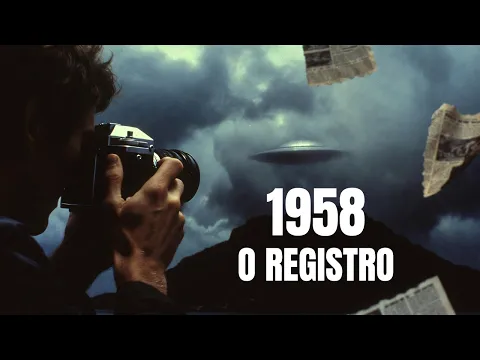
Therefore, when the topic reappears, it is often treated as a report of a supposed sighting, with no conclusive proof presented consensually.
Experts studying ufological phenomena and historians analyzing documentation often point out that cases of this kind gain momentum precisely by mixing testimonies, images, and gaps in information.
In the case of Trindade, the distance and low circulation of people help keep the narrative alive, even though the daily work on the island is linked to military and scientific functions.
Between Military Presence and Legends: What is Known About the Island
In news reports and informational materials, Trindade Island usually appears in two layers.
On one side, there is institutional action and support for research, in a remote environment that requires planning and authorization for any activity.
On the other, remain the stories that have crossed generations, such as the search for treasure and mentions of UFOs.
The combination of restricted access, little civilian presence, and great distance from the coast creates a scenario that favors varied interpretations and fuels curiosity.
Without tourism and with limited entry, most of what is known about Trindade reaches the public through official records, accounts of scientific expeditions, and historical reconstructions.







Nunca Existiu Tesouros na ilha da Trindade, É Pura Lenda, Entre Informações Contraditórias e Especulações, Cavaram, Explodiram, Dizimaram, e até Antigos Cemitérios e Túmulos Foram Profanados, a Procura dos tais Tesouros que nunca Existiram; e Parece que a Marinha Brasileira vai Dar Aval Para Novamente, Certos Especuladores, Com Equipamentos de Última Geração, Cavucarem, Explodirem e Dizimarem o Que a Natureza está Tentando Repor; O Tal Mapa do Tesouro Está Codificado, Ele é de Uma Ilha na Costa do Rio de Janeiro, Elaborado por Um Inglês Maçom, entre 1829 e 1831, Pós Guerras de Independência e Cisplatina, Brasil Império.