





 Portuguese
  English
  Spanish
  6 min of reading
  128 comments





In Brazil, A Silent Phenomenon Is Changing The Relation Between Companies And Workers: The Declining Interest In CLT. While Traditional Sectors Try To Hire, The Lack Of Labor Spreads And Already Threatens Supermarkets, Bakeries, Steelworks, And Even Construction Companies. With Thousands Of Open Positions And Few Interested, The Country Witnesses A Shock Between Work Models That Puts The Structure Of Formal Employment In Check.
The Brazilian job market is undergoing profound transformations. Fewer and fewer people want formal jobs governed by the Consolidation of Labor Laws (CLT), creating a huge labor shortage in various sectors of the economy.
This movement, driven by the search for flexibility and autonomy, challenges a model established for decades and is already having effects on essential sectors of the economy.
Moreover, the crisis of job scarcity is exacerbated by low wages and excessively long working hours, with many of these workers complaining about the 6-on-1 work schedule.
-
Airfare prices may rise with increasing fuel costs, and the government is considering urgent measures to avoid a direct impact on the wallets of Brazilians.

-
Chocolate prices soar nearly 15% and become a luxury item for Easter 2026, with increases surpassing inflation and changes in Brazilian consumption habits.

-
The Federal Revenue issues a good alert for Brazilian taxpayers: 60.9% are already using the pre-filled tax return, automatic refunds via Pix reach millions, and the government plans for a fully automated income tax in the coming years.

-
India announces a plan of $3.06 billion to bring aviation to forgotten regions: 100 new airports, $1.07 billion in subsidies, and regional routes guaranteed for 10 years, from 2026 to 2036, away from the centers.

Many workers have come to prefer autonomous activities, such as app drivers and delivery workers, which offer control over their own routine.
For them, the ability to choose their working hours compensates for the lack of benefits and formal security.
This change in mindset mainly affects young people, who show little interest in traditional, long-term careers at companies.
On the other hand, employers face challenges in hiring and retaining employees. In several areas, positions remain unfilled and there are few interested candidates. The result is rising costs, high turnover, and, in many cases, the need for automation.
The Labor Scarcity In The Construction Industry
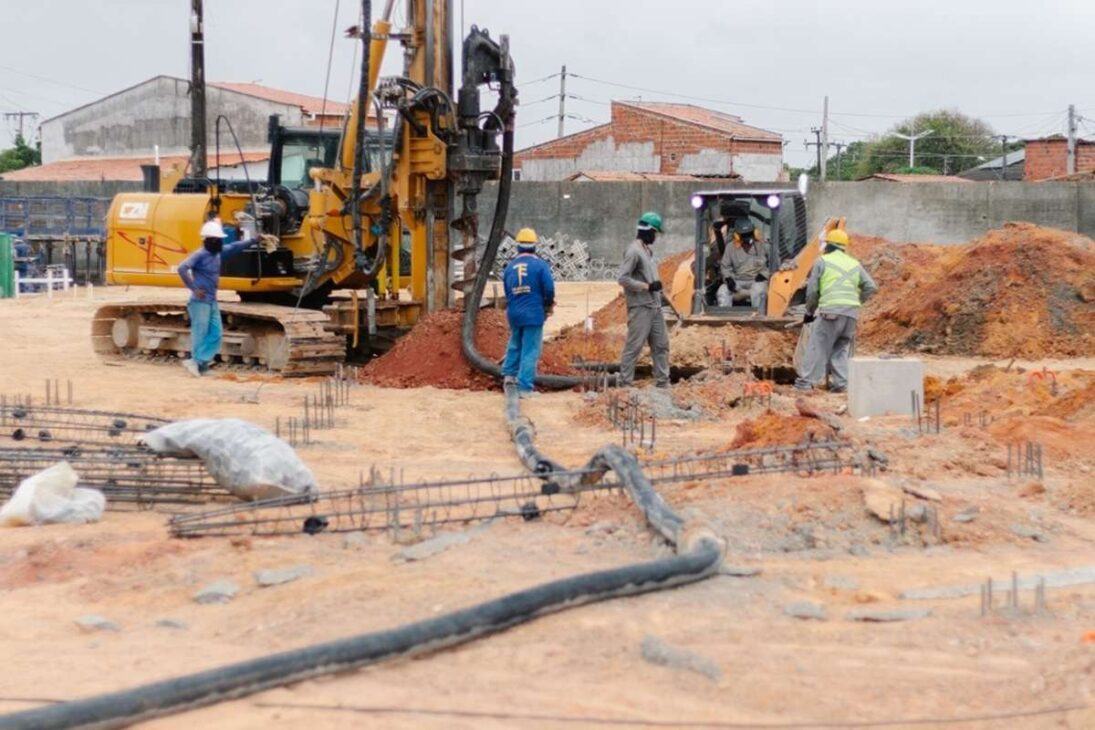
A study titled “Overview of Labor in Brazilian Construction”, conducted in April 2024 by Grua Insights with 139 companies, revealed a concerning scenario.
In the previous six months, 76% of construction companies needed to revise project deadlines due to a lack of workers.
To try to mitigate the impacts, 74% of companies increased salaries and benefits. Nevertheless, the scarcity persists.
The Union of Workers in the Construction Industry of São Paulo (Sintracon-SP) reinforces the weight of this situation.
In 2024, salary adjustments outpaced inflation. While the norm would be about 0.5% above the official index, the increase reached 1.27%, in addition to the INPC adjustment of 3.18%.
The direct reflection appears on construction sites: delayed timelines, inflated costs, and a risk of financial infeasibility in medium and large-scale projects.
Scarcity Of Workers In The Wholesale Sector
The crisis is not limited to construction. In wholesale, entrepreneurs are struggling to find and, especially, retain professionals.
According to a survey by FecomercioSP, the average retention of workers fell from 28 months in 2010 to 26 months today.
Although the difference may seem small, in areas such as food, beverages, pharmaceuticals, and agricultural raw materials, many employees do not last two years at the same company.
The president of the Wholesale Trade Council (CCA), Ronaldo Taboada, summarizes: “Full employment is an achievement for the country, but for the wholesale businessman, it has also become a daily battle to find and retain good professionals. Human capital has become the great competitive differential.”
Moreover, the participation of young people has dropped sharply. In 2010, they represented 22% of formal jobs in the sector. Currently, this number has fallen to 17%.
For companies, raising wages is no longer sufficient. FecomercioSP points out that the market demands a healthy working environment, clear career paths, and consistent benefits. Without these, turnover will continue to erode margins and productivity.
In light of this scenario, the recommended solution is to invest in training, technology, and valuation policies, as well as specific programs to attract young people.
Supermarkets, Bakeries, And The Deficit Of Workers
The problem also appears forcefully in retail. A report from SBT Brasil revealed that 58% of retail and service entrepreneurs face difficulties in filling vacancies. In construction and manufacturing, the percentage rises to 60%.
The numbers are striking. Supermarkets estimate a deficit of 350,000 workers, which reflects in long lines at checkouts and a decline in service quality. Bakeries and pastry shops also suffer, with a shortage of over 100,000 professionals.
Flexibility In Place Of A Registered Employment
The preference for autonomy has become evident. The report highlighted the story of José Luiz, an app driver for nine years. After losing his formal job, he couldn’t find another position with a comparable salary and decided to drive.
“I like the hours I do. Before, I had to work two jobs to try to reach the ideal,” he said.
This example represents thousands of Brazilians who opted for technological informality. The feeling of independence surpasses the stability of CLT.
Robots As A Response To The Labor Scarcity
With open positions and few interested candidates, many companies have turned to automation.
A chain of bakeries in São Paulo opened 30 positions but could not fill any, even offering above-average salaries. The solution was to invest in robots. Currently, three units are already working in service, delivering plates and transporting cups.
A similar situation occurred at a steel mill in the interior of São Paulo. Unable to hire 70 employees for peak production periods, the company automated part of the line. The director was clear: it was not a choice but a necessity.
The Shock Between Generations And Work Models

The new generations show little interest in traditional jobs. The search for flexibility, quick remuneration, and autonomy contrasts with the rigidity of CLT.
This clash between the needs of companies and the expectations of workers explains why thousands of vacancies remain open.
On one side, employers talk about costs and productivity. On the other side, workers talk about freedom and quality of life.
The Workers’ View: Low Wages And Excessive Demands
Readers’ comments on this report help to better understand the root of the problem.
For many, the so-called lack of formal labor is directly linked to low wages, working conditions, and excessive demands.
A boilermaker reported that he earns R$ 7,000 working outside of CLT, but if he were registered, his net salary would not reach R$ 5,000 due to deductions.
For the company, however, the cost of that same worker would exceed R$ 20,000 monthly.
The discrepancy reinforces how formalization can create cost distortions and loss of attractiveness.
Another reader highlighted the business contradiction: “They demand first-world qualifications and offer third-world salaries. Perhaps the end of the 6-on-1 schedule would be a great advance.”
The perception of underemployment also surfaced strongly. “No one can live on a subemployment salary, which is why there is a lack of formal labor,” commented another reader.
One worker even mocked the demands: “These companies complain, but they want people up to 35 years old, with three degrees, five languages, and offer R$ 1,700. That’s not feasible, right?”
These accounts show that the labor scarcity cannot be seen only as a rejection of CLT or preference for apps, but also as a result of unattractive wages and unrealistic business expectations.
The Position Of CUT: Precarization Pushes People Toward Apps
The president of the Unified Workers’ Central (CUT), Sérgio Nobre, reinforces this view. For him, the precarization of formal employment has increasingly pushed Brazilians into informal work and digital platforms.
“If we do not raise the value of salaries today for those who are registered, we will push more and more people into informality,” he warned in an interview with Brasil de Fato.
According to Nobre, low remuneration and the rigidity of formal positions cause many to opt for apps. “It’s better to take a car and work the whole week, because at the end of the month, I can make at least R$ 8,000 without a boss bothering me. Nowadays, app workers want protection; they would like to be registered workers, but it’s not worth it,” he said.
Possible Paths And The Future Of CLT
Industry entities advocate three main strategies to combat the labor shortage:
- train professionals within companies;
- invest in real career plans;
- adopt policies for salary enhancement and benefits.
Despite this, many companies still do not implement these measures. The risk is that the dependence on formal labor continues to decline while automation advances.
The debate goes beyond statistics. The CLT faces direct competition from technological informality. App drivers, delivery workers, and freelancers are increasing in number while supermarkets, bakeries, industries, and wholesalers struggle to fill positions.
Brazil is facing a historic dilemma: adapt the CLT to new demands or coexist with a market divided between freedom and formal ties.
For now, the balance tilts towards autonomy. And the result is a country with thousands of formal job openings, meaning a shortage of workers, but increasingly fewer people willing to fill them.









Crise na CLT na cabeça de minhoca de vocês, a crise é toda por culpa de empregador que não cumpre a própria obrigação, paga pouco e quer além do que oferece.
Sempre trabalhei na construção civil atualmente tive que abandonar a vaga pois a empresa nunca cumpriu suas obrigações atrasando salário e sem falar de líderes incompetente sem educação **** e sem nenhuma formação profissional, e por sua vez quer grita e maltratar seus subordinados olhando esse cenário triste o melhor e trabalhar particular.
O problema é somente o salário muito baixo, se o empresário reduzir o lucro e aumentar o salário base das empresas para pelo menos uns 4 mil, pode ter certeza que vai chover interessados, pois não tem como viver com um salário mínimo, não dá para pagar aluguel, supermercado, água e luz. E quem tem salário melhor consome o que produz também. A economia gira… Robô não consome dá gasto apenas…