





 Portuguese
  English
  Spanish
  6 min of reading
  0 comments


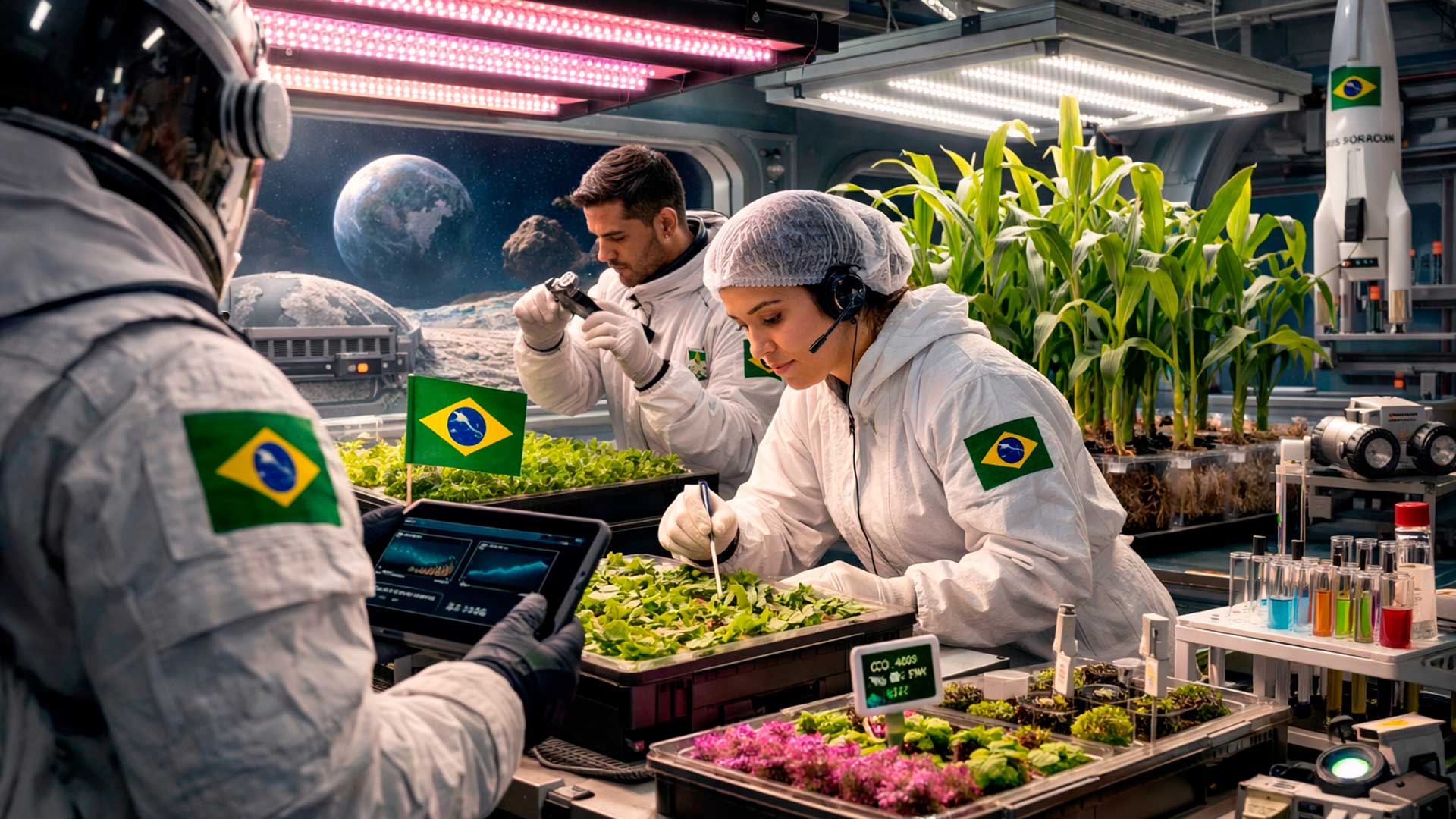
Brazilian research unites space agriculture, food security, and climate adaptation in one of the country’s most ambitious projects in the Artemis program
Brazil has entered a strategic front in the space race with a goal that goes far beyond the Moon. Brazilian researchers are working on the development of plants capable of growing in space environments, but the practical effect of this technology may first appear here on Earth, in regions affected by drought, extreme heat, and climate instability.
The project is part of the Artemis program, an international initiative led by the United States since 2012, which already includes 56 signatory countries. In April 2026, the program made headlines again with the conclusion of the second crewed mission to the Moon, completed on April 10 with the return of four astronauts to Earth.
On the Brazilian side, the bet is on the Space Farming Brazil Network, led by the Brazilian Agricultural Research Corporation, Embrapa, with support from the Brazilian Space Agency, AEB, and participation from scientists from 22 institutions. The proposal is to create bases for future extraterrestrial “farms” while simultaneously developing more resilient crops for a changing planet.
-
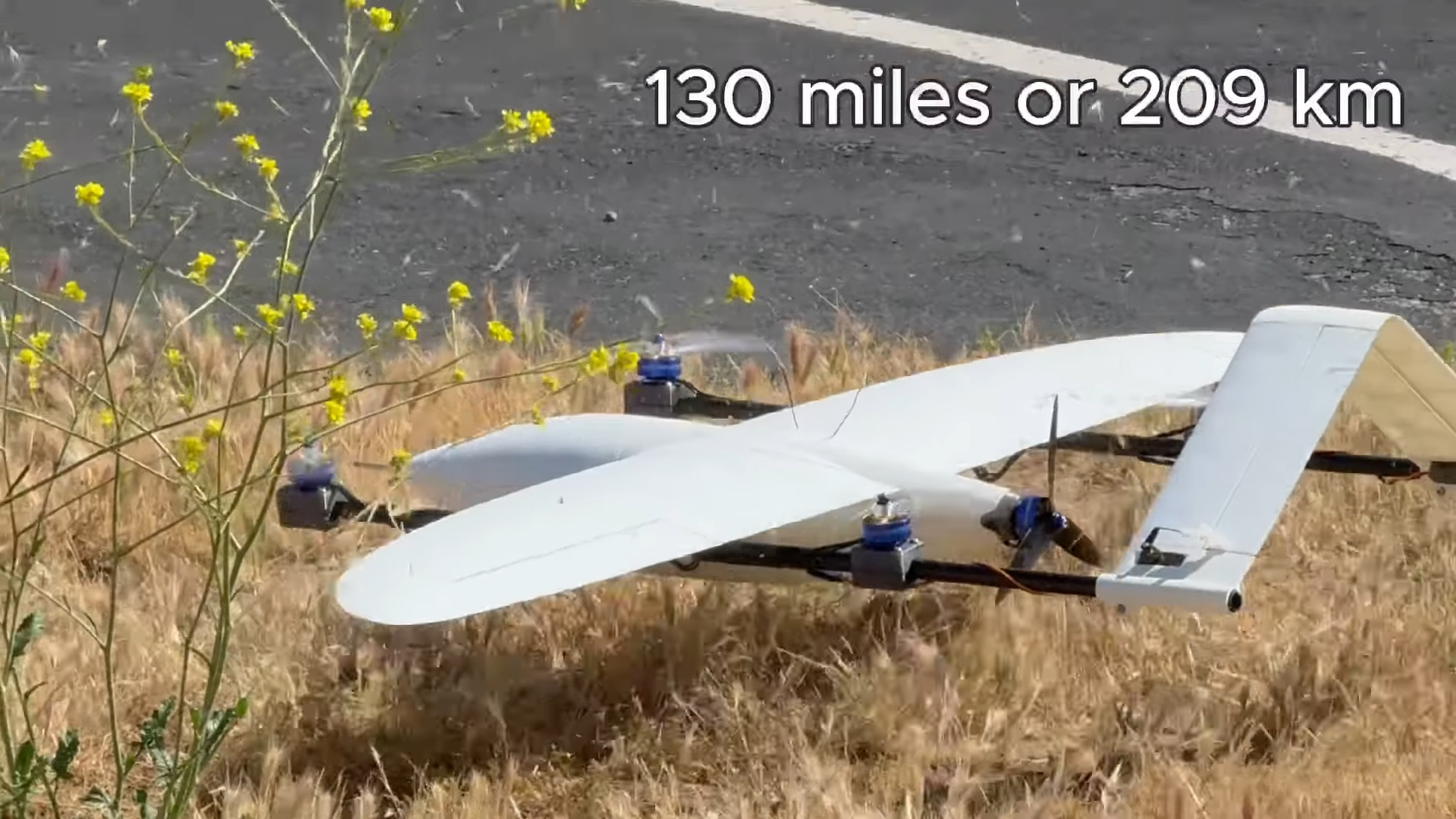
Without aerospace training, a student designed a VTOL drone on his own in just 90 days, featuring a 3D-printed structure and a range of up to 3 hours, capable of covering about 130 miles and demonstrating how far independent engineering can go outside of traditional industry.
-
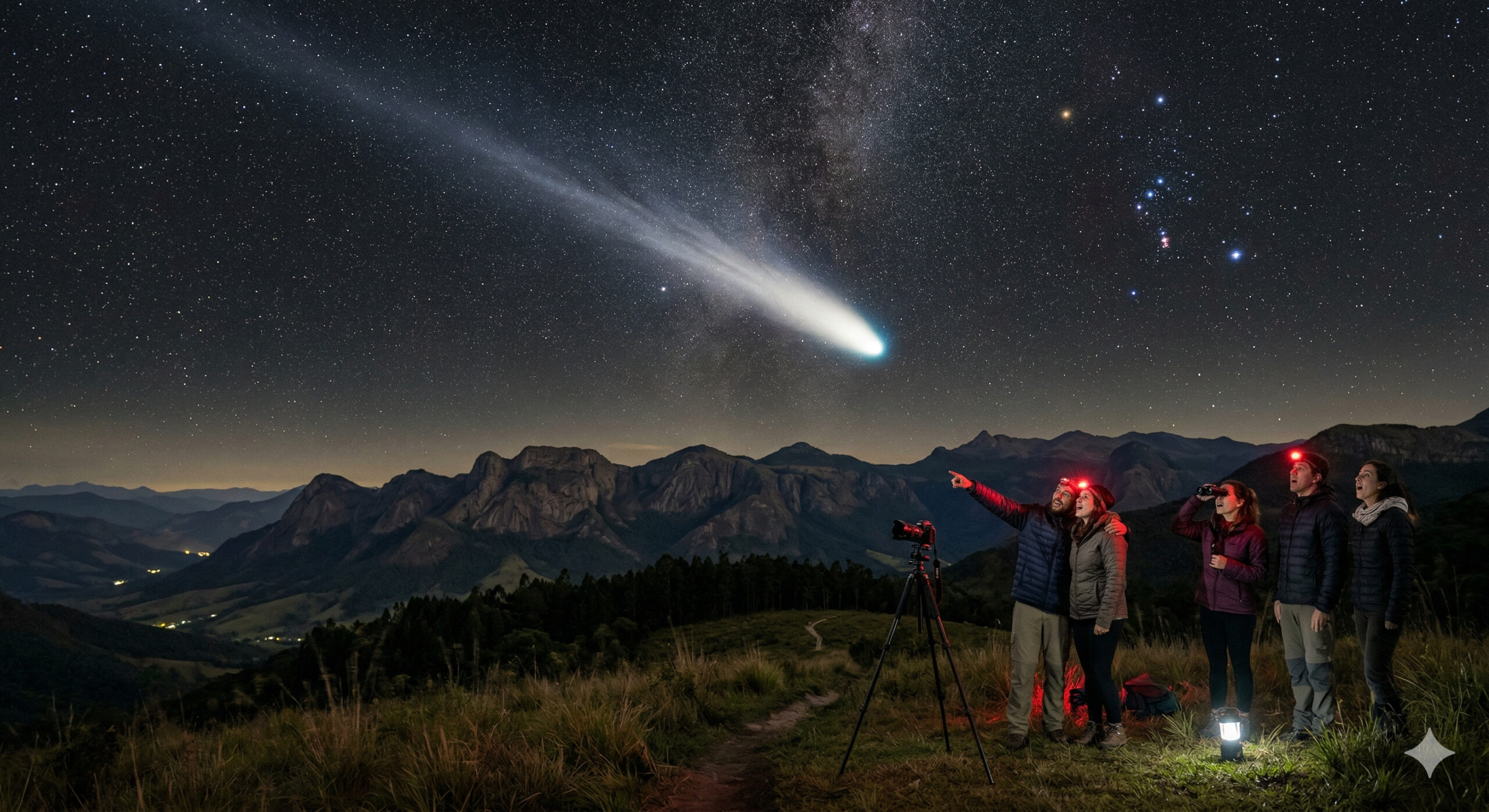
Comet C/2025 R3 (PanSTARRS) is starting to shine brighter each night and may become visible to the naked eye in April; this rare phenomenon promises to transform the sky into one of the biggest astronomical spectacles of the year.
-
After a devastating fire that left 3 injured and 200 intoxicated by smoke in the Red Sea, the most expensive warship ever built — $13.3 billion — returns to the front in Iran after quick repairs in Croatia.

-
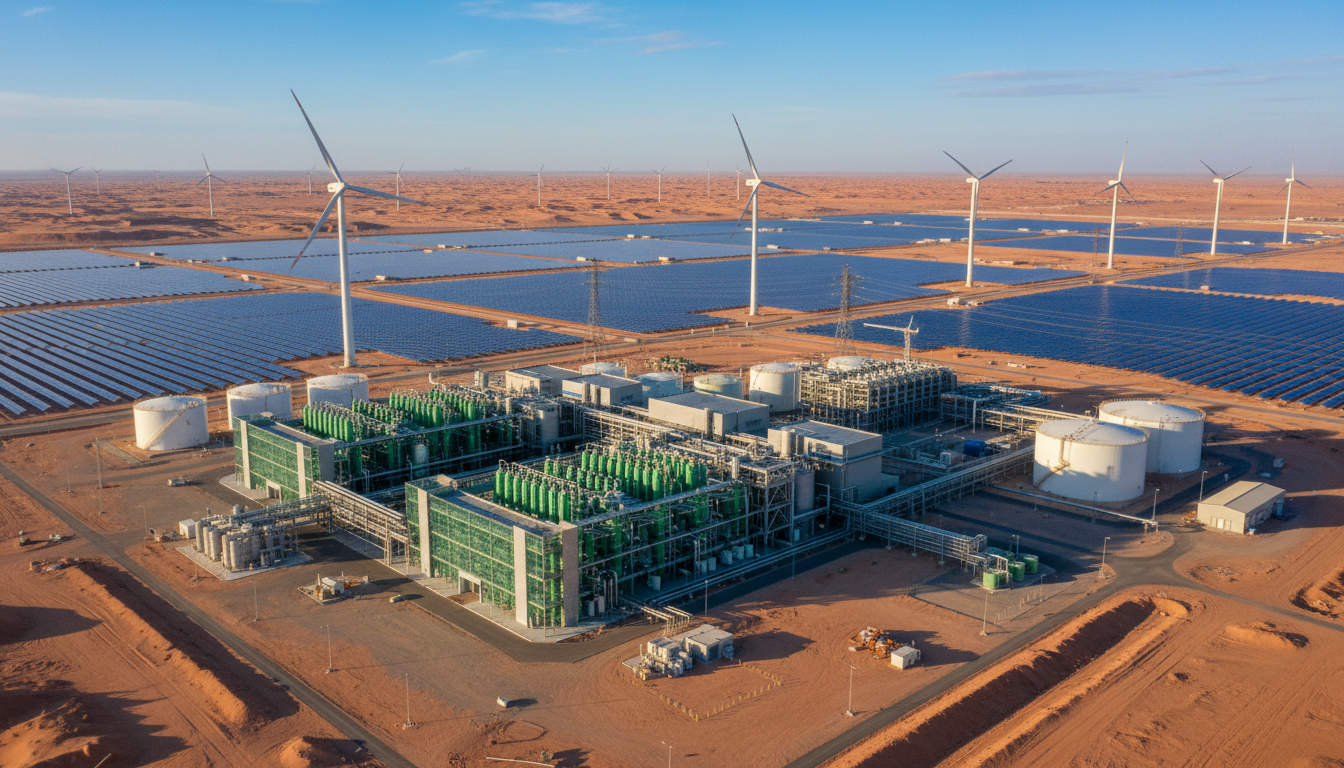
In the Saudi Arabian desert, the world’s largest green hydrogen plant is 80% complete and will use 4 gigawatts of solar and wind energy to produce 600 tons of clean fuel per day when it opens in 2027.
The logic is simple and powerful. If a plant can adapt to extreme growing conditions, with little water, controlled energy, and high environmental stress, it can also help tackle the food crisis in vulnerable areas of Brazil and other countries.
How the Space Farming Brazil Network wants to create superplants for space missions and also for vulnerable areas on Earth
The first phase of the research chose sweet potato and chickpea as priority crops. Both species require less water and less heat than other crops, making them promising candidates for testing in closed and hostile environments.
The researchers’ focus is to explore genetic variability to select plants with higher productivity, greater resistance, and better nutritional value. The work also aims for greater efficiency in the use of water and energy, two central factors for both space missions and agriculture in regions affected by climate change.
Alessandra Fávero, a researcher at Embrapa and coordinator of the research, explains that this process can accelerate the selection of genotypes better prepared for the climatic conditions of the coming decades. In practice, the laboratory anticipates future scenarios of temperature and environmental stress to find plants more suited to survive.
This application is not limited to the space sector. The prototypes developed by the network can be used in large urban centers and also in remote rural areas, strengthening food security in places more exposed to the climate crisis.
Tests in Brazil already simulate radiation, microgravity, and soil-less cultivation to face the challenge of producing life outside Earth
One of the biggest obstacles of space agriculture is protecting plants from cosmic ionizing radiation. In space, particles travel at high speeds and can alter matter by stripping electrons from atoms, creating an environment incompatible with life without adequate protection.
Therefore, a central part of the research is the construction of a casing that can shield the plants. While this solution progresses, extreme conditions have been replicated in Brazilian laboratories and in analog missions that simulate the environment of a space station on Earth.
One of the tests took place at Habitat Marte, a structure at the Federal University of Rio Grande do Norte, UFRN, which reproduces conditions inspired by the red planet. The experiment used tomato seedlings grown by hydroponic and aeroponic systems, both without soil, and was deemed successful.
In April 2025, the Space Farming Brazil Network sent chickpea and sweet potato seeds on a rocket from Blue Origin, Jeff Bezos’s commercial company. The seeds were exposed to microgravity for five minutes before undergoing genetic analysis.
Then, in August 2025, the group sent other Brazilian plants, including strawberries and orchids, to the International Space Station. The first phase of the program is expected to last five years, with simulations on Earth. Subsequently, the second phase plans tests in low Earth orbit, and the third aims for experiments in deep space, including the Moon.
Beyond space agriculture, Brazil prepares the nanosatellite SelenITA to reach lunar orbit and study the south pole of the Moon in 2028
Brazil’s participation in Artemis is not limited to food cultivation. The country is also preparing its first lunar mission with the development of SelenITA, a nanosatellite designed to go to lunar orbit and circle the lunar south pole.
The name refers to selenite, a crystal with a shine associated with the Moon. The launch is scheduled for the next phase of the Artemis program in 2028, and the equipment will study magnetic fields and terrain, valuable information for future crewed missions.
The project is led by the Aeronautics Institute of Technology, ITA, in partnership with AEB and NASA. For the Brazilian Air Force, studies related to SelenITA are expected to boost areas such as space embedded systems, orbital navigation, deep space telecommunications, and energy engineering.
This type of advancement may seem distant, but it already connects with concrete uses in everyday life. Space technologies help in monitoring the Amazon, border surveillance, and the secure sharing of sensitive information, which enhances the strategic weight of the investment.
What the agreement between Brazil and the Artemis program means in practice and why results should appear more in the long term
Brazil signed the Artemis agreements in 2021. These commitments serve as a protocol of intentions and safeguards for peaceful space exploration and do not impose automatic technological obligations on participating countries.
According to astrophysicist Gabriel Rodrigues Hickel from the Federal University of Itajubá, Unifei, the return for the population is not expected to be immediate. Still, the history of the space race shows that technologies initially created for missions outside Earth eventually reach everyday life years later, as occurred with satellite telecommunications and advances in medical diagnostics.
For Hickel, one of the most promising points for Brazil lies precisely in Embrapa’s studies. By seeking species adapted to space environments, the research may reveal more productive plants for arid lands, less fertile soils, and suboptimal lighting.
AEB states that the country conducts its space activities based on multilateralism, maintaining cooperation with both the United States and China, as already occurs in the CBERS program for over 30 years. Today, Brazilian priorities are focused on three fronts: the renewal of the satellite fleet, autonomous access to space, and the consolidation of launch centers.
In this framework, the Alcântara Launch Center in Maranhão is treated as a key piece to become a competitive commercial hub in the global market, with an increase in launch frequency initiated with the South Korean company Innospace. At the same time, there are no ongoing negotiations to send a Brazilian astronaut to space at least until 2030.
The numbers behind the space race help explain why Brazil is trying to transform high-cost science into a concrete solution for real life
The Artemis program has already consumed 93 billion dollars in its 13 years of existence, a figure highlighted in a NASA audit. It is a gigantic investment, which makes the search for practical applications that justify this effort beyond geopolitical symbolism even more relevant.
In the Brazilian case, space agriculture appears as one of the most promising doors for this transformation. Instead of merely selling the idea of technological conquest, the country is trying to link lunar exploration to an urgent and very terrestrial problem: the ability to produce food under increasingly adverse conditions.
If the strategy works, the impact could reach from future space bases to vulnerable communities in the semi-arid region, urban peripheries, and isolated areas. It is precisely in this bridge between advanced science and real need that the project gains political, economic, and social relevance.
The debate is now inevitable. Is it worth investing in space research when results take time, or is this exactly the type of bet that can prevent greater crises in the future? Leave your comment and say whether Brazil is looking too far ahead or finally thinking ahead of the problem.





Seja o primeiro a reagir!