





Curitiba Surpasses Cities from Five Countries to Win the World Smart City Awards 2023 with Projects Focused on Innovation, Sustainability, and Urban Planning.
Curitiba has positioned Brazil at the forefront of one of the leading international competitions for urban innovation by outpacing five foreign competitors and winning the City Award at the World Smart City Awards 2023. The capital of Paraná triumphed over projects presented by Barranquilla in Colombia, Cascais in Portugal, Izmir in Turkey, Makati in the Philippines, and Sunderland in England, after being evaluated by an international jury comprised of representatives from organizations such as UN-Habitat, the World Bank, and the World Economic Forum.
According to the Smart City Expo World Congress, which organized the event held in Barcelona, Spain, Curitiba received the award on November 8, 2023, for its combination of intelligent urban planning, socioeconomic growth, and environmental sustainability, all while focusing on the quality of life for its residents.
This recognition has placed the Brazilian city ahead of projects that included Internet of Things applications, advanced connectivity networks, smart fire systems, and green infrastructure policies.
-
Indian Prosthetic Leg Costs About $100, Can Be Made and Fitted in One Day, and Enables Squatting, Swimming, and Working Barefoot in Muddy Fields

-
Scientists Develop Hydrogen-Powered Car That Doesn’t Require Gasoline or Charging
-
How the Cyclotron Resolved a Problem that Electrical Engineering Couldn’t with Voltage, Earning the 1939 Nobel Prize in Physics

-
Europe Removed 603 Old Dams, Dikes, and Barriers in One Year, Reconnected Over 3,740 km of Rivers, Transforming Obsolete Structure Demolition into an Ecosystem Recovery Tool


Curitiba Outshines Five Foreign Cities in Competing for the World Award
The victory is not limited to a selection restricted to Brazil or Latin America. In the final phase of the Cities category, Curitiba faced proposals developed across different continents with notably distinct characteristics.
Barranquilla presented a strategy that integrated climate action into urban planning, aiming to transform the Colombian city into a Latin American benchmark for urban biodiversity. Cascais, in Portugal, brought forth the Viver Cascais initiative, a structured program designed to consolidate services and benefits related to mobility, health, and culture.

Izmir, in Turkey, competed with a smart fire alarm system capable of transmitting real-time information to facilitate detection and response efforts. Makati presented initiatives based on connected devices and Internet of Things technology to support data-driven public policies.
Sunderland, in the United Kingdom, emerged among the finalists with a digital transformation strategy leveraging advanced wireless communication technologies and a platform capable of consolidating data for real-time urban management.
Curitiba won by showcasing a broader approach grounded in the integration of various urban policies.
International Jury Focused on Planning and Sustainability in Decision-Making
The World Smart City Awards did not only assess the quantity of technology installed in each city.
According to the organizers of the Smart City Expo World Congress, the jury recognized Curitiba for how the city employs intelligent urban planning, socioeconomic development, and environmental sustainability to tackle both present and future challenges. The improvement of residents’ quality of life was highlighted as a central element in the justification provided by the event.
The honor jury included representatives from the Municipal Council of Barcelona, UN-Habitat, the World Bank, a European Commission mission focused on smart and climate-neutral cities, the World Economic Forum, SEGITTUR, and the Smart City Expo World Congress itself.
Solar Pyramid Transformed Former Landfill into Energy Generation
One of the highlighted projects in Curitiba’s strategy was the Caximba Solar Pyramid, installed over a decommissioned sanitation landfill.

Curitiba, 03/27/2023.
Photo: José Fernando Ogura/SMCS.
According to the City Hall of Curitiba, the installation became the first photovoltaic power plant built on a decommissioned landfill in Latin America. In the first six months of operation, the complex generated 2,048.985 MWh of energy, resulting in reported savings of R$ 1.17 million (about US$230,000) for municipal coffers during that period.
The project is particularly representative of the proposal presented by the city as it combines two issues typically addressed separately: the recovery and repurposing of an area previously designated for waste and the production of renewable energy.
The Solar Pyramid was part of a broader strategy called Curitiba More Energy, which aimed to utilize photovoltaic systems in various municipal structures. The city also highlighted the small hydroelectric plant Nicolau Kluppel, located in Barigui Park, among the initiatives related to energy generation.
Curitiba has included food security and urban agriculture among the policies aimed at showcasing its innovation capabilities.
When it won the award, the city reported maintaining 35 Family Warehouses, 11 Family Markets, five Popular Restaurants, 150 urban gardens, and five units of the Solidarity Table, in addition to the Food Bank. The Urban Farm of Cajuru was also part of this initiative.
The presence of these initiatives among the projects linked to the candidacy helps broaden the definition of a smart city adopted in the award. While technology and connectivity remain important, the ability to provide solutions for food supply, inclusion, and quality of life is also factored in.
Curitiba had previously used urban agriculture and social development in a prior candidacy for the same award.
Curitiba had been striving for the top of the award for five years
The 2023 victory was not the first time Curitiba came close to receiving the top recognition from the World Smart City Awards.
According to city officials, this was the fifth time that Paraná’s capital made it to the final six cities in the category. The path of significant participations began years earlier.
In 2018, Curitiba was a finalist in the Urban Environment category with the Chef’s Garden project, aimed at connecting urban farmers with restaurants.
The following year, it returned to the competition with the Vale do Pinhão, a movement focused on the innovation ecosystem and sustainable development.
In 2021, during the effects of the Covid-19 pandemic, Curitiba’s Economic Recovery Plan was highlighted among six projects in the awards for initiatives related to response, adaptation, and transformation of cities during the health crisis.
In 2022, the capital returned to the finals in the City Award category, this time with a proposal for food security, urban agriculture, and social development.
The victory came in 2023.
Vale do Pinhão integrated startups and entrepreneurship into the urban project
One of the structures that helped shape the winning candidacy was the Vale do Pinhão, created to integrate companies, universities, government, and other participants in the city’s innovation ecosystem.
Data released by the city hall during the award announcement indicated the presence of 604 startups linked to the local ecosystem. Among them were Ebanx, Olist, and MadeiraMadeira, companies that had reached unicorn status, a term used for firms valued at over US$ 1 billion.
The structure also included training programs and support for entrepreneurship.
The nine Entrepreneurial Spaces provided, according to the data presented in 2023, 991 services per day, in a city that had approximately 210,000 formalized individual micro-entrepreneurs at that time.
Qualification programs aimed at the technology sector, such as 1st Empregotech and Empregotech 40+, were part of the same ecosystem.
In this model, therefore, the idea of a smart city was not limited to services offered directly by the city hall. It also encompassed the capacity to stimulate new businesses, professional training, and economic development.
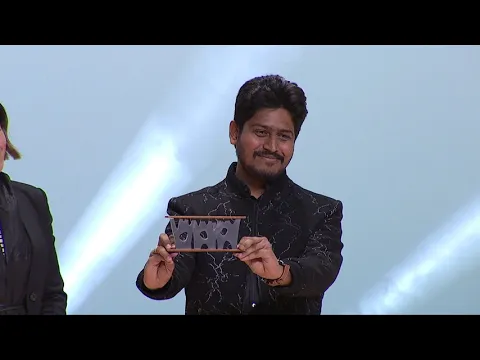
The World Smart City Awards is the award associated with the congress that aims to recognize outstanding initiatives in innovation and urban transformation.
In 2023, in addition to the category won by Curitiba, projects related to mobility, safety and resilience, enabling technologies, energy and the environment, governance, infrastructure, and inclusion were awarded.
The awards that year also recognized initiatives from cities and organizations in Finland, France, South Korea, the Netherlands, the United States, Turkey, and Saudi Arabia, highlighting the international scope of the competition.
Curitiba turned five finals into a historic victory for Brazil
When Rafael Greca received the trophy in Barcelona on November 8, 2023, Curitiba finally converted years of presence among the highlights of the competition into the top title in the Cities category.
The victory did not imply that the Brazilian capital was superior to its competitors in every possible urban indicator. The award specifically recognized the strategy submitted and evaluated by the jury of the World Smart City Awards that year.
Still, the result placed a Brazilian city ahead of candidates from Colombia, Portugal, Turkey, the Philippines, and the United Kingdom within an international competition focused specifically on solutions for the future of urban areas.
Curitiba won not by presenting a single spectacular technology, but by integrating solar energy, urban agriculture, connectivity, entrepreneurship, transportation, digitalization of public services, food security, and sustainability into a unified planning vision.
It was this combination that led the international jury to select the Paraná capital as Smart City of 2023, placing the name of a Brazilian city at the top of the World Smart City Awards.


