





 Portuguese
  English
  Spanish
  4 min of reading
  0 comments



Restrictions, risks, and bureaucracies shape the access of Brazilians to international destinations, where security, politics, and logistics weigh more than the passport and make some trips unfeasible, complex, or highly selective, even with proper documentation and global acceptance of the Brazilian document.
Having a Brazilian passport, today among the travel documents with wide international acceptance, does not mean automatic entry into any destination.
In several cases, the obstacle is not the nationality itself, but a combination of war, state restrictions on tourism, specific immigration requirements, and geographical isolation that make travel inadvisable, expensive, or difficult to execute, even if the basic documentation is in order.
In practice, this changes the meaning of phrases that usually circulate on social media.
-
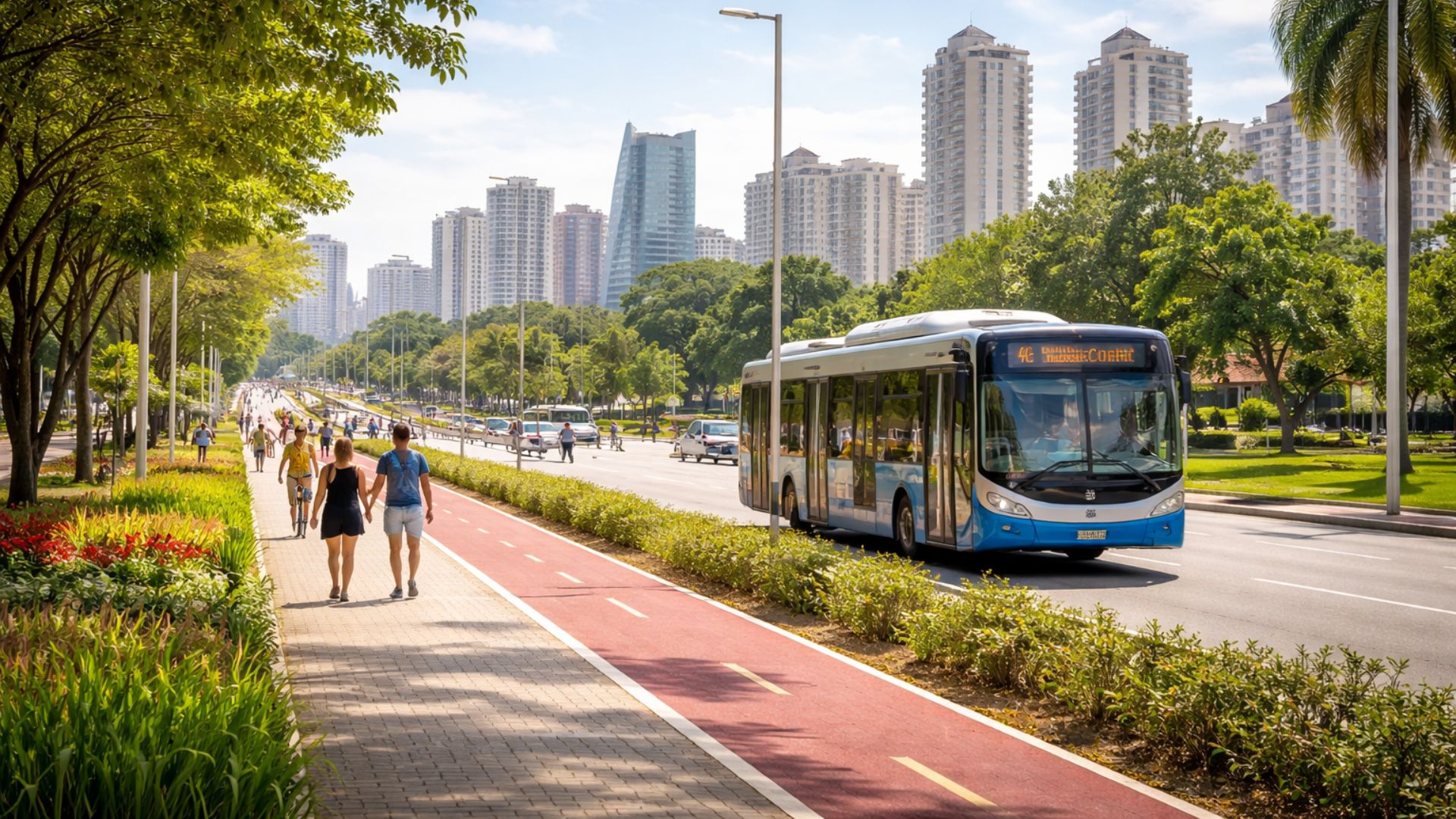
Nothing from Switzerland or the USA: the first city in the world to reach the highest standard of quality of life is in Brazil.
-
Mega tsunami in Greenland causes Earth to vibrate for 9 days and reveals extreme effects of global warming that worry scientists worldwide.

-
Maria Branyas Morera lived to be 117 years old, eating three yogurts a day without developing cancer or dementia, and when scientists analyzed her DNA, they found a secret that no one expected: her biological clocks indicated an age two decades younger than her actual age.

-
Upside Down House transforms abandoned warehouses from the 1970s, blending art with concrete and steel engineering, becoming a phenomenon in South Korea and impressing with a surreal experience that attracts tourists from around the world.


Brazilians are not, as a rule, formally prohibited from entering these countries just for being Brazilian.
What exists, in many cases, are scenarios of extreme risk, heavily controlled tourism models, or routes so limited that travel ceases to be a simple option for the average visitor.
International security and high-risk destinations
Afghanistan and Somalia are among the clearest examples of destinations where the greatest barrier is not the passport, but the internal context.
In the case of Afghanistan, the official Brazilian documentation related to humanitarian reception describes the country as affected by serious or imminent institutional instability, as well as severe violations of human rights and international humanitarian law.
In such a scenario, any formal possibility of entry loses relevance in the face of the concrete risk associated with staying in the territory.
Somalia follows a similar logic.
The country remains associated, in international travel alerts and guidelines, with threats of armed violence, instability, and institutional fragility.
In these cases, the difficulty for Brazilians does not stem from a classic migration ban, but from the combination of insecurity, limited consular coverage, and low predictability regarding travel, accommodation, and essential services.
This type of restriction is different from a formal visa refusal.
In destinations marked by war, militias, or institutional breakdown, the traveler may find an entry rule on paper, but it ceases to be the central element of the decision.
What truly matters is the risk assessment, especially because insurers, airlines, and tour operators often impose their own limitations in such scenarios.
Countries with controlled tourism and strict rules
North Korea occupies a category of its own.
The country kept foreign tourism closed during the pandemic, has limitedly relaxed restrictions, and continues to have highly controlled access.
Recent reports and industry information show that the opening has been partial, unstable, and subject to sudden interruptions, drastically reducing travel predictability for foreigners of various nationalities, including Brazilians.
Even when there is some permission, it is not conventional tourism.
Movement usually depends on authorized operators, supervised itineraries, and strict local rules.
This means that the obstacle is not the Brazilian passport itself, but the way the North Korean state organizes, restricts, and, when it decides, suspends the flow of foreign visitors.
Bhutan also receives foreigners, but adopts a different logic.
The country maintains a high-value, low-volume tourism model, in which international visitors must pay the Sustainable Development Fee, currently set at $100 per day for adults, in addition to a one-time, non-refundable visa fee of $40.
The cost and design of the public policy make travel more selective from the outset.
In this case, there is no hostility towards Brazilians nor a specific blockade against Brazil.
What exists is a deliberate policy to limit tourist flow and increase the cost of staying.
Geographical isolation and difficulty of access
Nauru and Kiribati show another type of barrier.
They are remote destinations in the Pacific, with reduced air connectivity and more complex logistical planning than in traditional tourist routes.
In the case of Nauru, the local airline covers a small number of international points, which limits travel combinations and increases costs.
In Kiribati, the official tourism body highlights that the country has few international entry points.
The difficulty arises during the journey, with few flights, long connections, and limited options.
In these circumstances, formal access exists, but practical execution becomes restricted to a small group of travelers with time, budget, and tolerance for unpredictable routes.
What the Brazilian passport really guarantees
International rankings indicate that the Brazilian passport remains well positioned in terms of global mobility and visa-free access to a high number of destinations.
Still, this indicator measures documentary ease, not local security, political stability, availability of flights, or the degree of state control over tourism.
A strong document can coexist with unfeasible or not highly recommended travel in various parts of the map.
The difference between permitted entry and viable travel is the central point.
A Brazilian may have the document accepted and, at the same time, encounter war, high fees, unstable borders, intermittent tourism, or scarce flight routes.
In times of accelerated misinformation, correct reading relies less on catchphrases and more on an objective check of the real conditions of each destination before any boarding.






Seja o primeiro a reagir!