Portuguese
  Spanish


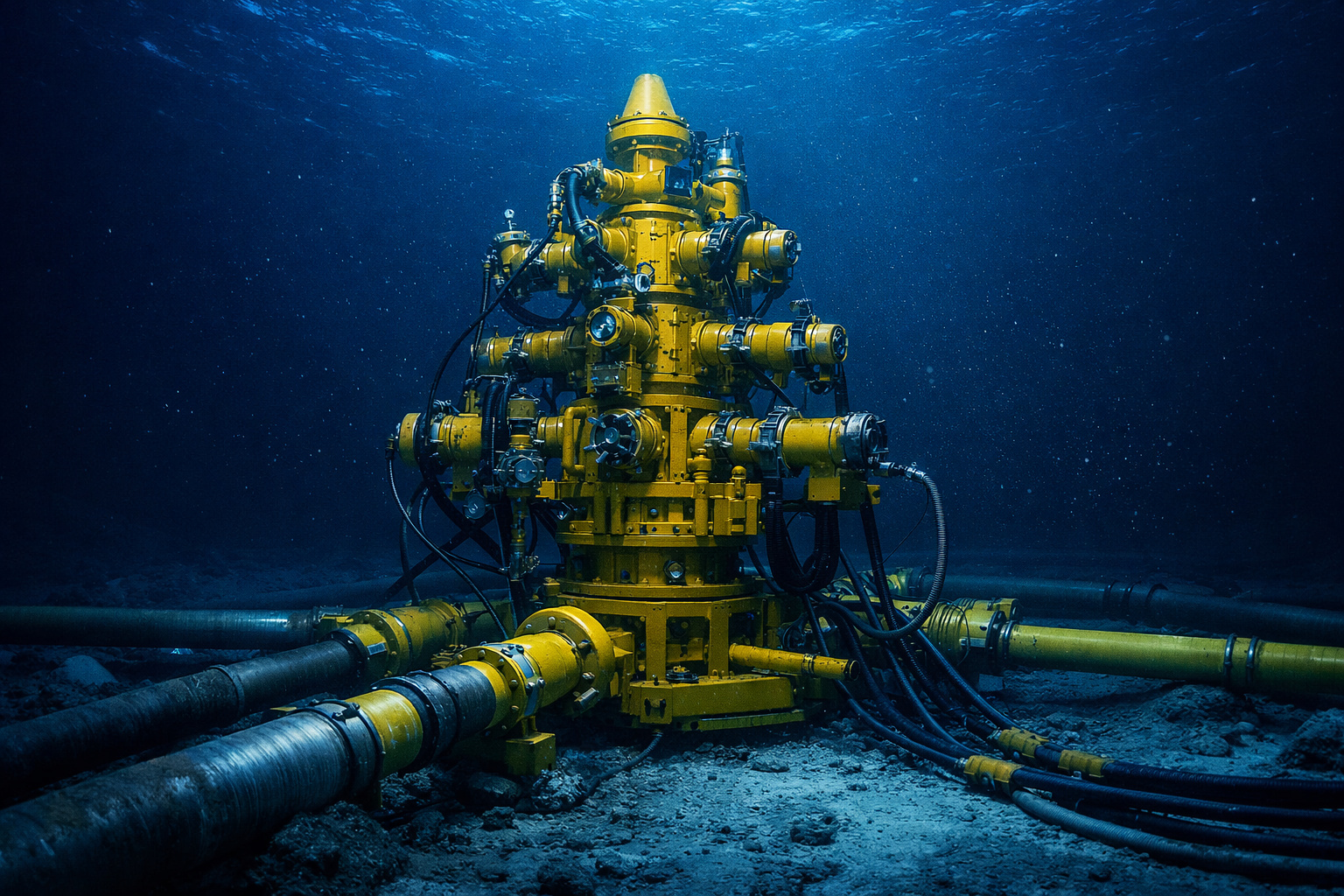

Submarine systems operate at extreme depths to regulate pressure and flow of oil and gas, ensuring safety, operational control, and efficiency in offshore production
Installed equipment on the seabed directly controls the production of oil and natural gas in offshore environments. These systems regulate the pressure and flow of fluids extracted from reservoirs, ensuring safe and efficient operations.
The National Agency of Petroleum, Natural Gas and Biofuels (ANP) supervises these operations in Brazil, ensuring that activities follow strict technical standards.
Furthermore, this equipment becomes indispensable in deepwater fields. In these scenarios, production relies entirely on advanced technology and continuous remote control.
-
Brazilian Engineers Lead $200 Million Project to Bring Water from São Francisco River to Transform Supply in Northeastern Cities

-
Brazilian University Tests Recycled Plastic Component for Homes, Aiming for More Sustainable Single-Family Housing Construction
-
Apple, Samsung, and Sony Warn: Wet Bluetooth Earbuds Can Be Damaged if Stored Before Fully Drying
-
Brazil Develops AI-Driven Technology to Measure Brain Pressure Non-Invasively, Detecting Nanometric Deformations in Real Time to Aid Early Medical Intervention


How do submarine valves that control oil flow work

The system consists of a set of valves and connections installed directly above the submarine wellhead. This set controls the flow of oil and gas from the reservoir to the surface.
At the same time, each valve acts strategically to regulate pressure and direct fluids. This way, operators can maintain stability throughout the production process.
Additionally, teams control these systems remotely from platforms or operational centers. To do this, they use hydraulic or electrical systems that allow precise adjustments, even at great depths.
Consequently, the technology ensures quick responses in critical situations.
What operational care is taken to ensure safety and efficiency
The operation requires constant monitoring. This is necessary because the equipment operates under high pressure and in extreme conditions.
For this reason, teams adopt strict protocols to avoid failures. Among the main precautions are:
- Continuous monitoring of well pressure
- Active control of oil and gas flow
- Periodic inspections of submarine connections
- Constant verification of hydraulic systems
- Remote monitoring of safety valves
- Planning of preventive maintenance
Moreover, these processes increase the lifespan of the equipment and reduce operational risks.
Where are these systems used in offshore production
These structures primarily operate in offshore fields located in deep and ultra-deep waters. In these regions, production depends exclusively on systems installed on the seabed.
At the same time, the equipment connects to pipelines and collection systems that transport oil to platforms or production ships. Additional technical information can be consulted from entities such as the Society of Petroleum Engineers.
Why are these valves essential for production control
These systems play a critical role in operational safety. They control the internal pressure of the well and prevent uncontrolled release of oil.
Additionally, they allow for immediate interruption of flow when necessary. This way, teams can perform maintenance safely and avoid accidents.
Therefore, this equipment ensures not only efficiency in production but also environmental and operational protection.
Have you ever imagined the complexity behind offshore oil production?