





 Portuguese
  English
  Spanish
  4 min of reading
  0 comments


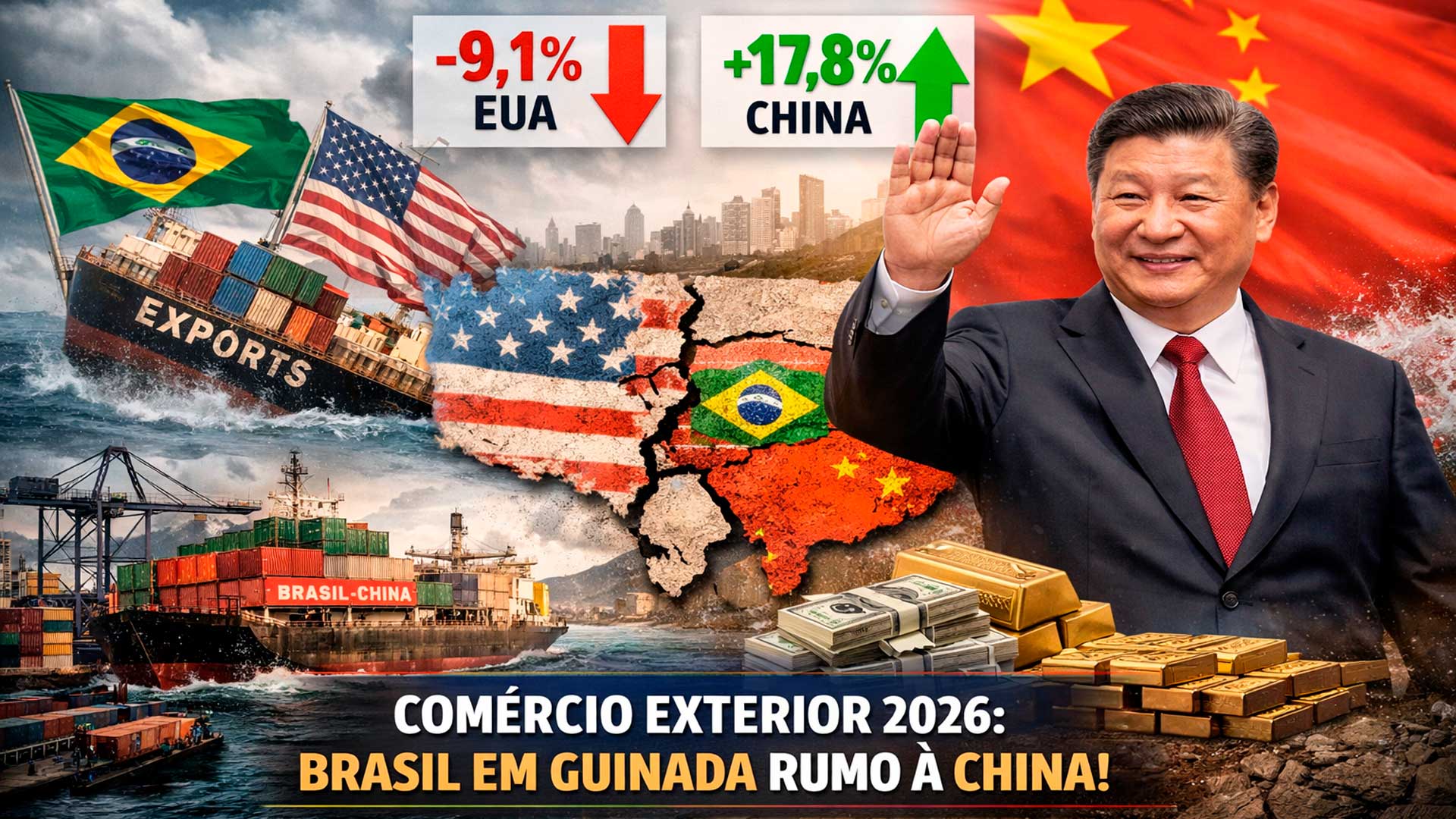
Drop in sales to the United States and advance of China expose a relevant change in Brazilian foreign trade in March 2026
Brazil’s foreign trade gained a new shape in March 2026. Brazilian exports to the United States fell by 9.1%, while sales to China increased by 17.8%, reinforcing an important shift among the country’s main trading partners.
The numbers were released on April 7, 2026 by the Secretariat of Foreign Trade, Secex, linked to the Ministry of Development, Industry, Commerce and Services, MDIC. In the same month, the Brazilian trade balance closed with a surplus of US$ 6.405 billion, below the market median of US$ 7.55 billion.
The contrast between the American and Chinese markets is striking because it involves the two largest poles of the global trade dispute. In the case of the U.S., the prolonged decline in purchases of Brazilian products occurs after the tariff imposed by the Donald Trump government in mid-2025.
-
The Federal Government wants to curb family indebtedness and is considering releasing FGTS with a renegotiation that could cut up to 80% of debts for families and individual micro-entrepreneurs (MEIs).

-
‘Theory of the Madman’ is the strategy that explains why Trump threatened to end Iran and hours later offered a two-week truce as if nothing had happened.
-
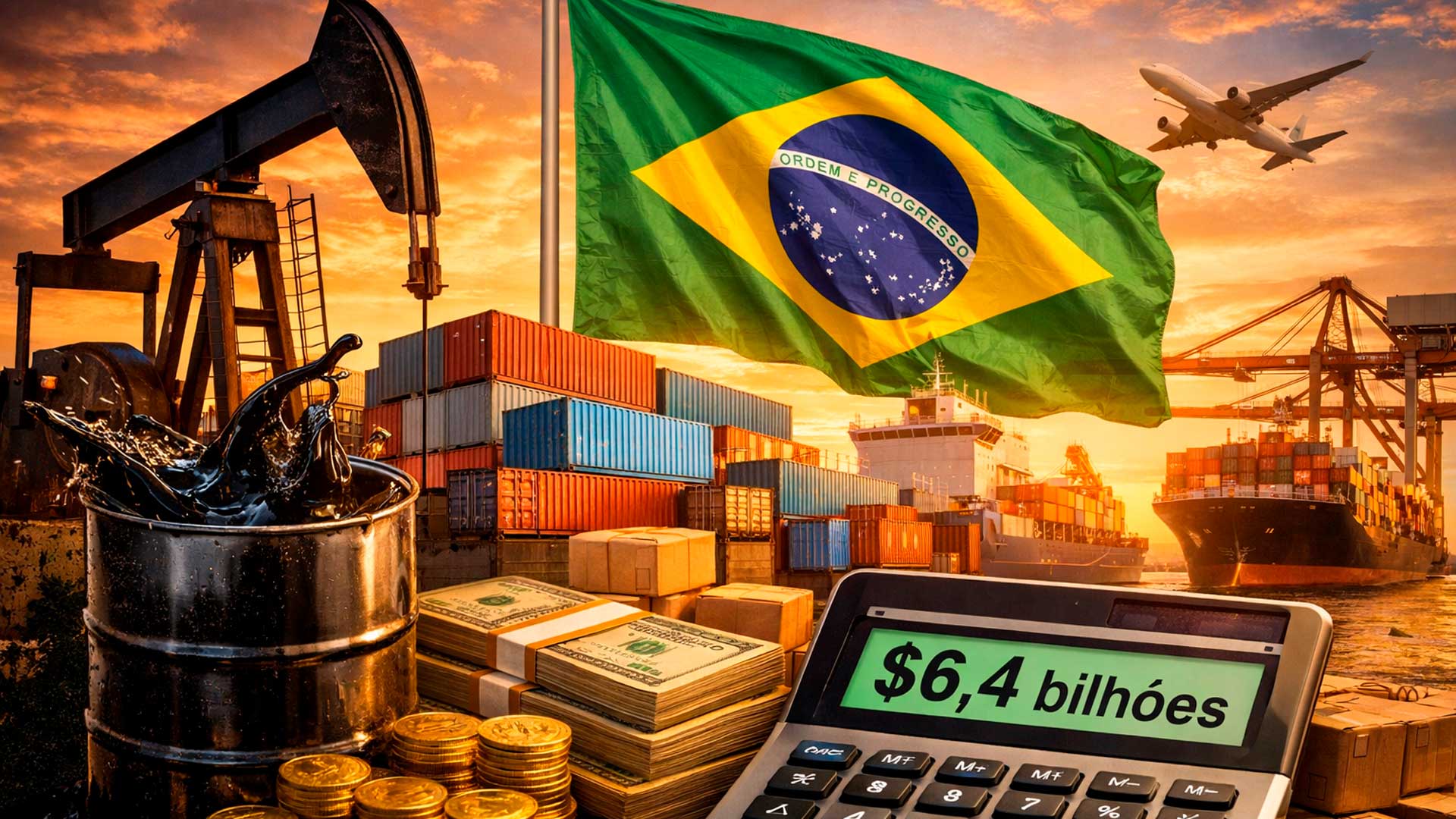
Oil secures a larger drop, exports advance in March, and Brazil ends the month with a surplus of $6.4 billion despite the strong rise in imports.
-
The largest chicken processor is closing factories in series and has already cut thousands of jobs in just a few months in a crisis that reveals the extent of the problems in the meat sector in the USA.

On the other hand, China maintained its expansion pace and increased its weight in Brazil’s external accounts. The result shows that the Asian country remains an essential destination for Brazilian exports, while the United States faces a loss of space in the bilateral trade balance.
U.S. tariffs continue to pressure Brazilian exports and maintain trade deficit in early 2026
In March 2026, Brazil exported US$ 2.894 billion to the United States, down from US$ 3.182 billion in March 2025. On the import side, purchases of American products also declined, falling 6.31%, from US$ 3.537 billion to US$ 3.314 billion.
As a result, the trade balance between Brazil and the U.S. ended March with a deficit of US$ 420 million. This was the eighth consecutive decline in Brazilian sales to the North American market, a direct effect of the 50% tariff applied to Brazilian products in mid-2025.
At the end of 2025, some Brazilian items were removed from the tariffs. Still, the MDIC estimates that 22% of Brazilian exports remain subject to the tariffs established in July, including products that only pay the additional rate of 40% and others that face 40% plus the base rate of 10%.
From January to March 2026, exports to the United States totaled US$ 7.781 billion, a decrease of 18.7% compared to the same period the previous year. Imports fell 11.1% to US$ 9.169 billion, leading to a quarterly deficit of US$ 1.388 billion.
China accelerates purchases from Brazil, expands surplus and reinforces position as main destination for exports
China moved in the opposite direction to the United States in March. Brazilian exports to the Asian country grew by 17.8% and reached US$ 10.490 billion, well above the US$ 8.903 billion recorded in the same month of 2025.
Imports from China also surged, with an increase of 32.9%, rising from US$ 5.014 billion to US$ 6.664 billion. Despite this increase in purchases, Brazil ended March with a robust surplus of US$ 3.826 billion in trade with the Chinese.
In the first quarter of 2026, the movement was even more pronounced. Brazilian sales to China grew by 21.7% and reached US$ 23.890 billion, while imports fell 6.0%, totaling US$ 17.907 billion.
This performance ensured a surplus of US$ 5.983 billion between January and March. In practice, the result confirms China as a central piece in sustaining Brazil’s positive balance, especially at a time of weakening sales to the U.S.
European Union and Argentina complete the picture of Brazil’s main trading partners in March
The European Union also saw an increase in purchases of Brazilian products in March 2026. Exports to the bloc rose 7.3% to US$ 4.110 billion, compared to US$ 3.829 billion in March 2025.
Brazilian imports of European products grew even more, with an increase of 14.9%, rising from US$ 4.078 billion to US$ 4.687 billion. The result was a deficit of US$ 577 million in the trade balance with the bloc that month.
However, in the first quarter, the situation turned positive. Exports to the European Union advanced 9.7%, totaling US$ 12.232 billion, while imports fell 2.2% to US$ 11.607 billion, generating a surplus of US$ 625 million.
In the case of Argentina, Brazilian exports fell 5.9% in March, totaling US$ 1.470 billion. Imports, on the other hand, grew 13.1% to US$ 1.128 billion, leaving a positive balance of US$ 342 million for Brazil.
Between January and March 2026, sales to Argentina dropped 18.1% to US$ 3.447 billion. Imports fell 6.5% to US$ 2.744 billion, ensuring a surplus of US$ 703 million. Alongside China, the United States, and the European Union, the neighboring country remains among Brazil’s main trading partners.
March results show that Brazilian surplus depends more and more on markets that continue to buy more
The total surplus of US$ 6.405 billion in March was supported by the advance of exports from the extractive and manufacturing industries, but the number fell short of market expectations. This shows that the overall performance of the Brazilian trade balance remains positive, although less comfortable than projections indicated.
The data also reveal a growing dependence on markets that continue to absorb more Brazilian products, particularly China. At the same time, the loss of momentum in sales to the United States reinforces the weight of tariff barriers and their direct effects on exporting companies and sectors of the national industry.
Whether this trade shift will consolidate in the coming months remains an open question, but March left a clear message. China, the European Union, and Argentina have gained relative importance, while the U.S. remains pressured by a tariff policy that has changed the dynamics of bilateral trade.
And you, do you think Brazil should reduce its dependence on the American market and further strengthen ties with China and other partners? Leave your comment and say whether this change strengthens the Brazilian economy or creates new risks for the country.








Seja o primeiro a reagir!