






 Portuguese


Operation BRACOLPER 2026 Brings Together Naval Forces from Brazil, Colombia, and Peru for Exercises Addressing Cross-Border Threats and Humanitarian Actions
The Brazilian Navy has mobilized patrol boats, a hospital assistance vessel, a helicopter, and a detachment of Marines to participate in a large multinational operation in the Amazon.
Launched on July 18, 2026, the 52nd edition of Operation BRACOLPER unites military personnel from Brazil, Colombia, and Peru. The exercises take place along the tri-border area and aim to prepare the three nations to work together in a region characterized by vast rivers, isolated communities, and cross-border security challenges.
The operation involves training in river assaults, signaling communications, vessel inspections, disaster response, humanitarian assistance, and tackling asymmetric threats.
-
Brazil’s Navy Transforms Largest Warship in Latin America into Showcase for Robots, Artificial Intelligence, and Virtual Reality

-
USA finds answer to the cheap drone war: new interceptor costs less than $100,000, uses its own propulsion, and can be manufactured in containers near the field of operation.

-
Russia converts Soviet aircraft Yak-52 and An-2 into drone carriers capable of launching up to six interceptors in mid-flight, a low-cost solution that extends range, saves energy, and repurposes Cold War aircraft to face an air war increasingly dominated by fast, autonomous, and difficult-to-shoot-down drones.

-
From fighter jets to military drones: understand why an Arab conglomerate decided to close a deal for 100% of this strategic company hidden in the heart of Brazilian defense


In addition to military training, the mission aims to strengthen regional cooperation and enhance the capacity to provide care to indigenous and riverside populations living in hard-to-reach areas.
Brazilian Vessels Engaged in Operation BRACOLPER
The involvement of the Brazilian Navy is coordinated by the Command of the 9th Naval District, which oversees a vast area of Western Amazon.
The Naval Force has dispatched the River Patrol Ships Raposo Tavares and Amapá, as well as the Hospital Assistance Ship Soares de Meirelles. These three vessels are under the command of the Amazon Flotilla.
The mission also includes an aircraft from the 1st General Employment Helicopter Squadron of the Northwest and military personnel from the 1st River Operations Battalion, a specialized unit of the Marine Corps.
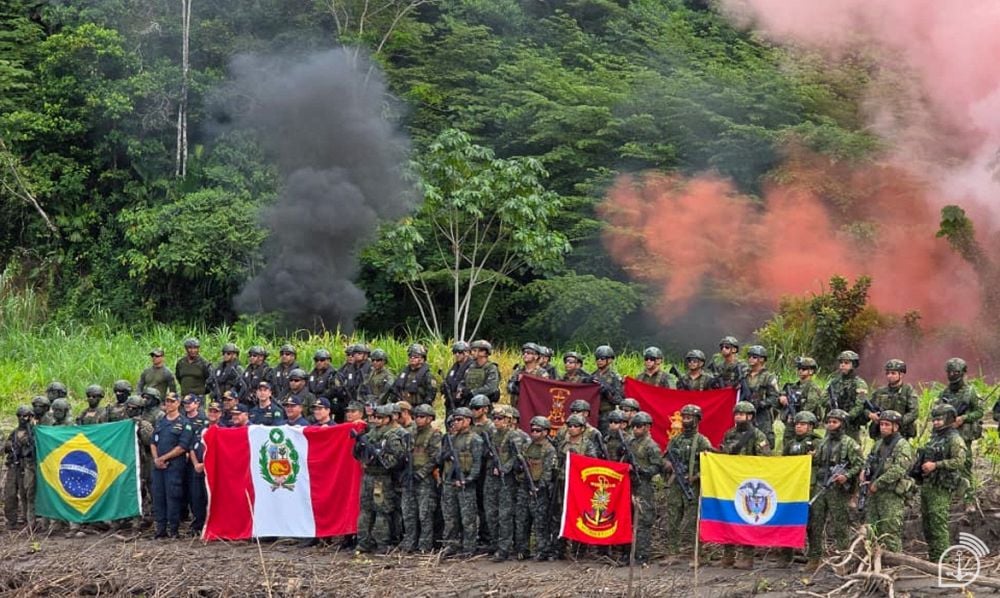
The presence of various assets allows the operation to simulate complex situations. Ships, helicopters, and troops must share information and execute coordinated movements, despite belonging to armed forces of different countries.
This capacity to work integratively is known as interoperability. In practice, it allows the three Navies to act as a single force in the face of emergencies or threats that exceed national borders.
Operation Combines Security and Humanitarian Assistance
Although it involves military exercises, BRACOLPER also has a significant humanitarian component.
The training prepares crews to respond to floods, accidents, natural disasters, and health emergencies. In many areas of the Amazon, road access is nonexistent or severely limited, making rivers essential for transporting people, medicine, and specialized teams.
The deployment of the Hospital Assistance Vessel Soares de Meirelles enhances this capacity. Vessels of this type are utilized by the naval institution to transport healthcare teams and provide medical and dental care to riverine communities.
International cooperation also allows for the sharing of experiences regarding river navigation, logistics, emergency assistance, and operations in jungle areas.
First phase occurred in Colombia
Operation BRACOLPER 2026 was divided into three phases, conducted along the border shared by Brazil, Colombia, and Peru.
The first stage took place from July 18 to 22, in the city of Leticia, Colombia. Military personnel participated in training focused on immediate response to natural disasters and humanitarian assistance.
The activities specifically considered the needs of indigenous and riverine populations. These communities live in regions where an emergency may require significant travel by rivers before help arrives.
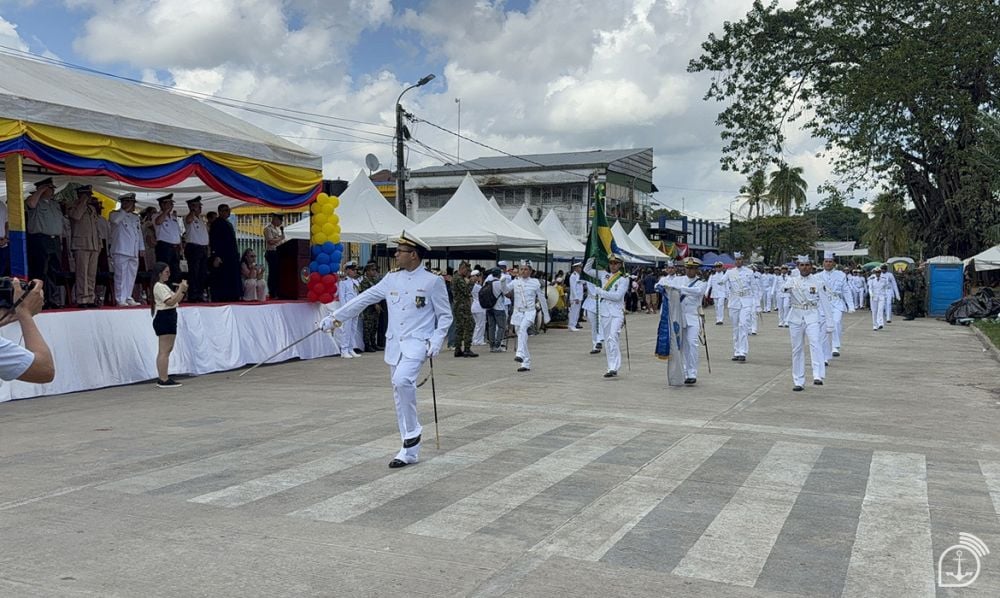
During their time in Leticia, Brazilian military members also participated in the civic-military parade held to celebrate the Colombian Independence Day, observed on July 20.
Ships sailed together to Peru
After the activities in Colombia, the ships headed toward Iquitos, Peru.
During the transit, the Brazilian vessels sailed in formation with the Colombian ship ARC Reyes, the Peruvian BAP Castilla, and the hospital ship Río Yavari.
The crews conducted communication exercises using signals, responses to asymmetric threats, and procedures led by Visit and Inspection Groups.
These groups are trained to approach and verify vessels in situations of oversight or suspicion. This activity can be crucial in combating transboundary crimes occurring in the region’s rivers.
The training also tested the vessels’ capacity for rapid information exchange and maintaining organized formation during navigation.
Naval Commandos conducted river raid in Iquitos
The second phase of BRACOLPER took place in Iquitos, Peru. The city is located in the heart of the Peruvian Amazon and lacks conventional road links to the rest of the country.
One of the main training exercises was the River Assault Exercise, simulating the deployment of Naval Corps troops in a riverine environment.
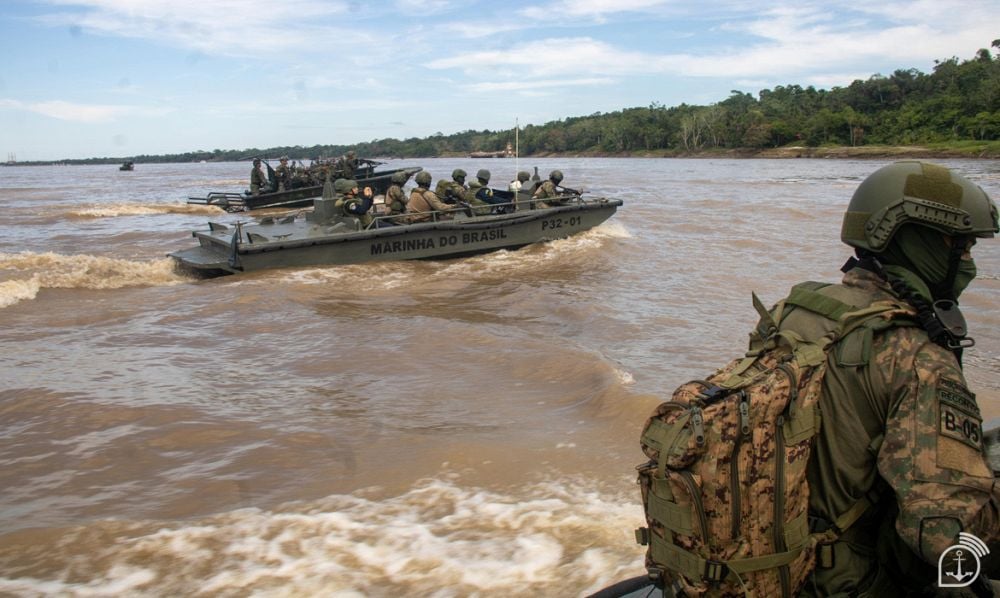
This type of mission requires knowledge of navigation, troop landing, occupying strategic areas, and moving in regions surrounded by rivers and forests.
Military personnel need to adapt their equipment and procedures to the Amazon conditions. Heat, humidity, strong currents, dense vegetation, and long distances complicate operations.
The training can be utilized for both defense missions and in actions involving security, rescue, community protection, and emergency responses.
Brazilian soldier descended from helicopter onto Peruvian ship
One of the most significant moments of the 2026 edition was the execution of an Advanced River Interdiction Exercise.
For the first time in the operation, a member of the Brazilian Navy performed a descent via winch from a Brazilian aircraft onto a vessel belonging to the Peruvian Navy.
The maneuver demonstrated the level of coordination achieved by the participating forces. The procedure required communication among the helicopter crew, the suspended soldier, and the personnel in charge of the Peruvian ship.
Operations of this kind may be necessary when a team needs to quickly access a vessel without relying on conventional docking or approaches.
The training also helps prepare the troops for inspections, rescues, evacuations, and interventions conducted in riverine areas.
Naval parade brought together the three countries on the Nanay River
Activities in Peru included the participation of Brazilian military personnel in the celebrations for the Peruvian Independence Day on July 28.
On the same date, residents of Iquitos attended a naval parade on the Nanay River. The event featured ships from Brazil, Colombia, and Peru.
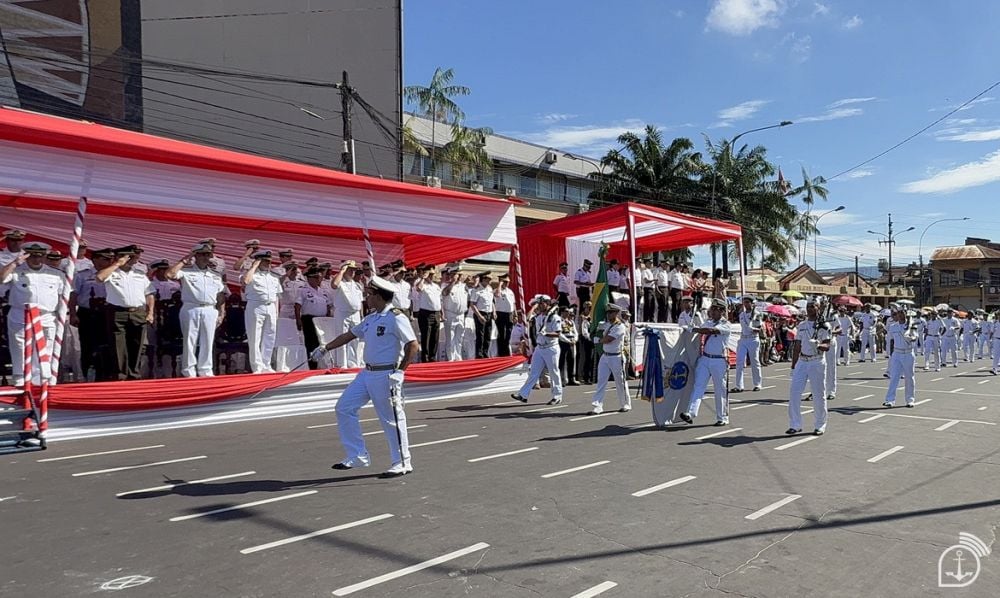
The joint presence of the vessels symbolized the cooperation maintained among the three Amazonian nations. BRACOLPER has been conducted for over five decades and has become one of the region’s most significant multinational river exercises.
The mission reinforces the need for coordinated actions in an area where rivers cross borders and connect communities from different countries.
For the Brazilian Naval Force, the training enhances procedures, familiarizes them with equipment used by neighboring nations, and expands joint response capabilities.
The operation also demonstrates that the protection of the Amazon depends not only on military presence but also on cooperation among governments, institutions, and populations living along the border.
Source: Agência Marinha de Notícias.


